
Key Findings
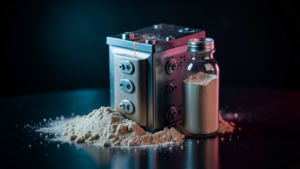
A study published in ‘Chemistry of Materials’ by ACS Publications demonstrated that AI-assisted multiobjective high-throughput screening and prioritization of gel polymer electrolytes (GPEs) is a powerful means to accelerate the development of safer lithium batteries. This innovative methodology utilizes generative models to propose diverse polymer electrolyte candidates, combining conditional generation with iterative computational evaluation to explore a vast structural space previously inaccessible through manual enumeration.
Technical / Clinical Details
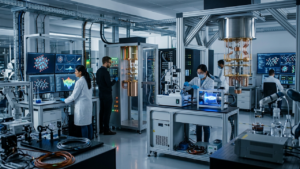
The core of this research approach is an AI-driven generative model. This model learns from existing GPE datasets and autonomously generates new polymer structures or compositions that are likely to possess specific desirable properties (e.g., high ionic conductivity, excellent mechanical stability, low flammability). The generated candidate materials are then evaluated in detail for their properties using computational methods such as Density Functional Theory (DFT) calculations and Molecular Dynamics (MD) simulations. Crucially, this system enables ‘multiobjective’ optimization, simultaneously considering multiple, often conflicting goals such as safety (e.g., thermal stability, flame retardancy) and performance (e.g., ionic conductivity, electrode compatibility) to identify optimal GPE candidates. This iterative process feeds computational evaluation results back into the generative model, forming a ‘closed-loop’ design cycle that refines subsequent candidate generation. This allows researchers to efficiently narrow down promising GPE candidates without spending extensive time on laboratory trial-and-error.
Background & Context
Lithium-ion batteries are indispensable for the proliferation of electric vehicles (EVs) and portable electronic devices, but conventional liquid electrolytes pose safety concerns due to their flammability. GPEs, as solid-liquid hybrid electrolytes, are gaining attention as a promising alternative that can maintain high ionic conductivity while reducing leakage risks and improving battery safety. However, the search for optimal GPE materials has been an extremely complex challenge due to the diversity of their compositions and the need to balance multiple required properties. The introduction of AI-assisted high-throughput screening provides a groundbreaking approach to manage this complexity and resolve bottlenecks in GPE development.
Strategic Significance & Outlook
The success of AI-assisted multiobjective screening for GPEs significantly advances the practical implementation of safer, higher-performance next-generation lithium batteries. This technology is applicable not only to GPEs but also to the development of solid electrolytes for all-solid-state batteries and other high-performance battery materials, holding the potential to accelerate innovation across battery technology as a whole. In the future, this AI-driven design platform is expected to become a standard tool in materials science research, contributing to providing safer and more sustainable solutions across a wide range of fields such as energy storage, transportation, and wearable electronics. Furthermore, it will enable battery manufacturers to shorten development times and reduce costs, thereby enhancing market competitiveness.
Get our weekly technology intelligence — free
Receive an infographic that lets you judge at a glance whether each field’s analysis report is worth reading.
Subscribe Free — Weekly Tech Intelligence
By subscribing, you’ll receive Troy-Technical’s weekly technology intelligence newsletter.
- Your email and selected fields are used only to deliver the newsletter.
- We never share your information with third parties.
- You can unsubscribe anytime via the link in each email.
See our Privacy Policy for details.
Takes about a minute · Unsubscribe anytime







Comments