Key Findings
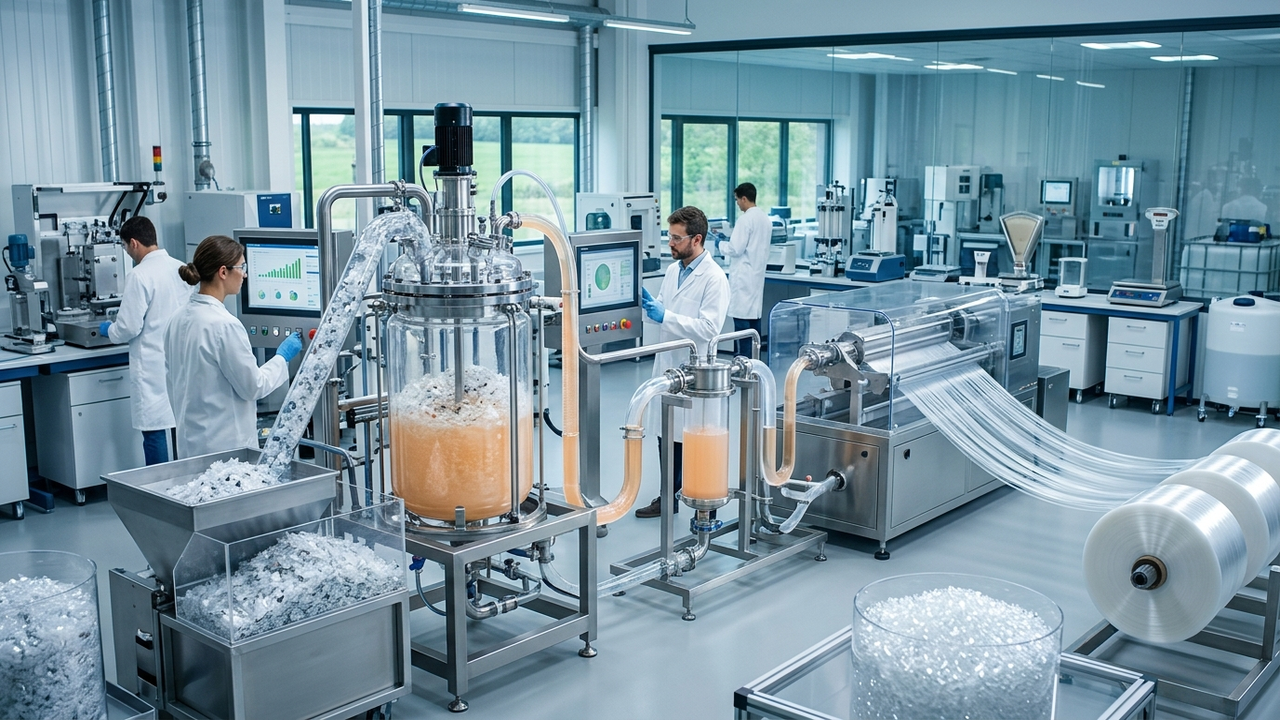
Carbios, a French company, has achieved a groundbreaking advancement in plastic recycling with the development of its enzymatic PET (Polyethylene Terephthalate) recycling technology. This innovative process enables the specific depolymerization of all types of PET waste, including colored and composite materials, back into their fundamental monomer constituents. Ultimately, this results in the production of 100% recyclable, high-quality PET products made from 100% recycled content, without any compromise in quality. This technology is a key enabler for transforming plastic and textile waste into valuable resources, thereby accelerating the realization of a true circular economy.
Technical / Clinical Details
Carbios’ enzymatic PET recycling technology utilizes specific enzymes to hydrolyze PET polymer chains, breaking them down into their constituent units: terephthalic acid (TPA) and monoethylene glycol (MEG). These enzymes act specifically on PET, allowing for efficient degradation even when other materials are mixed in. Traditional mechanical recycling often faces challenges with quality degradation and technical difficulties when processing colored PET, composite materials, or textiles. Carbios’ technology overcomes these hurdles. The recovered monomers can be repolymerized to produce plastics with properties equivalent to virgin PET, enabling infinitely recyclable PET. The process operates at lower temperatures, also contributing to reduced energy consumption.
Background & Context
PET is widely used globally in beverage bottles, food packaging, and textile products (polyester), and its mass consumption is a major contributor to the plastic waste crisis. Existing mechanical recycling technologies alone struggle to recycle all PET waste into high-value products due to quality degradation and contamination issues. The escalating demand for sustainability and tightening plastic regulations by governments worldwide have made the development of more efficient and high-quality recycling technologies an urgent necessity. Carbios’ enzymatic recycling technology addresses these industry needs, emerging as a prominent solution for creating new value from plastic waste.
Strategic Significance & Outlook
Carbios’ enzymatic PET recycling technology has the potential to fundamentally transform the future of the plastics industry. If scaled to commercial operations, this technology would significantly reduce the environmental footprint across the entire PET lifecycle and decrease reliance on fossil resources. In the textile industry, it offers the ability to regenerate used polyester fibers into high-quality PET raw materials, contributing to the establishment of a circular economy for textile products. Investors and businesses are keenly observing the sustainability and economic value offered by this technology, and its widespread adoption is expected to accelerate through licensing and partnerships. Carbios is poised to establish itself as a key player in global efforts to solve the plastic waste problem and realize a more sustainable society.
Get our weekly technology intelligence — free
Receive an infographic that lets you judge at a glance whether each field’s analysis report is worth reading.
Subscribe Free — Weekly Tech Intelligence
By subscribing, you’ll receive Troy-Technical’s weekly technology intelligence newsletter.
- Your email and selected fields are used only to deliver the newsletter.
- We never share your information with third parties.
- You can unsubscribe anytime via the link in each email.
See our Privacy Policy for details.
Takes about a minute · Unsubscribe anytime






Comments