Key Findings
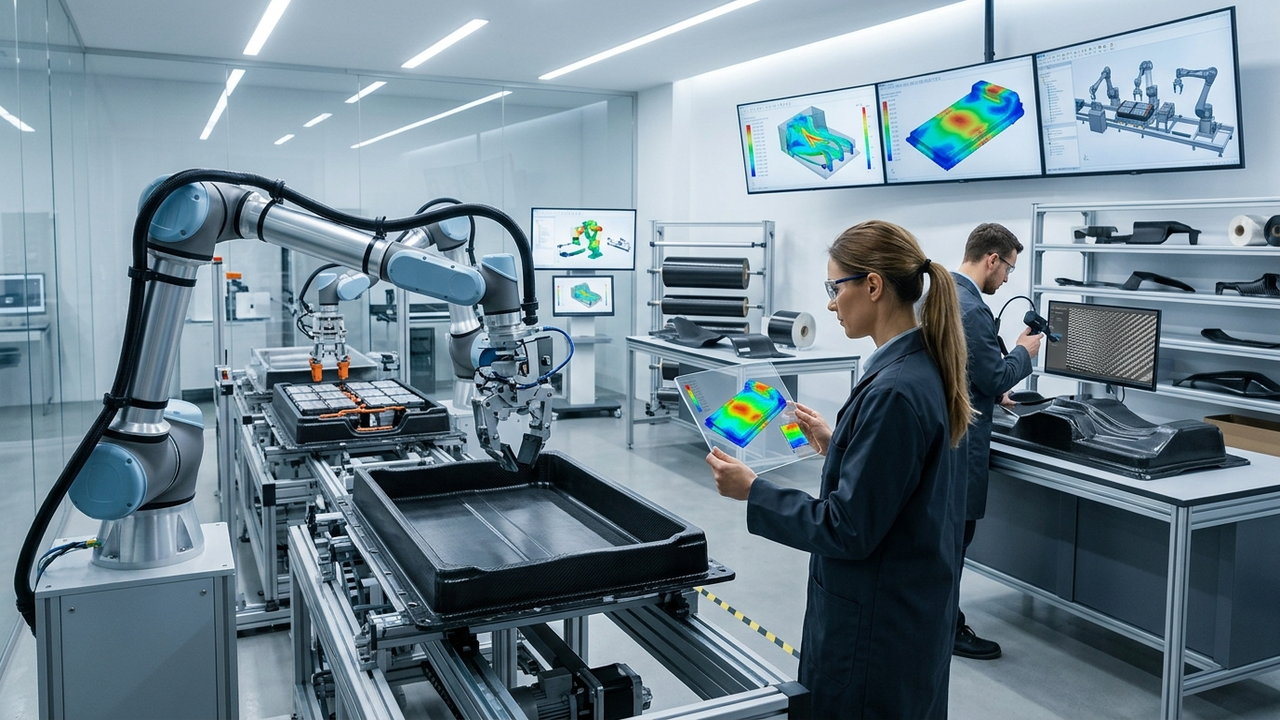
MDPI has released a comprehensive review paper on polymer composite materials used in New Energy Vehicle (NEV) battery pack structures. This review focuses on composite forming technologies, defect control, and digital manufacturing processes, presenting solutions to critical challenges such as lightweighting, thermal management, flame retardancy, and electrical properties, all vital for enhancing NEV performance and safety.
Technical / Clinical Details
The review specifically emphasizes the utilization of thermoplastic composite materials. Thermoplastic composites hold significant potential as structural materials for NEV battery packs due to their high-speed forming capabilities, excellent weldability, and crucial recyclability. The paper meticulously analyzes various forming routes, including injection molding, compression molding, and automated fiber placement (AFP), discussing defect generation mechanisms within each process and strategies for their control. Furthermore, it illustrates how integrated digital manufacturing approaches contribute to improving efficiency from design to production and optimizing material performance. This holistic approach enables the design and manufacturing of composite materials that simultaneously fulfill multiple NEV requirements, such as weight reduction, crash safety, and thermal runaway suppression.
Background & Context
Amidst global decarbonization and electrification trends, the New Energy Vehicle (NEV) market is experiencing rapid growth, with battery technology being one of the most critical factors determining NEV performance. Battery packs constitute a substantial portion of an NEV’s total weight, making lightweighting a key to extending driving range and improving energy efficiency. Concurrently, thermal management and flame retardancy to mitigate thermal runaway risks, along with impact protection, are indispensable for occupant safety. Polymer composites have garnered attention as promising materials to meet these demands, offering superior specific strength and stiffness compared to traditional metallic materials. Furthermore, there is growing interest in recyclable materials to reduce environmental impact throughout the entire lifecycle.
Strategic Significance & Outlook
This review serves as a vital guide for further research and industrial application of polymer composites in NEV battery packs. The integration of digital manufacturing technologies and AI, in particular, will accelerate the design and optimization of new materials and the automation of manufacturing processes, contributing to the realization of higher-performance, safer, and more sustainable battery packs. In the future, these technologies are expected to accelerate the widespread adoption of NEVs and become indispensable elements in building sustainable transportation systems.
Source: https://www.mdpi.com/2079-6439/14/8/94
Get our weekly technology intelligence — free
Receive an infographic that lets you judge at a glance whether each field’s analysis report is worth reading.
Subscribe Free — Weekly Tech Intelligence
By subscribing, you’ll receive Troy-Technical’s weekly technology intelligence newsletter.
- Your email and selected fields are used only to deliver the newsletter.
- We never share your information with third parties.
- You can unsubscribe anytime via the link in each email.
See our Privacy Policy for details.
Takes about a minute · Unsubscribe anytime








Comments