Key Findings
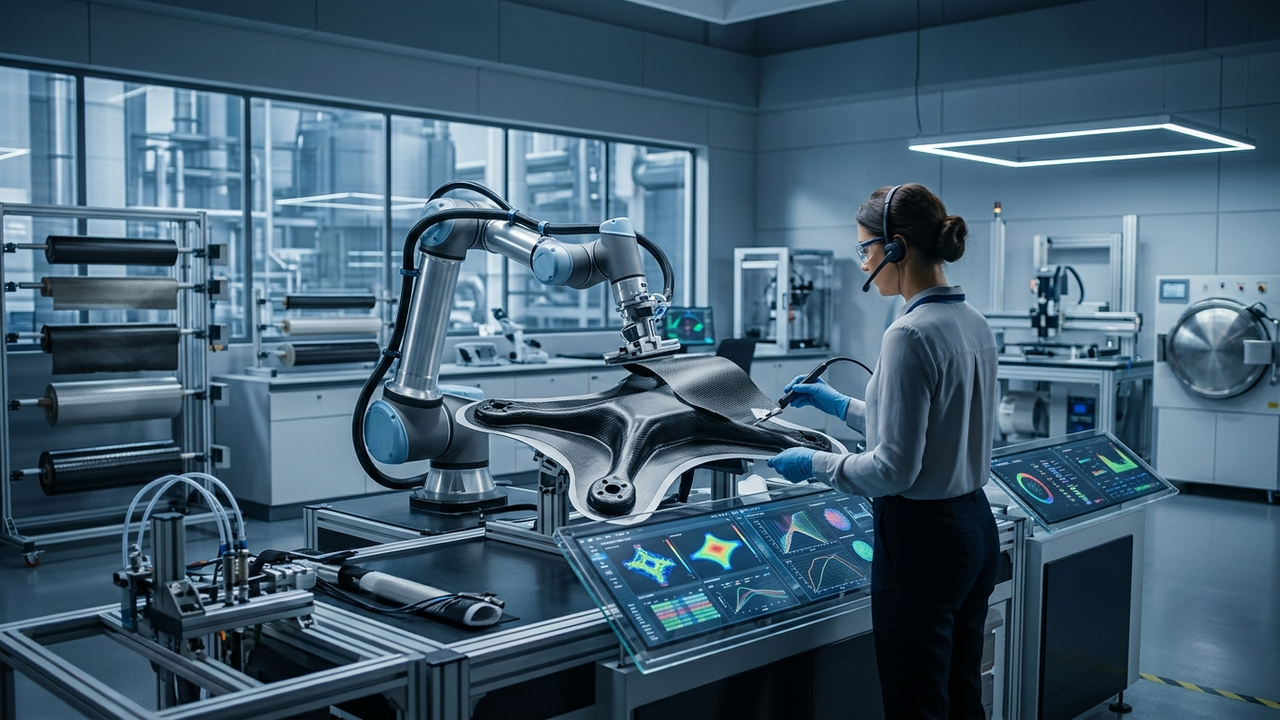
Xenia HM has unveiled a significant upgrade to its carbon fiber composite materials, promising to dramatically enhance the performance of lightweight structures in the aerospace and automotive sectors. This new technology has been demonstrated to boost the stiffness of composite materials by up to 20%. This improvement is crucial for increasing the reliability and durability of components, especially under severe load conditions, while simultaneously reducing overall weight. This advancement holds the potential to improve fuel efficiency in vehicles and aircraft and extend the range of electric mobility solutions.
Technical / Clinical Details
The technology developed by Xenia HM is based on a specialized resin matrix coupled with an optimized carbon fiber interface design. This refined formulation strengthens the adhesive bond between the fibers and the resin, leading to enhanced structural integrity across the entire composite material. While conventional methods for increasing stiffness often necessitate the use of more material, Xenia HM’s solution achieves this stiffness improvement with minimal to no additional material or weight increase. Specific mechanical tests have confirmed notable improvements in both flexural and tensile stiffness when compared to existing high-performance composite materials.
Background & Context
The aerospace and automotive industries are in a perpetual quest for lighter and higher-performance materials. Enhanced fuel efficiency, reduced emissions, and extended battery range for electric vehicles are paramount concerns in these sectors. Carbon fiber composites, already widely used for their superior strength-to-weight ratio, have nevertheless faced demands for further performance improvements. Xenia HM’s innovation pushes the boundaries of existing composite material design, opening new avenues for the development of next-generation aircraft, electric vehicles, and high-speed rail. This advancement is a critical factor for establishing competitive advantages in the market.
Strategic Significance & Outlook
This stiffness-enhancing technology is expected to find broad applications in structural components within the aerospace industry, automotive chassis and body panels, as well as in wind turbine blades and sports equipment. Xenia HM plans to accelerate the commercialization of this new technology and, through collaborations with partner companies, aims for its adoption across a wider range of industries. The widespread use of this technology would promote the production of lighter, more durable products, ultimately contributing to a more sustainable and high-performance future. Xenia HM is particularly well-positioned to establish leadership in niche markets where high-performance composites are essential.
Get our weekly technology intelligence — free
Receive an infographic that lets you judge at a glance whether each field’s analysis report is worth reading.
Subscribe Free — Weekly Tech Intelligence
By subscribing, you’ll receive Troy-Technical’s weekly technology intelligence newsletter.
- Your email and selected fields are used only to deliver the newsletter.
- We never share your information with third parties.
- You can unsubscribe anytime via the link in each email.
See our Privacy Policy for details.
Takes about a minute · Unsubscribe anytime








Comments