Background
While wind power is pivotal to the global clean energy transition, the escalating volume of discarded end-of-life turbine blades presents a significant sustainability challenge. The International Energy Agency (IEA) projects that global wind turbine blade waste could escalate to 40 million tons annually by 2050. In response, the wind industry is intensifying efforts to develop advanced blade recycling technologies and explore alternative materials. Thermoplastic composites (as highlighted in some European reports) and wood-based materials are emerging as front-runners in this critical shift towards a circular economy model.
Key Findings
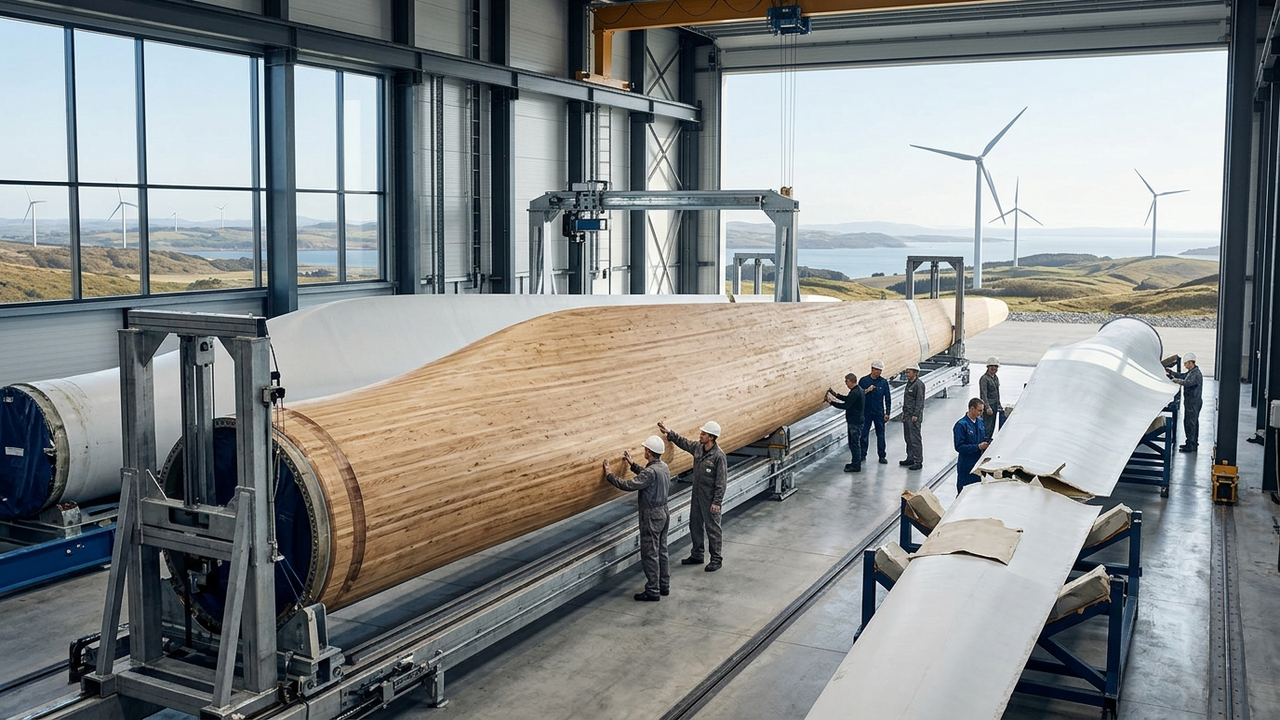
A report by BGR indicates that Europe is actively championing wooden wind turbine blades as a promising solution to the substantial fiberglass waste problem within the wind power sector. This initiative represents a greener alternative to traditional fiberglass composite blades, which are inherently difficult to recycle due to their thermoset resin matrix. Engineered wood blades, by contrast, offer straightforward recyclability or repurposing at end-of-life, potentially drastically diminishing the environmental footprint of wind energy across its entire lifecycle.
Technical & Product Details
Conventional wind turbine blades are predominantly constructed from composite materials, specifically fiberglass embedded in thermoset resins like epoxy. Though these blades deliver optimal strength-to-weight ratios, the thermoset resins form irreversible cross-linked chemical structures upon curing, rendering them exceptionally challenging to reprocess. Fiber recovery from fiberglass composites typically necessitates energy-intensive processes such as pyrolysis (thermal decomposition), which incur significant economic and environmental costs. In stark contrast, wooden blade technology presents several compelling advantages:
- Easier Recyclability: Blades fabricated from engineered wood, notably laminated timber or plywood, can be easily shredded or ground post-service. This shredded material can then be repurposed as chips for other wooden structures (e.g., building materials, furniture manufacturing) or efficiently utilized as fuel for biomass energy generation.
- Natural Material Utilization: Wood is a naturally renewable resource, and its production process generally entails a lower carbon footprint compared to fiberglass composite manufacturing. This not only bolsters the ‘green’ credentials of wind power but also actively contributes to overarching sustainability targets.
- Proven Technology: Wood boasts a venerable history as a high-performance structural material, evidenced in applications ranging from World War II aircraft (e.g., the de Havilland Mosquito) to ships and bridges. Contemporary engineering techniques effectively mitigate traditional vulnerabilities of wood, allowing it to robustly meet the stringent strength and durability requirements for modern wind turbine blades.
Numerous European companies and research institutions are already engaged in the development and testing of wooden blade prototypes. These prototypes are anticipated to deliver performance comparable to conventional blades while simultaneously providing substantial environmental advantages.
Strategic Significance & Outlook
Wooden wind turbine blades hold the potential to profoundly enhance the sustainability profile of the wind power industry. Moving forward, materials scientists and engineers will prioritize advancing the strength, reducing the weight, bolstering the durability, and scaling the production of wood composite materials for large-scale deployment. Concurrently, novel design methodologies and manufacturing techniques will be pioneered to optimize the efficient utilization of wood in wind turbine blade construction. This paradigm shift signifies a critical stride for wind power, moving beyond mere “zero emissions” towards a “zero waste” paradigm, thus paving the way for further reductions in the overall environmental footprint of renewable energy technologies. Ultimately, widespread adoption of wooden blades within the global wind power market is anticipated, significantly contributing to the establishment of a truly sustainable energy infrastructure.
Source: https://www.bgr.com/2245380/europe-wooden-wind-turbine-blades-prevent-fiberglass-pollution/
Get our weekly technology intelligence — free
Receive an infographic that lets you judge at a glance whether each field’s analysis report is worth reading.
Subscribe Free — Weekly Tech Intelligence
By subscribing, you’ll receive Troy-Technical’s weekly technology intelligence newsletter.
- Your email and selected fields are used only to deliver the newsletter.
- We never share your information with third parties.
- You can unsubscribe anytime via the link in each email.
See our Privacy Policy for details.
Takes about a minute · Unsubscribe anytime








Comments