Background
Wind power stands as a cornerstone of renewable energy; however, its rapid global expansion has unveiled a critical environmental challenge: the massive disposal of end-of-life wind turbine blades. Historically, these blades have been manufactured from complex composite materials typically combining thermoset resins (such as epoxy) with fiberglass. Once cured, thermoset resins form an irreversible, cross-linked molecular structure, rendering them extremely difficult to re-melt or reprocess. Consequently, the vast majority of decommissioned blades have been relegated to landfills or utilized for low-value energy recovery through incineration. This significant waste stream has cast a shadow on wind power’s true sustainability, prompting an urgent industry-wide pursuit of circular solutions.
Key Findings
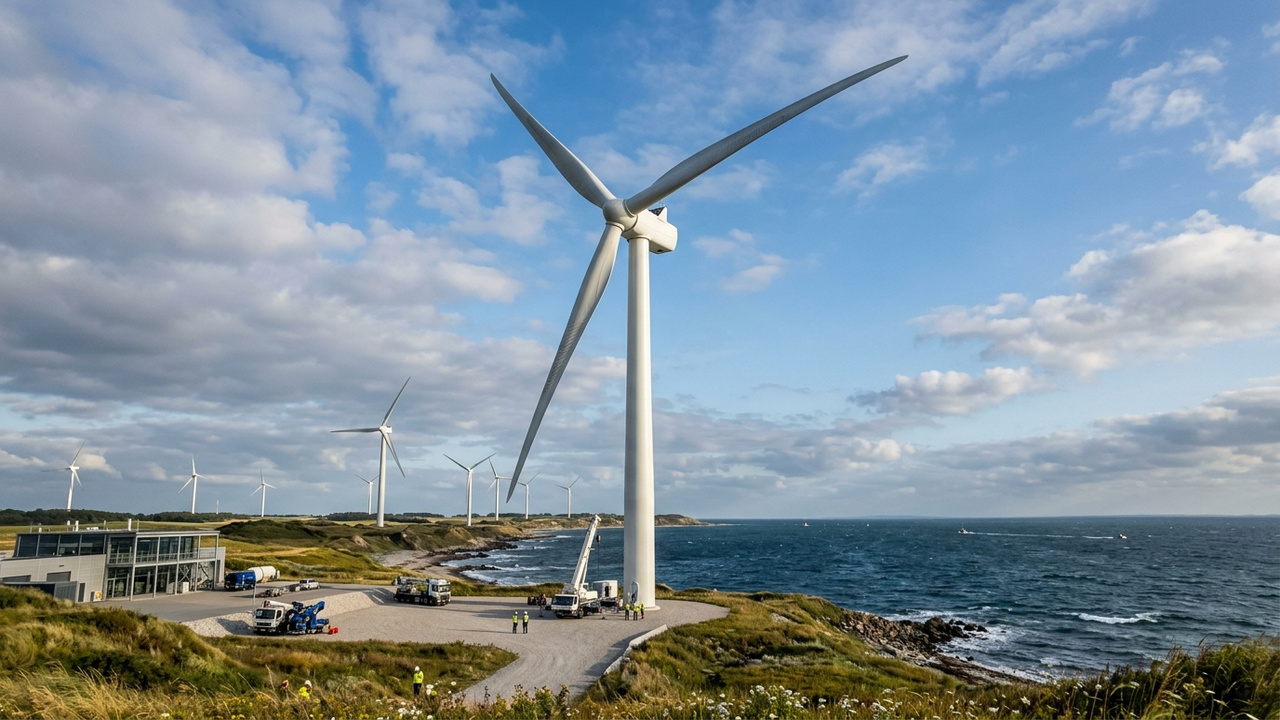
Germany has made a significant stride towards a circular economy in the renewable energy sector with the development of a 4-megawatt (MW) wind turbine that integrates fully recyclable materials into its key components. The core innovation resides in its “RecyclableBlade” technology, which fundamentally shifts from traditional thermoset resins to advanced thermoplastic composites for the turbine blades. This pioneering approach allows the substantial 62-meter-long blades to be melted and reshaped after their operational lifespan, facilitating their reuse in various applications while preserving material integrity. This provides a concrete, scalable solution to the persistent waste problem associated with conventional wind turbine blades, substantially elevating the sustainability profile of the wind power industry.
Technical & Product Details
In contrast to the irreversible nature of thermoset resins, the “RecyclableBlade” technology employs thermoplastic composites with distinct advantages:
- Thermoplastic Resin Matrix: Thermoplastics exhibit the unique property of softening when heated and solidifying upon cooling. This inherent characteristic allows for repeated melting and reshaping cycles, making the blade materials fully amenable to recycling and reprocessing.
- Efficient Material Recovery Process: At the end of their service life, the blades undergo a precisely controlled heating process designed to melt the thermoplastic resin. This enables the effective separation and recovery of high-value reinforcing materials, including glass and carbon fibers. The recovered fibers can then be efficiently reintegrated into the manufacturing of new turbine blades or repurposed for other high-value products across diverse sectors, such as automotive components, building materials, or furniture.
- Reduced Environmental Footprint: This closed-loop recycling process offers substantial environmental benefits. It significantly diminishes the reliance on virgin raw material extraction, drastically reduces landfill waste volumes, and lowers the associated CO2 emissions stemming from both manufacturing new materials and managing end-of-life disposal.
The successful manufacturing of 62-meter-long blades using thermoplastic composites, enabling full recyclability, represents a considerable engineering and technological achievement. This German initiative aligns with parallel efforts underway internationally, such as those in the Netherlands, which are also developing fully recyclable wind turbine blades utilizing Elium® thermoplastic resin, underscoring a growing global commitment to this vital sustainable solution.
Strategic Significance & Outlook
The introduction of recyclable wind turbine blades made from thermoplastic composites marks a pivotal turning point for the wind power industry. This transformative technology is set to dramatically reduce the environmental footprint across the entire lifecycle of wind turbines, thereby bolstering the social acceptance and long-term viability of wind power. Looking ahead, key objectives include the further scaling up of this technology, optimization of manufacturing costs to ensure economic competitiveness, and the development of international standardization protocols for material recovery and reuse. Furthermore, this innovative recyclable composite material technology holds significant promise for broader application across other renewable energy sectors, such as marine energy devices and tidal turbines, contributing to the realization of a comprehensive circular economy within green industries. This innovation stands as a prime example of how the convergence of advanced materials science and energy technology can drive the construction of a truly sustainable future.
Get our weekly technology intelligence — free
Receive an infographic that lets you judge at a glance whether each field’s analysis report is worth reading.
Subscribe Free — Weekly Tech Intelligence
By subscribing, you’ll receive Troy-Technical’s weekly technology intelligence newsletter.
- Your email and selected fields are used only to deliver the newsletter.
- We never share your information with third parties.
- You can unsubscribe anytime via the link in each email.
See our Privacy Policy for details.
Takes about a minute · Unsubscribe anytime






Comments