
Key Findings
INCURE INC. has published an article detailing the exceptional capabilities of UV resins in the 3D printing market. Compared to extruded filaments commonly used in Fused Deposition Modeling (FDM), UV resins offer significantly higher precision and detail resolution. This characteristic makes UV resins ideally suited for applications demanding intricate features and smooth surface finishes, such as master patterns, precision optical components, high-quality aesthetic models, and even intricate medical prototypes.
Technical / Product Details
UV resin 3D printing technology operates by selectively curing liquid photopolymer resin layer by layer using ultraviolet (UV) light. This process, leveraging Digital Light Projection (DLP), Stereolithography (SLA), or Liquid Crystal Display (LCD) technologies, achieves extremely fine resolutions and precise layer thickness control. Specifically, while FDM layer thicknesses are typically in the hundreds of micrometers, UV resin printers can commonly print with layer thicknesses ranging from 25 to 100 micrometers, and even finer resolutions are possible.
- High Precision and Detail: UV resins can reproduce fine text, sharp edges, thin walls, and complex geometries with remarkable accuracy. This is attributable to the photopolymerization process, which solidifies liquid resin at a point or across an entire layer, enabling higher resolution shape creation compared to FDM’s nozzle extrusion.
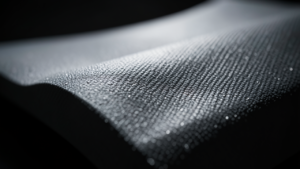
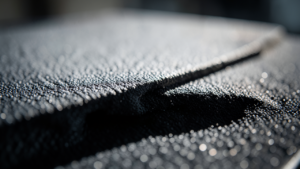
- Smooth Surface Finish: Cured parts exhibit exceptionally smooth surfaces with minimal visible layer lines. This reduces the need for extensive post-processing, saving both cost and time in finishing operations.
- Diverse Material Properties: INCURE INC. offers a wide range of specialized UV resins, from rigid, high-strength standard resins to rubber-like elastomeric resins, transparent resins, dental-grade resins, and engineering resins with heat resistance exceeding 200°C. These materials are engineered to meet specific mechanical, thermal, or optical requirements across various industries.
It is important to note that UV resins can be skin irritants, necessitating the use of appropriate personal protective equipment (gloves, goggles) and a well-ventilated working environment. Furthermore, a post-cure process using UV light is essential to fully develop the mechanical properties and heat resistance of the printed parts.
Background & Context
3D printing technology is rapidly evolving. While FDM has gained popularity for accessible prototyping and large-part manufacturing, there is a growing demand for more precise and functional components. UV resin printing plays a crucial role in sectors requiring tight tolerances and superior aesthetic quality, including jewelry, medical devices, automotive, aerospace, and consumer electronics. In these industries, the properties of UV resins are key to accelerating product development cycles and enhancing overall product quality, from initial prototyping to final part production.
Strategic Significance & Outlook
Advancements in UV resin technology are expected to continue on both material science and printer technology fronts. Future developments anticipate even faster print speeds, the emergence of resins with more diverse functionalities (e.g., biocompatibility, conductivity, ultra-high temperature resistance), and the proliferation of user-friendly and safer printing systems. Notably, the adoption of UV resins in production applications is projected to expand, enabling on-demand manufacturing of complex parts that would be prohibitively expensive or difficult to produce with traditional injection molding or CNC machining. This will accelerate innovation across a wide range of fields, from custom medical devices to high-performance industrial components.
Source: https://incurelab.com/wp/uv-resin-for-3d-printing-advantages-for-precision-detail
Get our weekly technology intelligence — free
Receive an infographic that lets you judge at a glance whether each field’s analysis report is worth reading.
Subscribe Free — Weekly Tech Intelligence
By subscribing, you’ll receive Troy-Technical’s weekly technology intelligence newsletter.
- Your email and selected fields are used only to deliver the newsletter.
- We never share your information with third parties.
- You can unsubscribe anytime via the link in each email.
See our Privacy Policy for details.
Takes about a minute · Unsubscribe anytime





Comments