Background and Industry Context
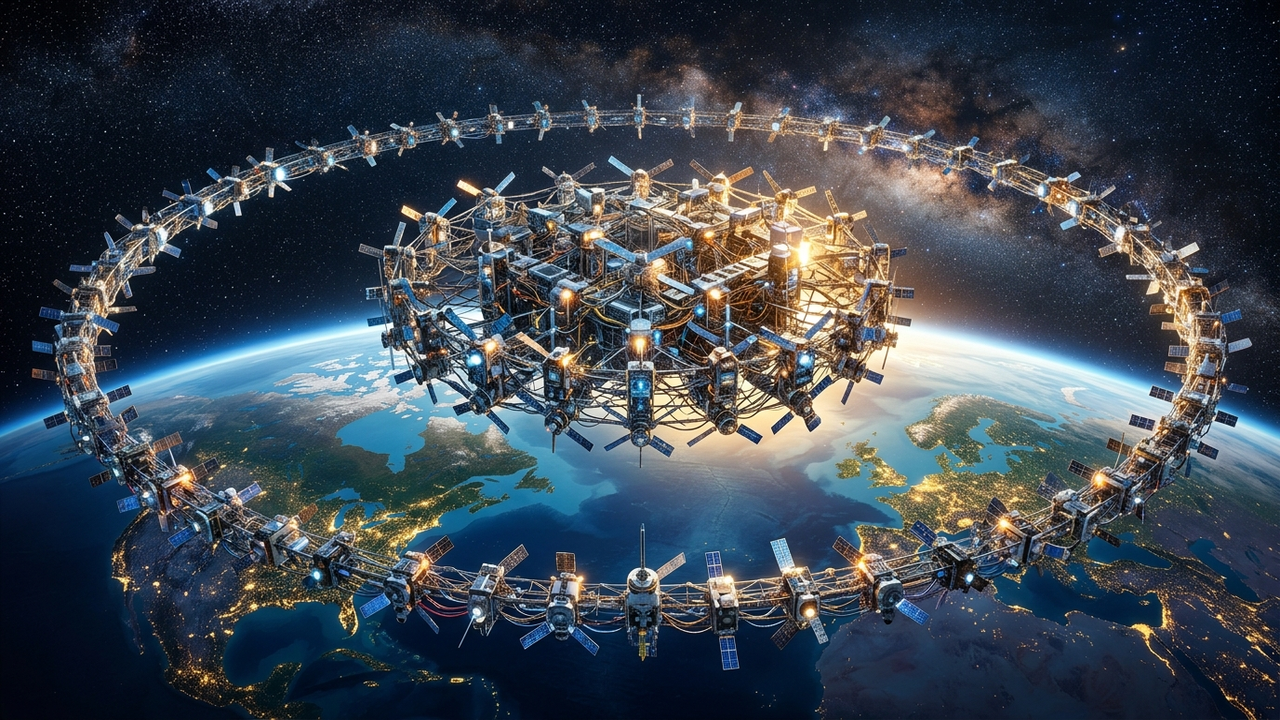
The exponential advancement of AI technologies has progressively strained conventional terrestrial data center infrastructure, imposing considerable challenges concerning power consumption, thermal management, and physical footprint. Simultaneously, the successful deployment of mega-constellations, most notably SpaceX’s Starlink, has validated the technical and economic viability of deploying numerous satellites at scale to establish global communication networks. This confluence of technological maturation and demand drivers renders the concept of extending significant computing resources into space a tangible reality, thereby inaugurating a new frontier for industrial and technological innovation. Furthermore, the inherent advantages of enhanced data sovereignty, ultra-low-latency processing capabilities, and reduced exposure to terrestrial geopolitical constraints present a compelling value proposition for national governments and multinational corporations.
Key Findings
SpaceX has reportedly submitted an application to regulatory authorities for the deployment of a monumental constellation comprising up to one million satellites, each engineered to serve as an orbital AI data center. This audacious initiative seeks to extend AI and machine learning computational frontiers into space, establishing a novel computing paradigm unburdened by the physical limitations inherent to terrestrial infrastructure.
Technical and Operational Details
- Constellation Scale and Functionality: The proposed satellites are slated for operation within low Earth orbit (LEO), at altitudes ranging from 500 km to 2000 km. Each satellite is conceived as a self-contained miniature data center, offering substantial computational throughput via onboard high-performance processors and specialized AI accelerators.
- Power and Communication: The constellation will harness solar energy for power. Inter-satellite and satellite-to-ground data exchange will be achieved through high-speed laser communication links. These optical links are designed to deliver superior bandwidth and significantly lower latency compared to conventional radio frequency (RF) communications, a critical factor for the real-time data processing demands of intensive AI workloads.
- AI and Machine Learning Applications: These orbital data centers are positioned to support a diverse array of computationally intensive AI and machine learning applications. Potential uses include real-time analysis of Earth observation data, sophisticated climate modeling, defense intelligence processing, and foundational infrastructure for future global edge AI computing. This architecture aims to tackle complex computational challenges that are either impractical or inefficient to resolve solely with terrestrial resources.
Strategic Significance and Outlook
Should regulatory approval be secured and this vision materialize, SpaceX’s audacious proposal holds the potential to fundamentally transform global computing infrastructure. This initiative promises to unlock novel value propositions, acting as a powerful complement to existing terrestrial data centers and significantly accelerating the trajectory of AI innovation. Regulatory bodies, industry competitors, and prospective clients are closely monitoring this development, as orbital AI data centers could emerge as an indispensable component of the burgeoning next-generation digital economy. Critical challenges for successful implementation will encompass the management of long-term operational expenditures, mitigation of space debris accumulation, and the establishment of robust cybersecurity protocols within a distributed, orbital network architecture.
Get our weekly technology intelligence — free
Receive an infographic that lets you judge at a glance whether each field’s analysis report is worth reading.
Subscribe Free — Weekly Tech Intelligence
By subscribing, you’ll receive Troy-Technical’s weekly technology intelligence newsletter.
- Your email and selected fields are used only to deliver the newsletter.
- We never share your information with third parties.
- You can unsubscribe anytime via the link in each email.
See our Privacy Policy for details.
Takes about a minute · Unsubscribe anytime






Comments