Key Findings
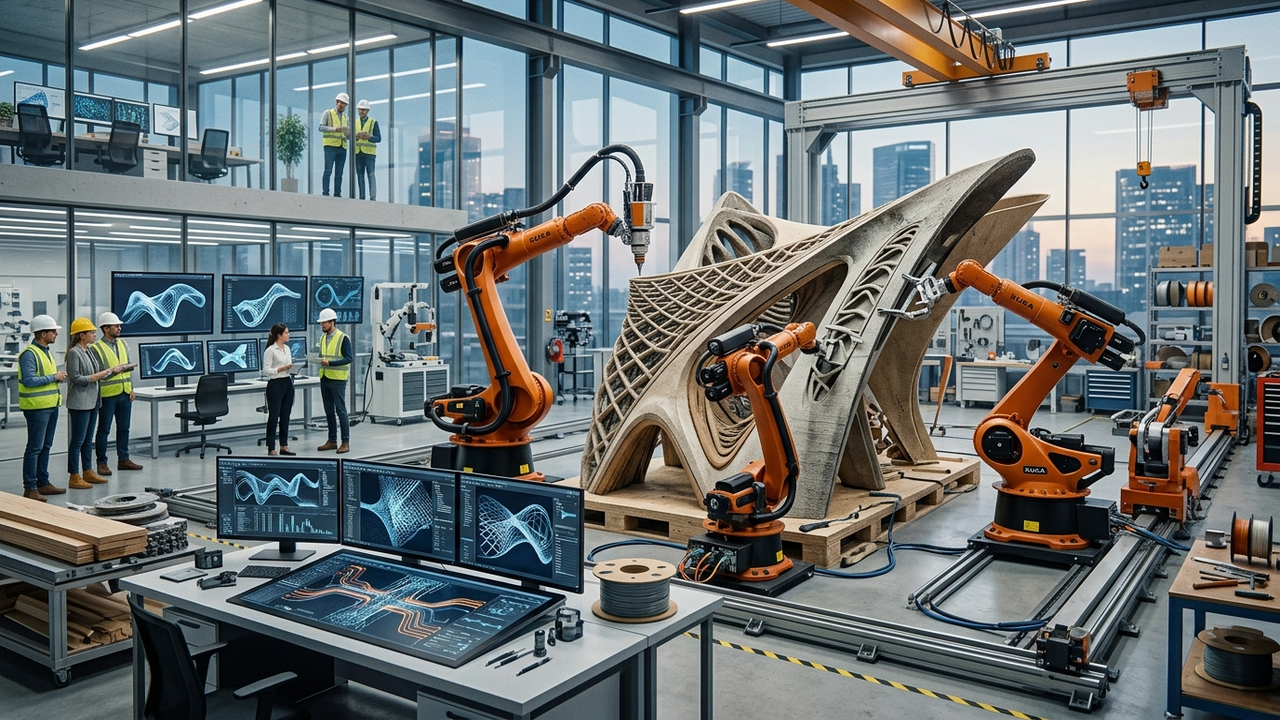
In modern architectural workflows, the integration of AI-driven generative design and robotic fabrication is functioning as a transformative approach, enabling the creation of lightweight and high-performance building components. This significantly enhances sustainability and manufacturing precision, seamlessly connecting the design-to-fabrication process and bringing new value to the construction industry.
Technical / Clinical Details
At the heart of this integrated workflow are generative algorithms, specifically ‘topology optimization.’ Given specific structural requirements (loads, spatial constraints, aesthetics) and material types (concrete, steel, etc.), AI automatically generates shapes that achieve maximum performance with minimal material usage. This allows for reducing the consumption of materials like concrete and steel compared to conventional designs, creating components that are lighter yet structurally robust (e.g., complexly shaped columns, beams, facade panels). The generated 3D design data is then directly transmitted to robotic fabrication cells, which are central to digital fabrication. Here, AI automatically generates G-code or robot-specific control scripts from the design environment, allowing robotic arms or 3D printers to manufacture physical components. This direct link ensures that design intent is precisely replicated during fabrication, minimizing human-induced errors and material waste. While traditional construction processes required numerous conversion steps and manual labor between design and manufacturing, this integration dramatically boosts productivity.
Background & Context
The construction industry faces multifaceted challenges, including rising material costs, a shortage of skilled labor, and the imperative to reduce environmental impact. Particularly, with construction activities contributing significantly to global CO2 emissions, the demand for sustainability is escalating. The integration of AI generative design and robotic fabrication offers a powerful solution to these challenges. By optimizing material usage, it reduces costs and minimizes waste, thereby lowering environmental footprints. Furthermore, its ability to manufacture complex geometries with high precision allows for combining enhanced building performance with greater design freedom. This represents a more advanced future for digital architecture, extending beyond the evolution of Building Information Modeling (BIM).
Strategic Significance & Outlook
The integration of AI generative design and robotic fabrication holds the potential to fundamentally transform methods of design, construction, and material utilization in the architectural industry. In the future, AI is expected to optimize the entire building lifecycle (design, construction, operation, demolition, recycling) and delve deeper into materials science, such as optimizing material selection and compounding. This will lead to the faster and more efficient development of energy-efficient buildings, construction materials contributing to a circular economy, and resilient structures capable of withstanding disasters. Key factors for the widespread adoption of this technology include the standardization of AI design tools and robotic systems, and the reskilling of architects and engineers.
Get our weekly technology intelligence — free
Receive an infographic that lets you judge at a glance whether each field’s analysis report is worth reading.
Subscribe Free — Weekly Tech Intelligence
By subscribing, you’ll receive Troy-Technical’s weekly technology intelligence newsletter.
- Your email and selected fields are used only to deliver the newsletter.
- We never share your information with third parties.
- You can unsubscribe anytime via the link in each email.
See our Privacy Policy for details.
Takes about a minute · Unsubscribe anytime







Comments