Key Findings
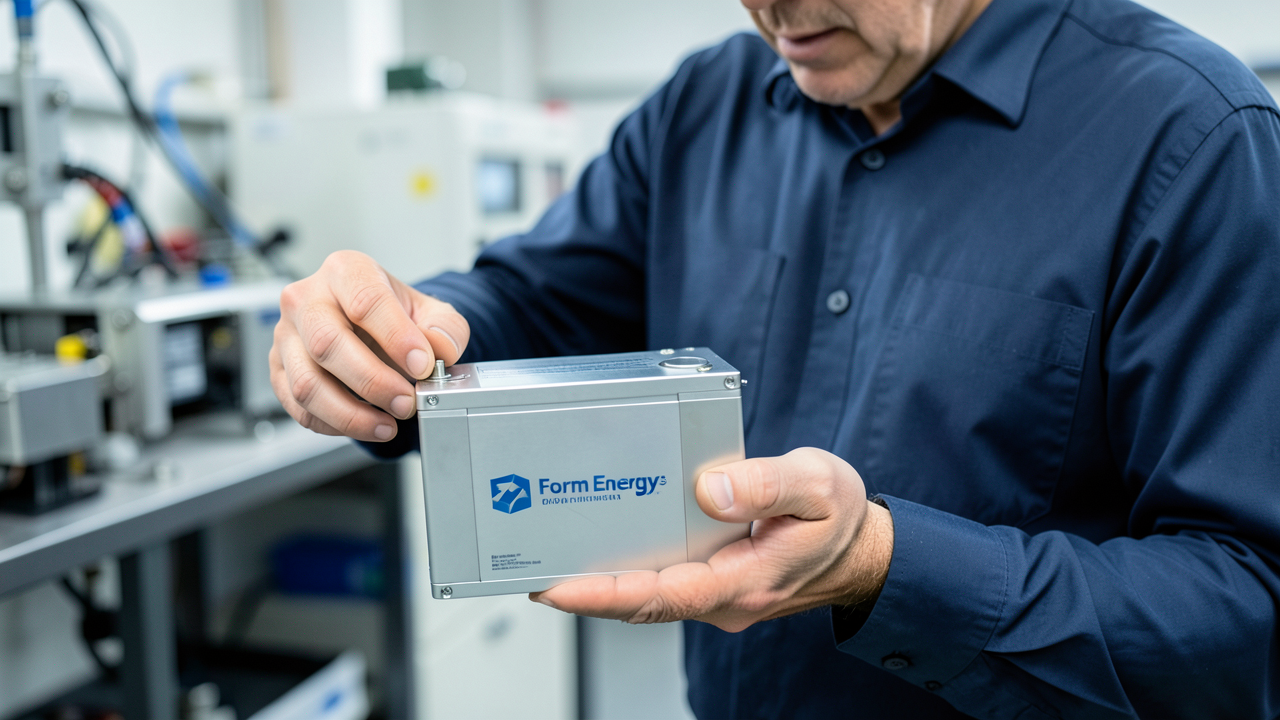
Form Energy is garnering significant market attention for its 100-hour iron-air battery technology, engineered for multi-day grid applications and utilizing abundant materials free from nickel and cobalt dependence. This technology plays a critical role in enhancing grid resilience within the long-duration energy storage (LDES) sector.
Technical Details
Form Energy’s iron-air batteries exclusively use iron, water, and air—materials that are abundant and inexpensive on Earth. This provides a significant advantage by decoupling from traditional battery supply chains, thereby minimizing exposure to rare metal supply risks and price fluctuations. These batteries offer discharge durations ranging from 24 to 100 hours, specifically designed for grid-scale LDES applications. They boast a very high theoretical energy density of 1,200 Wh/kg and a round-trip efficiency of 40-50%, engineered for over 20 years of operational life. Unlike lithium-ion batteries, which are typically designed for a few hours of storage, iron-air batteries offer a unique capability to manage power fluctuations over several days.
Background & Context
With the expanding adoption of renewable energy sources such as solar and wind, there is an increasing demand for long-duration energy storage solutions to absorb their variability and stabilize power grids. Conventional lithium-ion batteries are suitable for short-duration storage (a few hours) but face limitations and high costs when it comes to supporting grid needs during multi-day periods of low solar or wind output. LDES technologies like Form Energy’s iron-air battery aim to bridge this “grid storage gap.” Global interest in LDES is rising, with the UK government, for example, launching a £28 million “Ultra Long-Duration Energy Storage Challenge” in August 2026 to support technologies capable of over 100 hours of energy storage.
Strategic Significance & Outlook
Form Energy’s iron-air battery technology has the potential to revolutionize the long-duration energy storage market. The company has already announced a 10 MW/1,000 MWh project in Ireland with FuturEnergy Ireland in March 2026, marking Form Energy’s first international deployment. Additionally, Google and Xcel Energy agreed in February 2026 to add 300 MW of Form Energy iron-air battery storage in Minnesota to support data centers. These large-scale projects will significantly accelerate renewable energy integration and lay the groundwork for more affordable and stable clean energy supply. As further demonstration and commercialization of this technology progress, it is poised to become an indispensable component in the decarbonization and resilience enhancement of power grids.
Source: https://www.wenergystorage.com/news/top-10-battery-energy-storage-system-manufacturers-in-2026-2027/
Get our weekly technology intelligence — free
Receive an infographic that lets you judge at a glance whether each field’s analysis report is worth reading.
Subscribe Free — Weekly Tech Intelligence
By subscribing, you’ll receive Troy-Technical’s weekly technology intelligence newsletter.
- Your email and selected fields are used only to deliver the newsletter.
- We never share your information with third parties.
- You can unsubscribe anytime via the link in each email.
See our Privacy Policy for details.
Takes about a minute · Unsubscribe anytime




Comments