Key Findings
Graphene sensing chips are making significant strides towards commercial testing, with Paragraf launching its PMF2002 GFET (Graphene Field-Effect Transistor) Platform and Enterprise Reader for diverse applications such as water quality and biosensing. In parallel, Graphenea Semiconductor and Melexis have established a strategic collaboration to develop a GFET-on-CMOS platform aimed at advanced biosensing capabilities.
Technical / Clinical Details
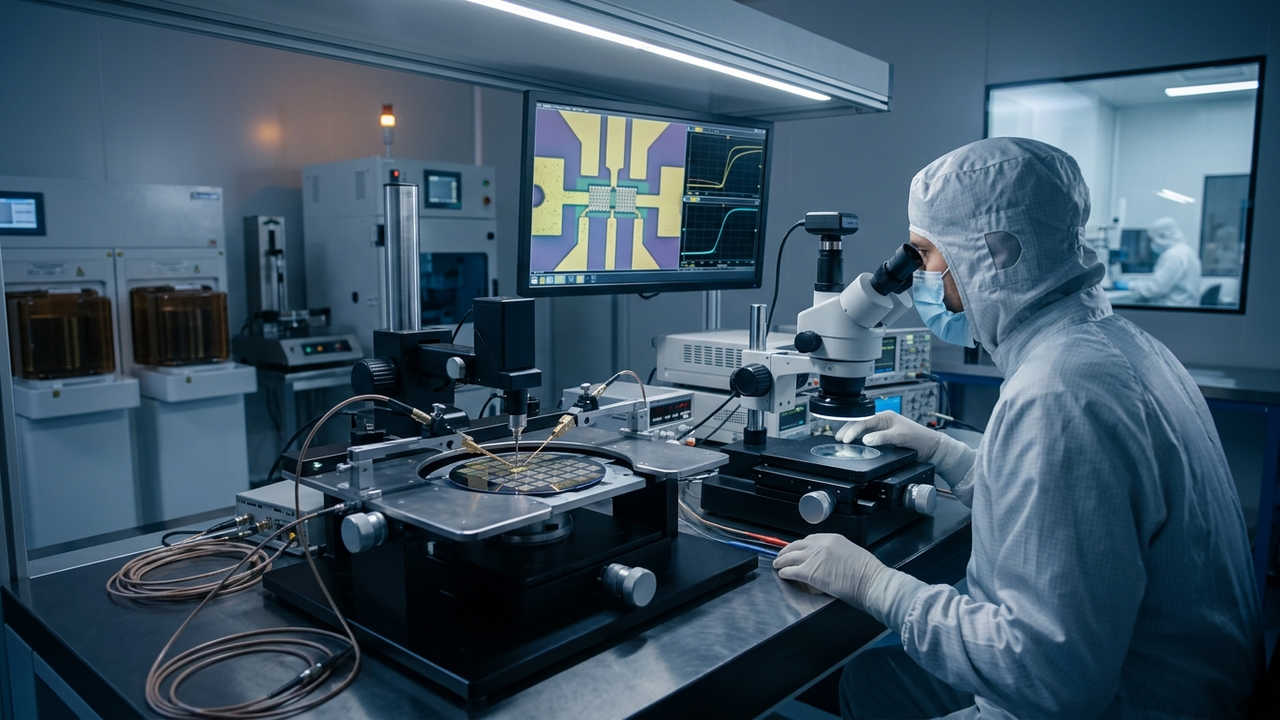
Paragraf’s PMF2002 GFET platform leverages graphene’s high sensitivity and specificity to enable the detection of extremely minute quantities of substances. This technology offers substantial benefits in fields requiring high-precision, real-time sensing, such as environmental monitoring and disease diagnostics. Meanwhile, the GFET-on-CMOS platform, a joint development by Graphenea Semiconductor and Melexis, integrates existing CMOS (Complementary Metal-Oxide-Semiconductor) manufacturing techniques with graphene technology. This fusion aims to achieve high-performance biosensors with both mass producibility and cost-efficiency. Advances in 2.5D packaging technology further support the integration of these chips into smaller, higher-performance devices.
Background & Context
Graphene, with its superior electrical and mechanical properties, has long been anticipated as a key enabler for next-generation sensing technologies. Recent advancements in manufacturing techniques and cost reductions have lowered the barriers to practical application. There is a strong demand for innovative sensing solutions in areas like environmental pollutant detection, rapid pathogen diagnosis, and biomarker monitoring for personalized medicine. The global graphene sensing chips market is projected to expand at a Compound Annual Growth Rate (CAGR) of 30.0% to reach USD 5,652.0 million by 2036, with graphene sensing chips playing a central role in this growth.
Strategic Significance & Outlook
The initiatives by leading companies such as Paragraf, Graphenea Semiconductor, and Melexis are laying the groundwork for widespread adoption of graphene sensing chips across various industries. As these platforms establish performance and reliability through commercial evaluations, innovation is expected to accelerate in diverse sectors including water treatment facilities, medical diagnostic equipment, food safety inspection, and smart agriculture. Further evolution and standardization of graphene technology will likely lead to the proliferation of smaller, more functional, and cost-effective sensing devices, making them indispensable components in our daily lives and industrial processes.
Source: https://www.openpr.com/news/4622163/graphene-sensing-chips-move-toward-commercial-testing-as-2-5d
Get our weekly technology intelligence — free
Receive an infographic that lets you judge at a glance whether each field’s analysis report is worth reading.
Subscribe Free — Weekly Tech Intelligence
By subscribing, you’ll receive Troy-Technical’s weekly technology intelligence newsletter.
- Your email and selected fields are used only to deliver the newsletter.
- We never share your information with third parties.
- You can unsubscribe anytime via the link in each email.
See our Privacy Policy for details.
Takes about a minute · Unsubscribe anytime









Comments