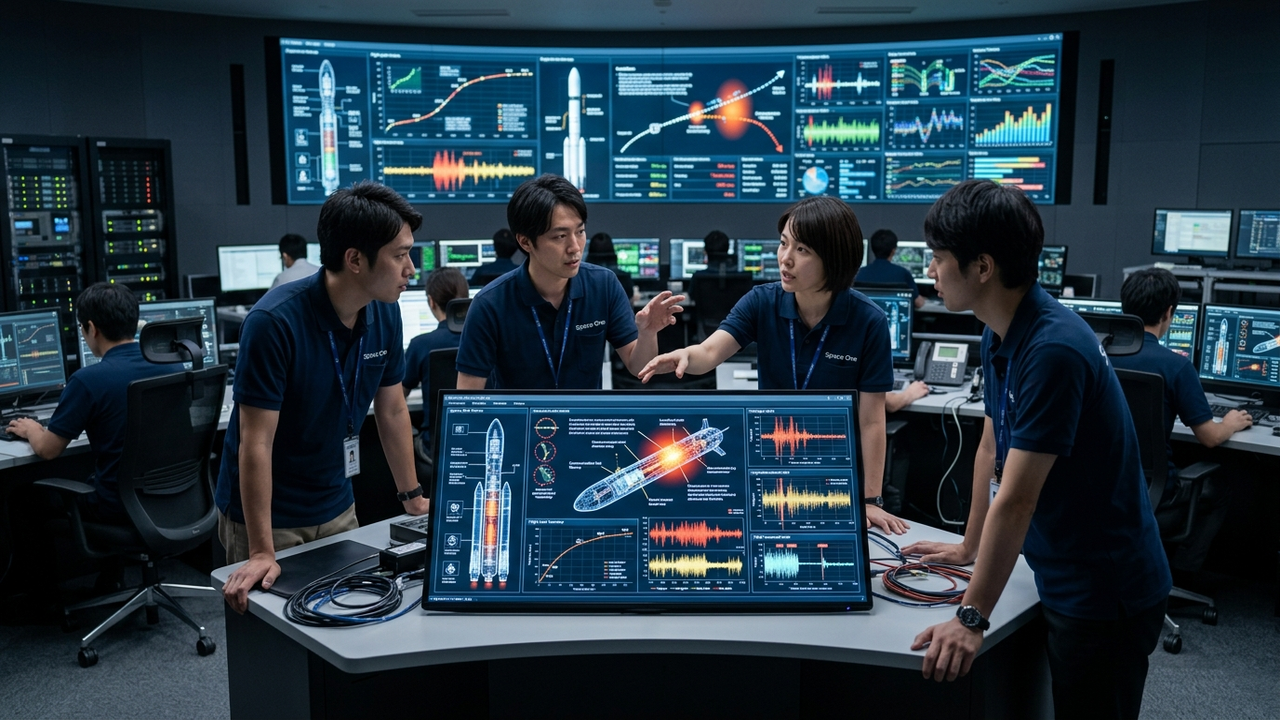
Key Findings: Space One Pinpoints Static Electricity as Cause for Kairos Rocket No. 3 Failure
Space One Co., a Tokyo-based space startup, has identified static electricity accumulation within its Kairos rocket No. 3 as the probable cause for its failure during launch in March 2026. The company concluded that electrical noise from static discharge temporarily interrupted communication between onboard devices, leading the safety system to erroneously trigger the rocket’s self-destruction. This precise identification of the failure mechanism is a crucial step towards enhancing reliability in future rocket development.
Technical Details: Static Electricity Interference and Safety System Misactivation
Investigations into the Kairos rocket incident revealed that an abnormal buildup of static electricity in specific internal sections of the rocket during launch generated electromagnetic interference (EMI). This EMI disrupted data communication between critical avionics systems responsible for flight control. The Autonomous Flight Safety System (AFSS) on board is designed to destroy the rocket if it deviates from its flight path or detects a system anomaly, preventing harm to ground populations. In this case, the communication disruption due to static electricity was misinterpreted by the AFSS as a ‘system anomaly,’ resulting in the erroneous execution of the self-destruct command. To address this, Space One plans to implement new materials that suppress static electricity generation within the rocket structure and revise the AFSS’s sensitivity settings and malfunction prevention logic.
Background & Industry Context: Small Rocket Market Competition and Reliability Concerns
The global small satellite launch market is intensely competitive, driven by increasing demand for compact satellites. Space One aims to be the first private Japanese company to conduct a commercial satellite launch with its Kairos rocket, and this failure posed a significant challenge to that goal. However, the swift identification of the cause and announcement of countermeasures demonstrate a commitment to safety standards and reliability improvement within the space industry. Similar static electricity issues have been reported in other rocket launches previously, underscoring the critical importance of electromagnetic compatibility (EMC) and electrostatic discharge (ESD) measures in the design phase, particularly for lightweight rockets that heavily utilize composite materials.
Future Outlook: Preventive Measures and Impact on Japanese Space Development
Space One will proceed with modifications to the Kairos rocket, incorporating new design changes including static electricity countermeasures, and will seek the next launch opportunity. This experience will serve as a valuable lesson not only for the company but also for other Japanese space development entities, contributing to enhancing the robustness of rocket systems and strengthening safety standards. Rapid learning from launch failures and subsequent technical improvements are essential for Japan’s space industry to maintain international competitiveness and establish itself as a reliable space transportation service provider. A successful re-launch would be a major confidence booster for the Japanese commercial space sector.
Source: https://japannews.yomiuri.co.jp/science-nature/technology/20260907-347367/
Get our weekly technology intelligence — free
Receive an infographic that lets you judge at a glance whether each field’s analysis report is worth reading.
Subscribe Free — Weekly Tech Intelligence
By subscribing, you’ll receive Troy-Technical’s weekly technology intelligence newsletter.
- Your email and selected fields are used only to deliver the newsletter.
- We never share your information with third parties.
- You can unsubscribe anytime via the link in each email.
See our Privacy Policy for details.
Takes about a minute · Unsubscribe anytime





Comments