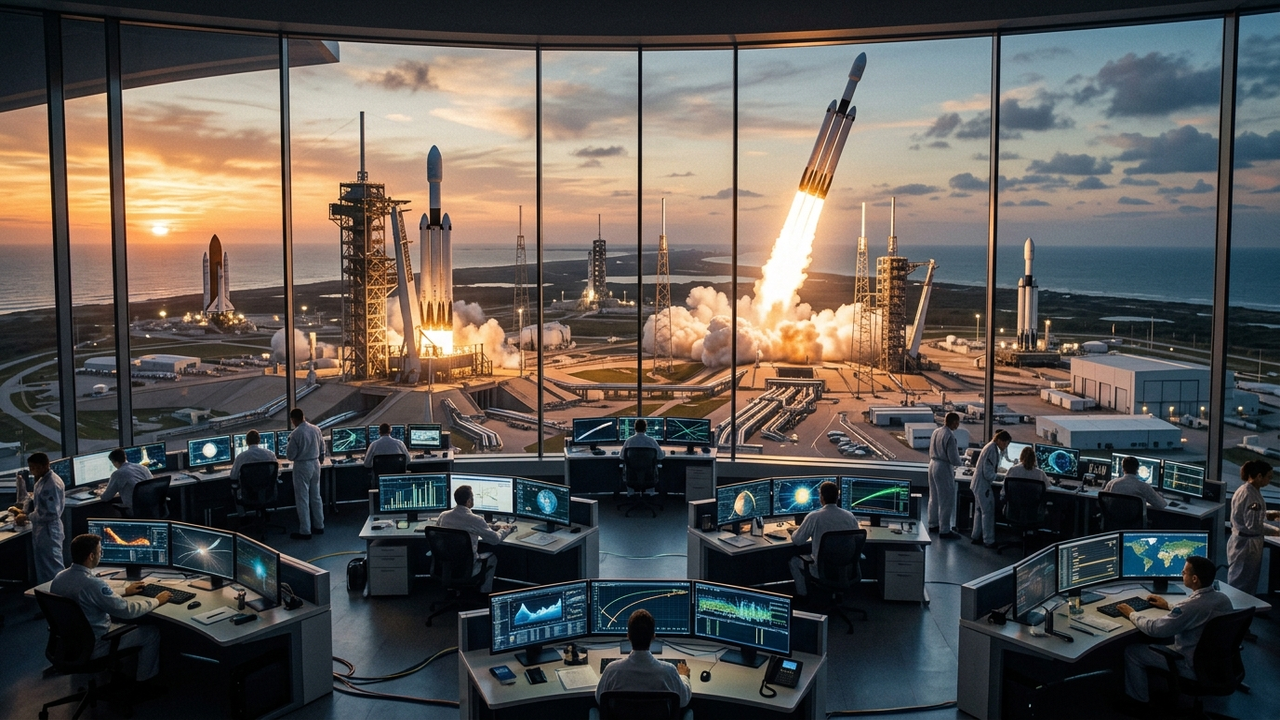
Key Findings: Trump Administration Unveils National Space Transportation Policy Targeting Over 1,000 Annual Launches/Reentries by 2030
On August 20, 2026, President Donald Trump announced the National Space Transportation Policy (NSPM-17), establishing a comprehensive new federal policy framework for U.S. space transportation. The cornerstone of this policy is the highly ambitious national goal of supporting over 1,000 launches and reentries annually by 2030. This is a strategic move designed to accelerate the explosive growth of the U.S. commercial space industry and solidify its leadership in the global space race.
Policy Details: Specific Directives for Federal Agencies and Ambitious Goals
NSPM-17 issues specific directives to multiple federal agencies, aiming to foster commercial space innovation and strengthen infrastructure:
- Expand Launch and Reentry Capabilities: While the U.S. accounted for 217 commercial space launches globally in 2025, the policy directs an increase in capacity to support the national goal of 10,000 FAA-licensed launches and reentries annually by 2035.
- Increase Commercial Access to Federal Ranges: Expand access for commercial entities to existing federal launch ranges, such as Kennedy Space Center and Vandenberg Space Force Base, to improve operational efficiency and flexibility.
- Modernize Related Infrastructure: Promote the modernization and upgrade of space transportation infrastructure, including launch facilities, control systems, and tracking networks.
- Strengthen the Domestic Space Transportation Industrial Base: Enhance the domestic capability for developing and manufacturing rockets, spacecraft, and related technologies through R&D investment, supply chain diversification, and workforce development.
- Increase Utilization of Commercial Transportation Services for Federal Missions: Encourage federal agencies like NASA and the Department of Defense to actively utilize commercial transport services from private companies such as SpaceX, Blue Origin, and Stoke Space, thereby fostering cost efficiency and innovation.
Background & Industry Context: Rise of Commercial Space and Global Competition
The advent of private companies like SpaceX has dramatically reduced space transportation costs and increased launch frequency. This has invigorated new commercial space activities, including the deployment of small satellite constellations, space tourism, and in-orbit manufacturing. With countries like China and those in Europe also accelerating their investments in space development, and China’s commercial space sector pursuing IPOs, global competition is intensifying. For the U.S. to maintain its advantage in this domain, clear government policy guidance and strengthened collaboration with the private sector are indispensable. NSPM-17 is thus designed to maximize the growth of the entire U.S. space economy and its national security interests in this global context.
Future Outlook: Explosive Growth of Space Economy and New Regulatory Framework
This National Space Transportation Policy is poised to be a major driver of explosive growth for the U.S. space economy in the coming years. The target of over 1,000 annual launches and reentries will stimulate massive investments and job creation across the entire space industry supply chain, including rocket manufacturing, satellite development, ground support services, and data analysis. Regulatory bodies like the FAA will be compelled to develop more efficient and adaptive regulatory frameworks to accommodate this surge in activity. This policy positions space as a new commercial frontier, a crucial step in cementing U.S. leadership in expanding humanity’s domain beyond Earth.
Get our weekly technology intelligence — free
Receive an infographic that lets you judge at a glance whether each field’s analysis report is worth reading.
Subscribe Free — Weekly Tech Intelligence
By subscribing, you’ll receive Troy-Technical’s weekly technology intelligence newsletter.
- Your email and selected fields are used only to deliver the newsletter.
- We never share your information with third parties.
- You can unsubscribe anytime via the link in each email.
See our Privacy Policy for details.
Takes about a minute · Unsubscribe anytime








Comments