Key Findings
Recent academic research details groundbreaking advancements in ammonia decomposition for hydrogen production, particularly in catalyst design and system integration. The development of highly efficient, low-temperature ruthenium-free (Ru-free) strained heterogeneous catalysts and sophisticated membrane reactors with integrated hydrogen separation functions offers a pathway to significantly enhance the efficiency and purity of hydrogen generation.
Technical / Clinical Details
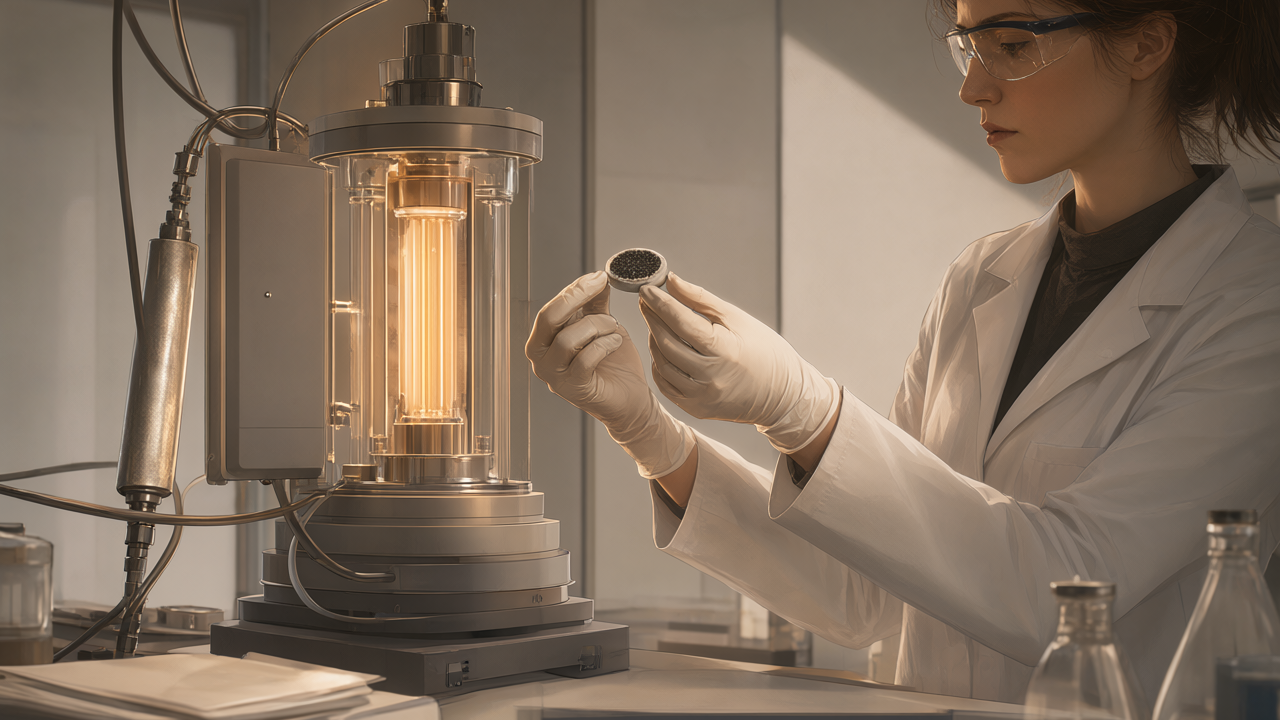
The core of this research revolves around the efficient conversion of ammonia (NH3) into hydrogen (H2). Ammonia is recognized as a superior hydrogen carrier due to its ease of liquefaction, high hydrogen mass fraction, and the availability of established global transport and storage infrastructure. Unlike conventional ammonia cracking methods that demand high temperatures, the newly developed Ru-free strained heterogeneous catalysts enable reactions at much lower temperatures, thereby reducing energy consumption. Furthermore, integrating H2 separation membranes directly into the reactor allows for the simultaneous separation of high-purity hydrogen during the reaction. This integration boosts overall conversion efficiency and minimizes downstream purification costs, paving the way for more economically viable hydrogen production.
Background & Context
As the global transition to clean energy accelerates, hydrogen is emerging as a critical energy carrier for achieving a decarbonized society. However, challenges persist in the production, transport, and storage of hydrogen. Utilizing ammonia as a hydrogen carrier presents a promising solution to these challenges. The integration of renewable energy sources with advanced ammonia decomposition technologies is increasingly seen as a viable path to large-scale, clean, and cost-competitive hydrogen production. This area of research is attracting significant interest from governments and industries worldwide, fueling intense competition in technological development.
Strategic Significance & Outlook
The advancements outlined in this study are poised to significantly accelerate the realization of an ammonia-based hydrogen economy. The combination of low-temperature, efficient catalytic reactions and integrated membrane reactors contributes to system miniaturization, enhanced efficiency, and cost reduction, thereby promoting broader adoption of hydrogen across various industries and regions. There is particular anticipation for its application in green ammonia production in regions abundant with renewable energy, and for its role in decentralized hydrogen supply systems. As these technologies mature, hydrogen is increasingly likely to establish itself as a primary sustainable energy source in the future global energy landscape.
Source: https://irispublishers.com/icbc/pdf/ICBC.MS.ID.000572.pdf
Get our weekly technology intelligence — free
Receive an infographic that lets you judge at a glance whether each field’s analysis report is worth reading.
Subscribe Free — Weekly Tech Intelligence
By subscribing, you’ll receive Troy-Technical’s weekly technology intelligence newsletter.
- Your email and selected fields are used only to deliver the newsletter.
- We never share your information with third parties.
- You can unsubscribe anytime via the link in each email.
See our Privacy Policy for details.
Takes about a minute · Unsubscribe anytime





Comments