Key Findings
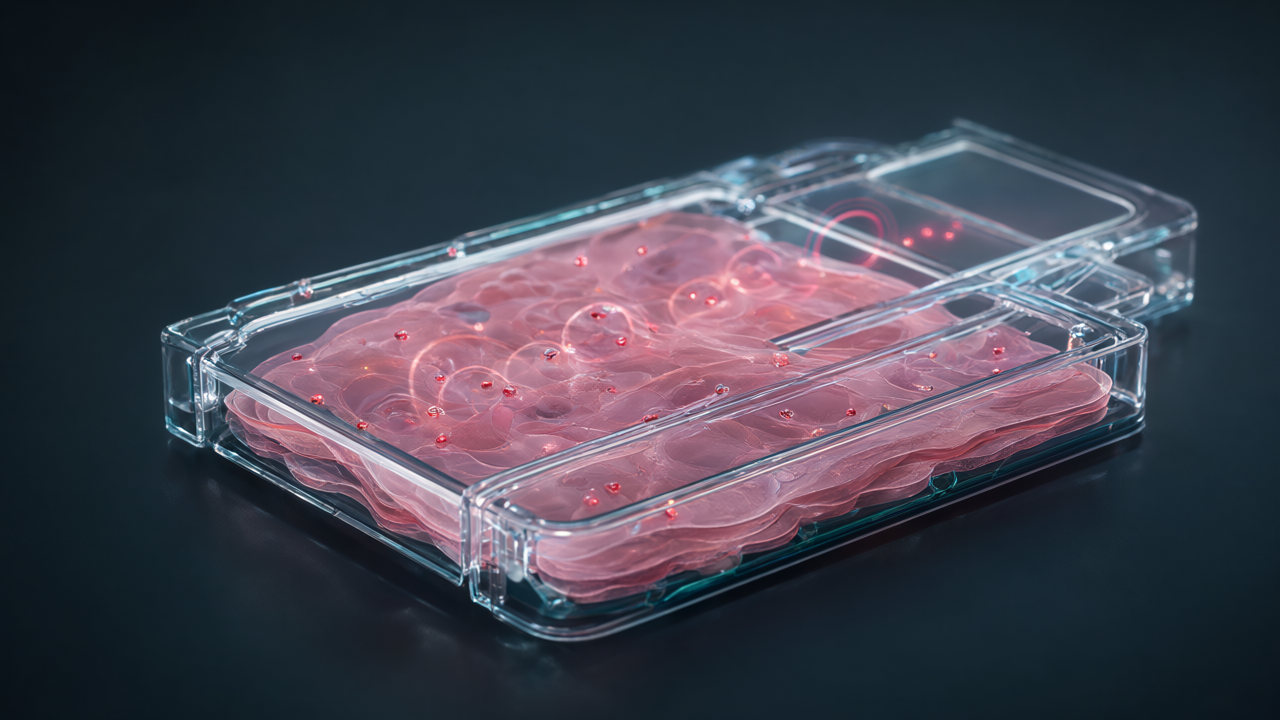
The integration of quantum nanosensors into microfluidic organ-on-a-chip (OoC) platforms holds significant potential for revolutionizing high-resolution, real-time biomedical monitoring. This technology is poised to overcome the inherent limitations of conventional OoC biosensing, particularly intermittent sampling and perturbation of cellular processes by fluorescent labeling, by non-invasively detecting biological changes at the nanoscale.
Technical / Clinical Details
- Overcoming Conventional OoC Sensing Limitations: Traditional biosensing strategies on organ-on-a-chip platforms often rely on intermittent sampling or fluorescent labeling, which can either perturb natural cellular physiological processes or provide only low-resolution data. Quantum nanosensors fundamentally address these limitations.
- Quantum Sensing Mechanism: Quantum sensors leverage quantum mechanical properties, such as electron spin states or quantum coherence, to detect extremely subtle physical changes. This enables non-invasive and highly precise capture of nanoscale magnetic signals, metabolic shifts, and thermal changes occurring within and around cells. For example, quantum defects like nitrogen-vacancy (NV) centers in diamond are highly sensitive to minute changes in external magnetic fields and can be used to detect changes in metabolic activity at the single-cell level.
- Non-Invasive Real-Time Monitoring: Since invasive procedures like fluorescent labeling are not required, real-time monitoring can be performed over extended periods without compromising the native function of biomolecules or cell viability. This allows for the evaluation of dynamic cellular responses and drug reactions under more physiologically relevant conditions.
- High-Resolution Data Acquisition: Quantum nanosensors provide data with spatial and temporal resolutions previously inaccessible by conventional techniques. This enables a more detailed and accurate understanding of the functions of tissues and organs mimicked on organ-on-a-chip platforms.
Background & Context
Organ-on-a-chip technology has garnered considerable excitement in drug development and disease research as an alternative to animal testing and a tool for more accurately modeling human physiological responses. However, the ability to monitor the complex biological processes occurring on OoCs in real-time and with high detail has remained a significant challenge. The introduction of quantum nanosensors addresses this long-standing need in the field, promising to accelerate the next generation of drug screening, toxicity testing, and personalized medicine research.
Strategic Significance & Outlook
The integration of quantum nanosensors and organ-on-a-chip technology represents a critical frontier in future research. With further technological maturation, the application of quantum sensing will expand to diverse OoC models, enabling faithful reproduction and monitoring of more complex physiological systems. This is expected to dramatically improve the elucidation of intractable disease mechanisms, the discovery of novel therapeutic agents, and the accuracy of predicting individual patient responses. In the future, these quantum-sensing-enabled organ-on-a-chip platforms have the potential to become standard tools for precision medicine and personalized drug development, revolutionizing medical research.
Source: https://www.azonano.com/news.aspx?newsID=41838
Get our weekly technology intelligence — free
Receive an infographic that lets you judge at a glance whether each field’s analysis report is worth reading.
Subscribe Free — Weekly Tech Intelligence
By subscribing, you’ll receive Troy-Technical’s weekly technology intelligence newsletter.
- Your email and selected fields are used only to deliver the newsletter.
- We never share your information with third parties.
- You can unsubscribe anytime via the link in each email.
See our Privacy Policy for details.
Takes about a minute · Unsubscribe anytime




Comments