


Key Findings
The research team achieved a peak anodic current density of 9.38 milliamperes per square centimeter using a 15-bilayer MXene-palladium electrode. This performance is more than three times the maximum previously reported for graphene-oxide-supported palladium multilayers at 6 bilayers. While the geometric current density increased with the number of layers up to 15, mass activity—normalized to palladium mass—was highest at a single bilayer and declined as the film thickened, indicating that gains resulted from increased accessible palladium rather than improved per-site activity.
Technical Details
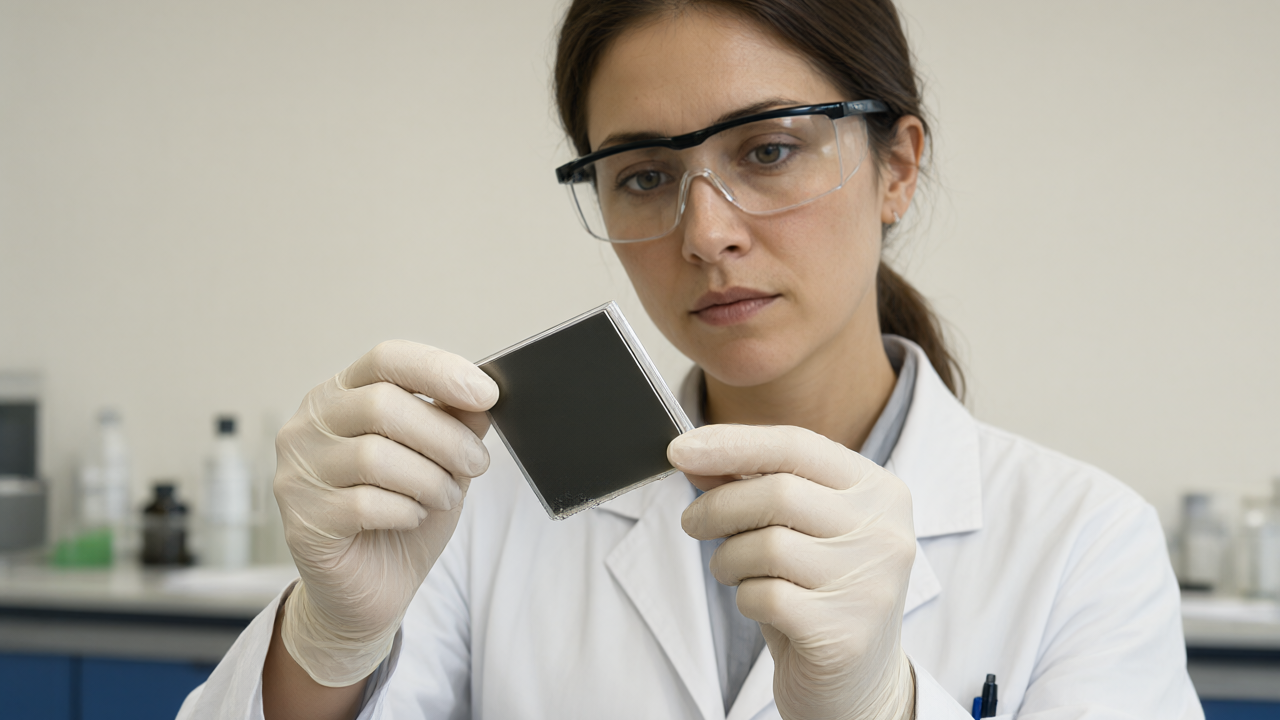
The electrodes were fabricated via electrostatic layer-by-layer assembly, alternating negatively charged MXene nanosheets (-35.5 millivolts) with positively charged palladium nanoparticles stabilized by DMAP ligands (+35.0 millivolts). Quartz crystal microbalance measurements showed each MXene layer added 5.72 micrograms per square centimeter and each palladium layer added 2.84 micrograms. Film thicknesses ranged from 50.5 nanometers (5 bilayers) to 107.4 nanometers (20 bilayers). In tests using 0.1 M potassium hydroxide and 1.0 M methanol, the 20-bilayer film showed a decrease in current density and electrochemical surface area due to diffusion constraints.
Background & Context
Traditional hydrogen production via steam methane reforming or coal gasification releases substantial carbon dioxide. While electrochemical water splitting is greener, the sluggish kinetics of the oxygen evolution reaction (OER) typically push practical operation above 1.5 volts, despite a theoretical cell voltage of 1.23 volts. This study replaces OER with the methanol oxidation reaction (MOR), which offers lower oxidation potential and faster kinetics. MXene was selected over graphene oxide due to its metallic conductivity and hydrophilic surface terminations.
Significance & Outlook
The system demonstrated respectable durability, retaining 74.4 percent of its initial current density after 100 cycles. A five-hour chronoamperometry test at 0.2 volts showed a stable current between 0.014 and 0.016 milliamperes. XPS analysis revealed that the titanium dioxide peak disappeared after activation, suggesting the MXene functions primarily as a conductive support and electron transport mediator rather than a primary catalyst for MOR.
Source: https://bioengineer.org/layered-mxene-palladium-electrodes-split-methanol-to-make-hydrogen-cheaply/
Get our weekly technology intelligence — free
Receive an infographic that lets you judge at a glance whether each field’s analysis report is worth reading.
Subscribe Free — Weekly Tech Intelligence
By subscribing, you’ll receive Troy-Technical’s weekly technology intelligence newsletter.
- Your email and selected fields are used only to deliver the newsletter.
- We never share your information with third parties.
- You can unsubscribe anytime via the link in each email.
See our Privacy Policy for details.
Takes about a minute · Unsubscribe anytime