


Key Findings
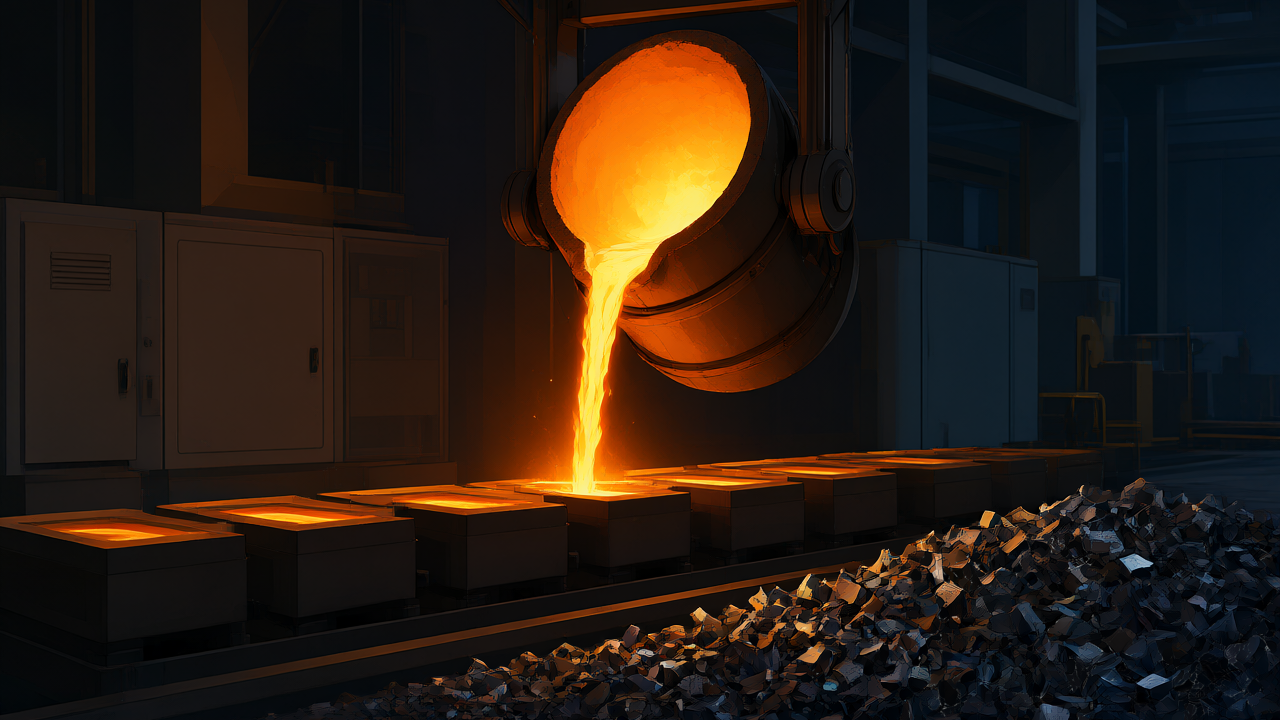
Researchers have successfully utilized machine learning to develop alloys from scrap metal that are insensitive to composition variations and benefit from the presence of contaminants. In tests using ductile cast iron (nodular cast iron), 14 out of 17 AI-generated alloy variants showed superior properties. Specifically, tensile strength increased by up to 15.2% and elongation at break rose by as much as 73.2% compared to earlier recycled materials. Additionally, production costs were approximately 8% lower than conventional processes that mix scrap with primary iron.
Technical Details
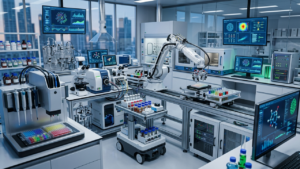
The development process employs a multi-stage AI workflow:
- Candidate Generation: An algorithm generates new alloy candidates by varying parameters within set limits, including chemical composition, heat treatment temperature, and duration.
- Property Prediction: Artificial neural networks predict the tensile strength and elongation at break for each candidate to find an optimal balance between strength and ductility.
- Verification: A second model, trained on a larger dataset of material properties and compositions, validates the selected candidates.
- Iterative Optimization: Experimental results from the most promising materials are fed back into the database to refine the prediction model for subsequent rounds.
Background & Context
Conventional metal production accounts for 10% of global energy consumption and roughly 8% of all greenhouse gas emissions. While recycling scrap metal can reduce environmental impact by up to 95%, contaminants typically lower the quality of new alloys. Traditionally, these contaminants are diluted by adding primary metals, which increases CO2 emissions and energy requirements.
Significance & Outlook
By treating contaminants as opportunities rather than obstacles, this method enhances the environmental benefits of recycling. The research was a collaboration between the Max Planck Institute for Sustainable Materials, Shanghai Jiao Tong University, City University of Hong Kong, East China University of Science and Technology, and Central South University. The findings were published in Science Advances. The team now plans to extend this AI-assisted methodology to other materials, including recycled aluminum, copper alloys, and steels.
Source: https://www.heise.de/en/news/Researchers-use-AI-to-make-alloys-from-scrap-metal-11512823.html
Get our weekly technology intelligence — free
Receive an infographic that lets you judge at a glance whether each field’s analysis report is worth reading.
Subscribe Free — Weekly Tech Intelligence
By subscribing, you’ll receive Troy-Technical’s weekly technology intelligence newsletter.
- Your email and selected fields are used only to deliver the newsletter.
- We never share your information with third parties.
- You can unsubscribe anytime via the link in each email.
See our Privacy Policy for details.
Takes about a minute · Unsubscribe anytime