
Key Findings
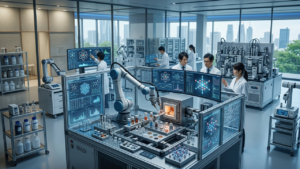
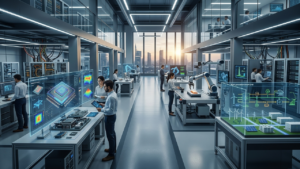
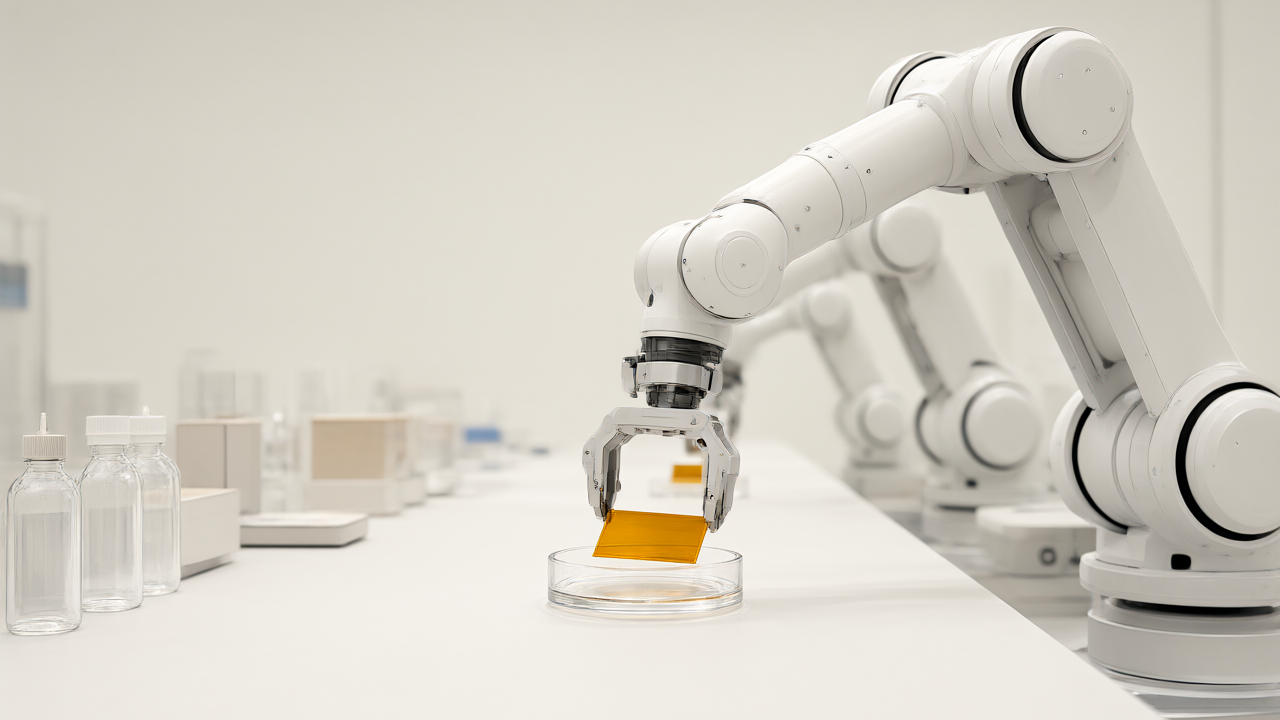
Asahi Kasei announced on November 5, 2026, the establishment of a “Smart Laboratory” platform designed to autonomously execute the entire material development process. Scheduled to begin operations in January 2027, the facility focuses on the development of Pymel, a photosensitive insulating material for semiconductors. By automating the blending of multiple raw materials and the subsequent processing and performance evaluation stages, the company expects to increase the volume of development experiments—defined as the number of compositions evaluated over a specific period—by approximately four times compared to conventional methods.
Technical Details
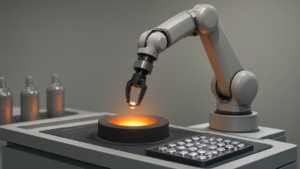
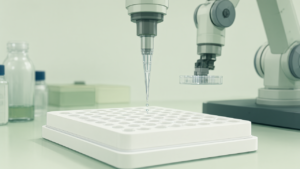
The Smart Laboratory functions as a single autonomous experimental system that manages a closed loop of material design, experimentation, evaluation, and learning. The system automates the following sequence:
- Experimental planning and scheduling.
- Raw material blending and sample preparation.
- Processing and evaluation based on semiconductor package manufacturing processes.
- Data feedback for learning and analysis to propose the next set of compositions and conditions.
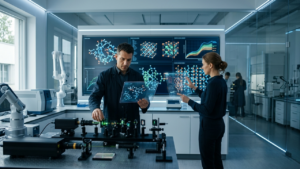
This autonomous cycle is integrated with a data infrastructure that leverages Materials Informatics (MI). By combining vast amounts of existing Pymel experimental data with public data, simulation, and theoretical science, the system identifies new compositions that may have been overlooked by traditional human-led research.
Background and Context
The demand for interlayer insulating films is growing at an average annual rate of approximately 8%, a trend expected to continue until around 2030. However, the rise of generative AI has increased the technical difficulty of advanced semiconductors, requiring materials to balance multiple high-level performance metrics, such as fine processing, shape stability, high reliability, and high resolution. Asahi Kasei has positioned its electronics business as a “priority growth” sector within its “Medium-Term Management Plan 2027 〜Trailblaze Together〜.”
Significance and Outlook
The transition to an AI-driven autonomous system allows Asahi Kasei to move beyond researcher experience to explore a wider range of possibilities more efficiently. The company intends to accumulate technical expertise from the Pymel project to expand this autonomous experimental approach to other electronic materials and, eventually, other material domains.
Source: https://monoist.itmedia.co.jp/mn/articles/2611/06/news014.html
Get our weekly technology intelligence — free
Receive an infographic that lets you judge at a glance whether each field’s analysis report is worth reading.
Subscribe Free — Weekly Tech Intelligence
By subscribing, you’ll receive Troy-Technical’s weekly technology intelligence newsletter.
- Your email and selected fields are used only to deliver the newsletter.
- We never share your information with third parties.
- You can unsubscribe anytime via the link in each email.
See our Privacy Policy for details.
Takes about a minute · Unsubscribe anytime