Key Findings
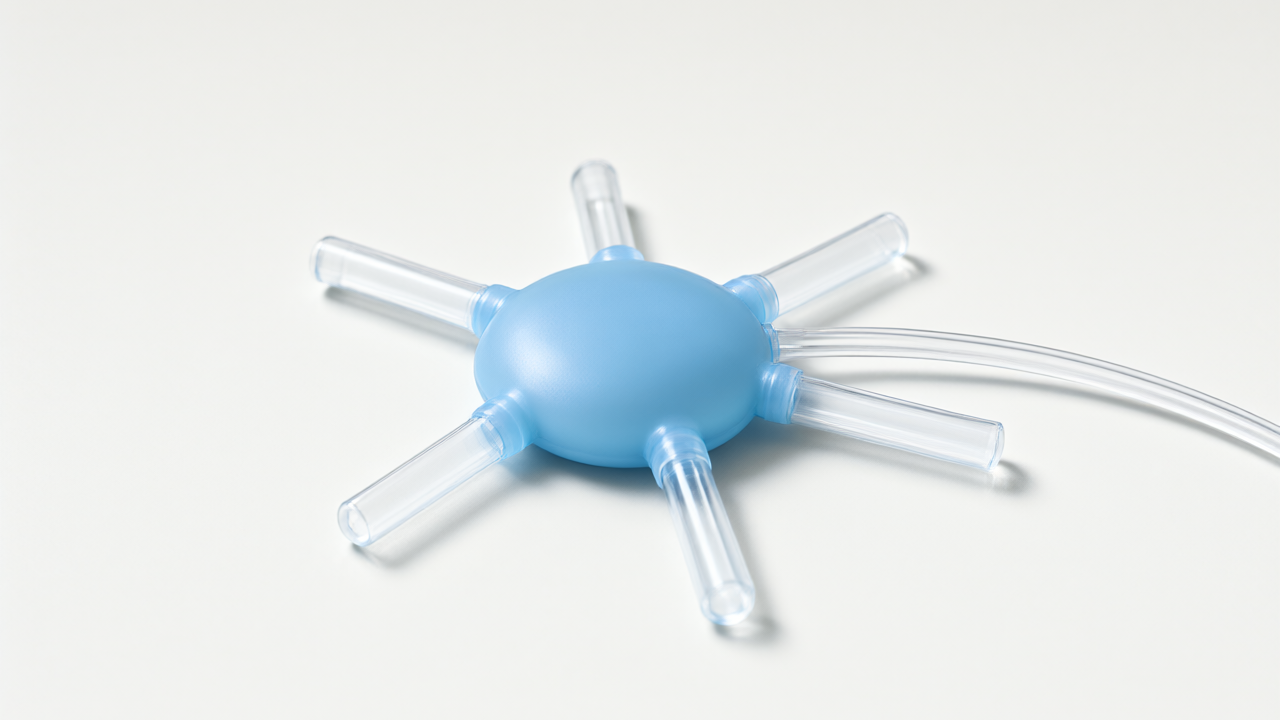
Engineers at the UC San Diego Jacobs School of Engineering have produced a six-legged soft robot capable of reaching speeds of 4.72 meters per second. The robot is 3D-printed in a single piece using one material and operates entirely without electronics. Testing confirms the robot can navigate diverse terrains, including concrete, sand, mulch, and gravel, and is capable of swimming and walking underwater.
Technical Details
The robot’s movement is driven by a network of internal chambers, valves, and tubes powered by pressurized air. To overcome the speed limitations of previous designs, the team implemented a design based on the compound steam engine. This architecture allows pressurized air to circulate twice: first through smaller, high-pressure chambers to power the valves, and subsequently through larger, low-pressure chambers to move the legs. This method maximizes energy efficiency from high-pressure air, allowing the robot to move more than 100 times faster than the team’s 2022 prototype, which moved at 4 centimeters per second.
Background & Context
The project was led by Professor Michael T. Tolley and postdoctoral researcher Yichen Zhai in the Bioinspired Robotics and Design Laboratory. The research builds upon a 2022 air-powered soft robot detailed in a 2025 article in Advanced Intelligent Systems. The current findings are published in the November 18, 2026, issue of Science Robotics. The work received funding from the National Science Foundation.
Significance & Outlook
Currently, the robot requires a tether to a compressed air source. Future development aims to integrate portable air cartridges to enable untethered operation and implement designs for steering and object manipulation. Because it functions without electronics, this class of robot is suited for specialized applications, including space exploration, disaster response, and scientific reconnaissance in areas with high magnetic fields or radiation.
Source: https://today.ucsd.edu/story/the-fastest-soft-robot-ever-built-doesnt-need-electronics-to-function
Get our weekly technology intelligence — free
Receive an infographic that lets you judge at a glance whether each field’s analysis report is worth reading.
Subscribe Free — Weekly Tech Intelligence
By subscribing, you’ll receive Troy-Technical’s weekly technology intelligence newsletter.
- Your email and selected fields are used only to deliver the newsletter.
- We never share your information with third parties.
- You can unsubscribe anytime via the link in each email.
See our Privacy Policy for details.
Takes about a minute · Unsubscribe anytime