

Key Findings
The research team led by Professor Il-Kwon Oh at the Korea Advanced Institute of Science and Technology (KAIST) has created a structural lithium-sulfur battery cathode that maintains stable electrical performance within curved and hollow geometries. The electrode demonstrated extreme mechanical durability, surviving 1,000 bending cycles at a curvature radius of 2.5 millimeters without structural collapse, cracking, or material detachment. In load testing within a cylindrical housing, the battery retained 99.8 percent of its initial operational voltage during external mechanical forces that fractured the structural frame.
Technical Details
To eliminate the delamination common in surface slurry coatings, the team grew nickel cobalt selenide nanowires directly onto woven carbon cloth. This monolithic integration provides several technical advantages:
- Chemical Anchoring: The nickel cobalt selenide compound catalyzes sulfur-related redox reactions and anchors lithium polysulfides to prevent their dissolution and migration into the electrolyte.
- Electrical Continuity: Direct growth of nanowires on the carbon fiber substrate ensures continuous electrical conduction pathways.
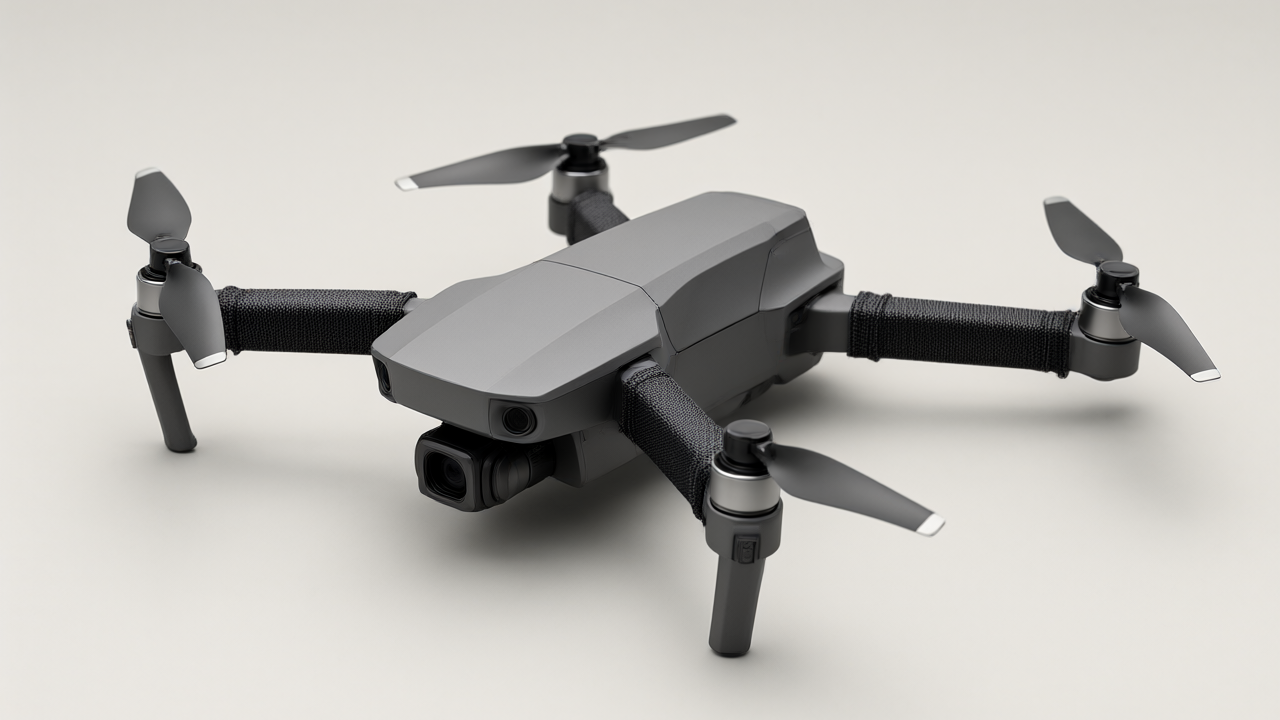
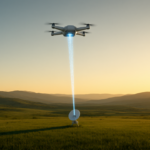
- Geometric Versatility: The material was successfully integrated into oval, square, and drone-leg structural components, powering LEDs across all varied contours.
Background & Context
Conventional drone and robotic architectures separate the structural airframe from rigid battery packs, which limits weight reduction. While lithium-sulfur systems offer high theoretical energy capacity at low weight, they typically suffer from poor electrical conductivity of elemental sulfur and the migration of lithium polysulfides. Furthermore, traditional flat battery configurations cannot be integrated into the curved or tubular surfaces common in landing gear and robotic limbs.
Significance & Outlook
This architecture allows load-bearing parts to function as energy storage medium, potentially reducing overall platform weight. The researchers suggest that this electrode could be paired with carbon fiber and resin matrices to build multifunctional robotic airframes. Future research is required to quantify the exact reduction in structural weight and the resulting extension of flight or mission durations.
Get our weekly technology intelligence — free
Receive an infographic that lets you judge at a glance whether each field’s analysis report is worth reading.
Subscribe Free — Weekly Tech Intelligence
By subscribing, you’ll receive Troy-Technical’s weekly technology intelligence newsletter.
- Your email and selected fields are used only to deliver the newsletter.
- We never share your information with third parties.
- You can unsubscribe anytime via the link in each email.
See our Privacy Policy for details.
Takes about a minute · Unsubscribe anytime