Key Findings
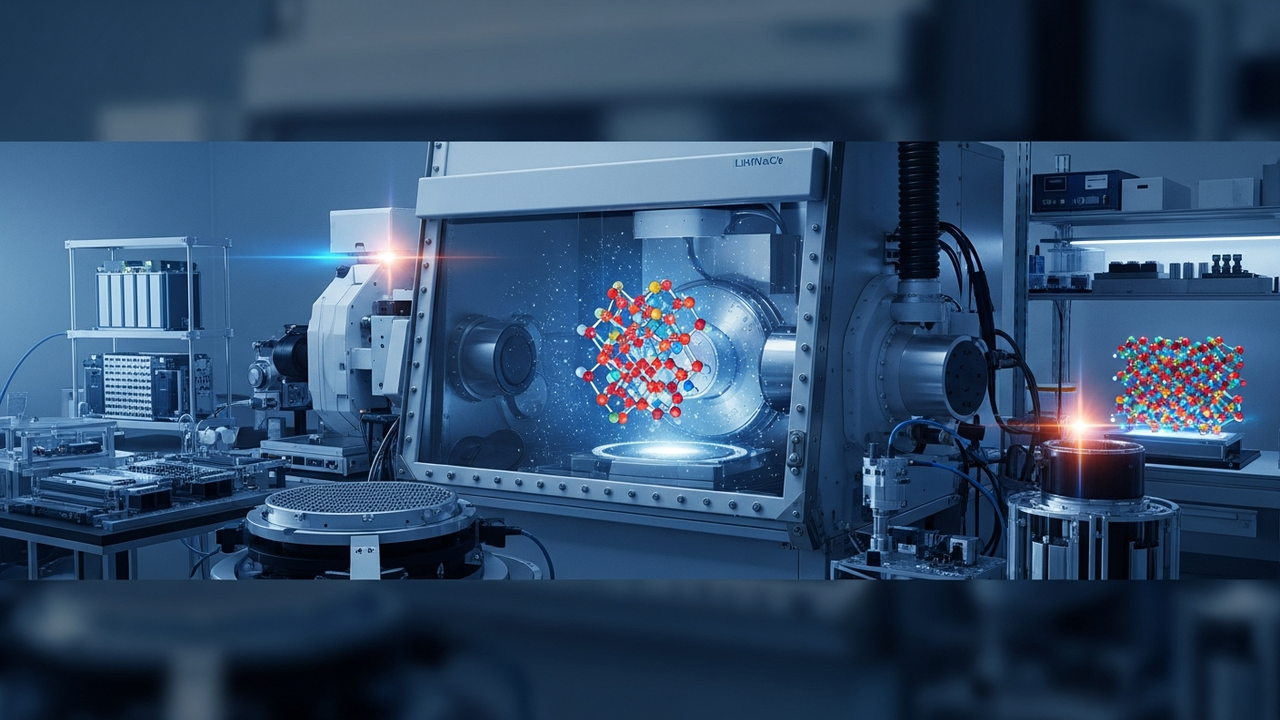
Samsung has filed a patent for an innovative lithium compound, ‘LiHfNaCl6,’ which holds the potential to function as the ion-conducting core in all-solid-state batteries. This novel material belongs to the halide solid electrolyte class, primarily composed of hafnium, sodium, and chlorine, and is expected to play a potentially very significant role in the competition to develop safer and longer-lasting batteries. This patent application represents a strategic move by Samsung to accelerate the development of next-generation battery technology, marking a significant step towards the practical realization of solid-state batteries.
Technical / Clinical Details
Halide solid electrolytes possess distinct advantages over sulfide-based solid electrolytes, notably higher stability against oxidation, and are easier to process than oxide ceramic electrolytes. These characteristics are beneficial for simplifying the manufacturing process of solid-state batteries and reducing costs. The LiHfNaCl6 compound aims to further optimize these properties of halide electrolytes, maintaining high lithium-ion conductivity while improving interfacial stability with electrodes. A more stable electrolyte reduces the risk of dendrite formation and enhances battery cycle life and overall safety. This technology is particularly crucial for applications requiring high performance and reliability, such as electric vehicles (EVs) and large-scale energy storage systems.
Background & Context
All-solid-state batteries are drawing global attention as next-generation battery technology due to their numerous advantages over existing lithium-ion batteries, including higher energy density, superior safety (elimination of thermal runaway risk), and long lifespan. The solid electrolyte is the core component of an all-solid-state battery, and a critical factor determining its performance. Active investment and patent acquisition in this field by major electronics manufacturers like Samsung reflect the recognition that solid-state batteries will be a key technological trend in the future. Halide solid electrolytes, in particular, have seen accelerated research in recent years due to their balanced properties, intensifying the race for practical implementation alongside other major solid electrolyte systems such as sulfides and oxides.
Strategic Significance & Outlook
Samsung’s patent application for the novel halide solid electrolyte LiHfNaCl6 is an important milestone towards the further evolution of solid-state battery technology. If this technology is successfully commercialized, it will enable the development of safer, higher-performing solid-state batteries, significantly contributing to extended EV driving range, reduced charging times, and enhanced safety. Furthermore, its ease of processing will lead to manufacturing cost reductions and accelerated mass production. Future focus will be on further optimizing the performance of this material, establishing manufacturing processes, and verifying long-term reliability in full cells. This move by Samsung is expected to reinforce its leadership in the global battery technology competition.
Source: https://patentlyze.com/patent/new-solid-state-battery-electrolyte-material/
Get our weekly technology intelligence — free
Receive an infographic that lets you judge at a glance whether each field’s analysis report is worth reading.
Subscribe Free — Weekly Tech Intelligence
By subscribing, you’ll receive Troy-Technical’s weekly technology intelligence newsletter.
- Your email and selected fields are used only to deliver the newsletter.
- We never share your information with third parties.
- You can unsubscribe anytime via the link in each email.
See our Privacy Policy for details.
Takes about a minute · Unsubscribe anytime








Comments