Key Findings
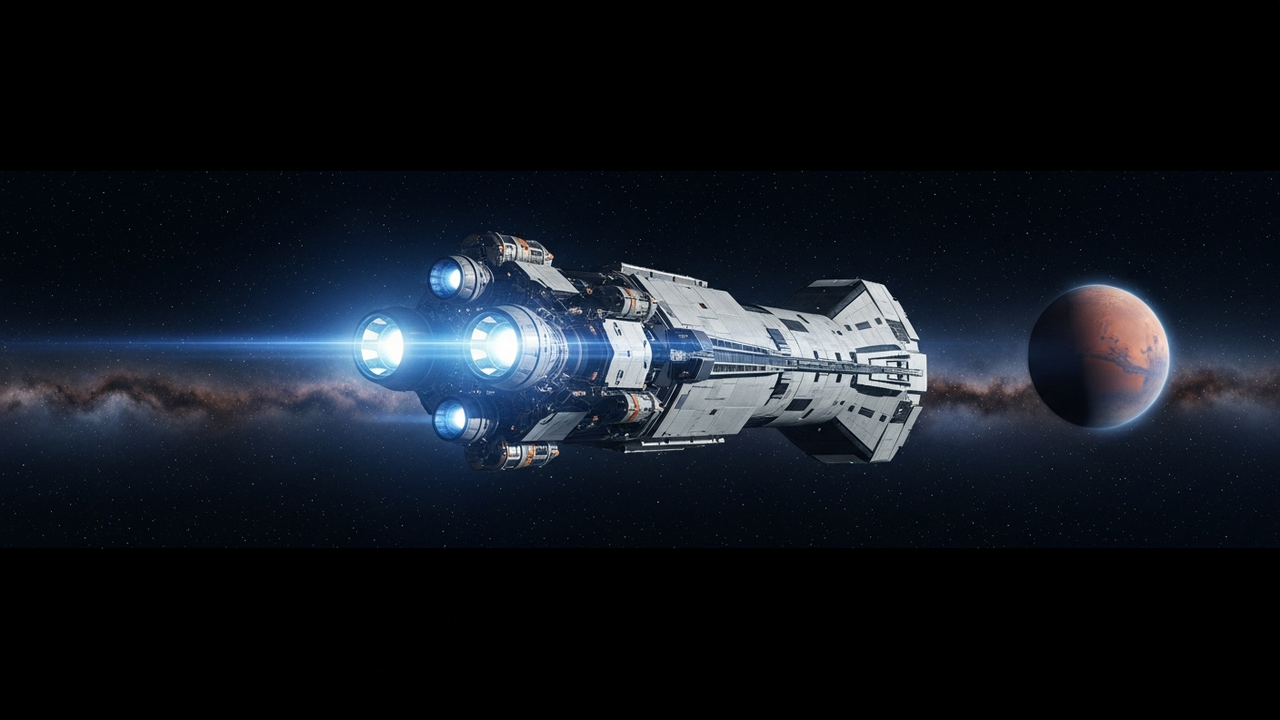
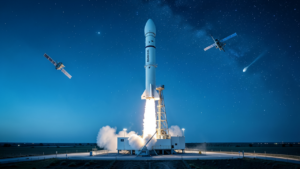
Space exploration is undergoing a significant, albeit quiet, transition towards nuclear power. NASA is preparing to launch its pioneering Space Reactor-1 Freedom (SR-1 Freedom) mission to Mars in late 2028. This mission aims to demonstrate the viability of nuclear electric propulsion and fission-powered interplanetary spacecraft, technologies critical for advanced deep-space missions. This development is poised to become a decisive enabler for humanity to explore the solar system with unprecedented speed and depth.
Technical Details
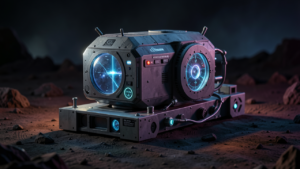
The NASA SR-1 Freedom mission is engineered to leverage a compact nuclear fission reactor for electricity generation, subsequently powering an electric propulsion system, such as ion thrusters. This architecture provides significantly higher propulsion efficiency and specific impulse compared to conventional chemical propulsion, leading to substantial reductions in propellant mass for extended missions and enabling markedly shorter transit durations to target destinations. Moreover, a fission reactor can ensure a stable and continuous power supply in deep-space environments where solar flux is minimal, including permanently shadowed regions of the Moon or during extended Martian nights. Such a system is capable of supporting diverse applications, from energizing astronaut habitats and life support systems to powering sophisticated scientific instrumentation. Nevertheless, the development, testing, launch, and operational phases of space-based nuclear power systems necessitate adherence to rigorous safety standards and navigating intricate regulatory frameworks.
Background & Context
The trajectory of space exploration has consistently been defined by the struggle against inherent limitations in power and propulsion. While radioisotope thermoelectric generators (RTGs) served critical roles in early deep-space missions, it has become increasingly clear that more potent nuclear propulsion systems are indispensable for facilitating larger crewed missions and accelerating interplanetary travel. The U.S. Department of Energy (DOE) has historically documented the evolution and underscored the importance of nuclear power applications in space. Establishing a sustainable human presence beyond Earth necessitates robust and enduring energy sources that are not exclusively dependent on solar insolation. Consequently, nuclear power is strategically positioned as a critical enabler for the construction of lunar and Martian bases, resource extraction initiatives, and ultimately, for comprehensive exploration of the entire solar system.
Strategic Significance & Outlook
The successful execution of the SR-1 Freedom mission is anticipated to herald a new epoch in deep-space exploration. Should nuclear electric propulsion technology be effectively validated, the prospect of high-speed transits to Mars within a few months, and crewed expeditions to more remote planets in our solar system, will transition from conceptual to tangible reality. Furthermore, the deployment of fission reactors on the Moon and Mars will establish reliable power infrastructure for future extraterrestrial bases, supporting extended human presence. Nonetheless, the widespread adoption of nuclear technology in space is still confronted by substantial challenges, including inherent accident risks, the complexities of radioactive waste management, navigating diverse international regulations, and securing public acceptance. Overcoming these multifaceted hurdles and ensuring the safe and responsible application of nuclear power in space is paramount for humanity’s sustained expansion into the cosmos. NASA and its partner agencies are committed to proactively addressing and mitigating these concerns.
Get our weekly technology intelligence — free
Receive an infographic that lets you judge at a glance whether each field’s analysis report is worth reading.
Subscribe Free — Weekly Tech Intelligence
By subscribing, you’ll receive Troy-Technical’s weekly technology intelligence newsletter.
- Your email and selected fields are used only to deliver the newsletter.
- We never share your information with third parties.
- You can unsubscribe anytime via the link in each email.
See our Privacy Policy for details.
Takes about a minute · Unsubscribe anytime



Comments