Background
The global electric vehicle (EV) industry is heavily reliant on China for its supply of rare-earth elements, which leads to significant supply chain instability and price fluctuation risks. This dependency presents a strategic challenge for EV manufacturers, making the development of rare-earth-free motors a critical technological objective to achieve independence. Vimag Labs’ patent acquisition offers an independent solution from India to this international challenge, potentially significantly impacting the global competitive landscape of the EV industry. This innovation could lay the foundation for building more diverse and stable supply chains, thereby further accelerating EV adoption.
Key Findings
Indian startup Vimag Labs has secured a patent for a software-defined electric motor for electric vehicles (EVs) that eliminates the need for rare-earth permanent magnets, as reported by Gulf News. This groundbreaking technology holds the potential to significantly reduce EV manufacturing costs and mitigate dependence on China’s dominant rare-earth supply chain.
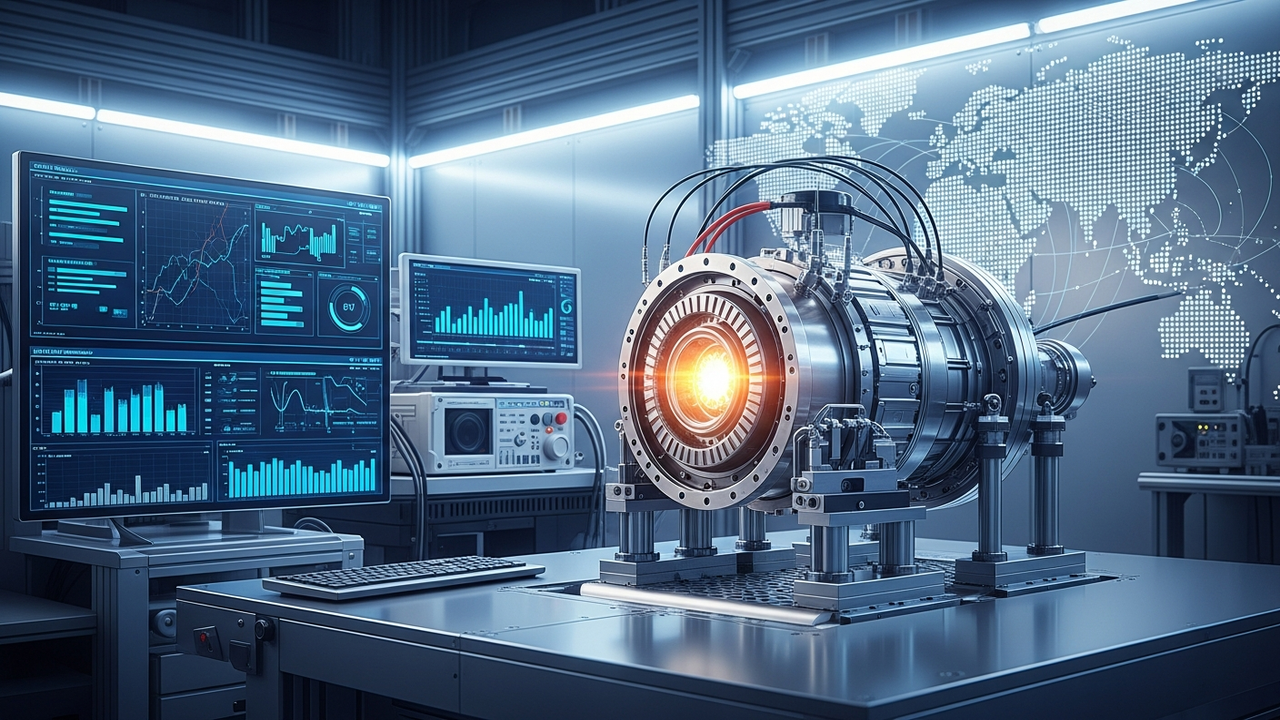
The company’s Virtual Magnet Synchronous Motor (VMSM) dynamically generates magnetic fields using power electronics and real-time control algorithms, enabling high-performance EV motors without geopolitically sensitive rare-earth elements. Specifically, VMSM technology replaces the rare-earth magnets (primarily neodymium) found in traditional Permanent Magnet Synchronous Motors (PMSMs) with a combination of copper coils, a steel core, and software-controlled electromagnets. This system is designed to adjust magnetic field strength and direction in real-time based on the motor’s operating conditions, potentially achieving efficiency and power density comparable to, or even exceeding, conventional magnet motors. The patented technology relies on complex magnetic field control algorithms to optimize the excitation patterns of electromagnets, delivering powerful torque and a wide speed range without rare-earth magnets. This approach also contributes to reducing the environmental impact associated with rare-earth mining and processing, fostering more sustainable EV manufacturing processes.
Vimag Labs’ rare-earth-free EV motor is anticipated to find applications beyond the automotive industry, extending to sectors like general industrial motors, robotics, aerospace, and defense. The company is actively engaged in pilot projects with two-wheeler and passenger car OEMs and plans for mass production and international market expansion. Widespread adoption of this technology would introduce new design freedoms for EVs, unconstrained by rare-earth resource limitations, becoming a critical driver for establishing competitive advantages in the global EV market and enhancing technological autonomy.
Get our weekly technology intelligence — free
Receive an infographic that lets you judge at a glance whether each field’s analysis report is worth reading.
Subscribe Free — Weekly Tech Intelligence
By subscribing, you’ll receive Troy-Technical’s weekly technology intelligence newsletter.
- Your email and selected fields are used only to deliver the newsletter.
- We never share your information with third parties.
- You can unsubscribe anytime via the link in each email.
See our Privacy Policy for details.
Takes about a minute · Unsubscribe anytime









Comments