Key Findings
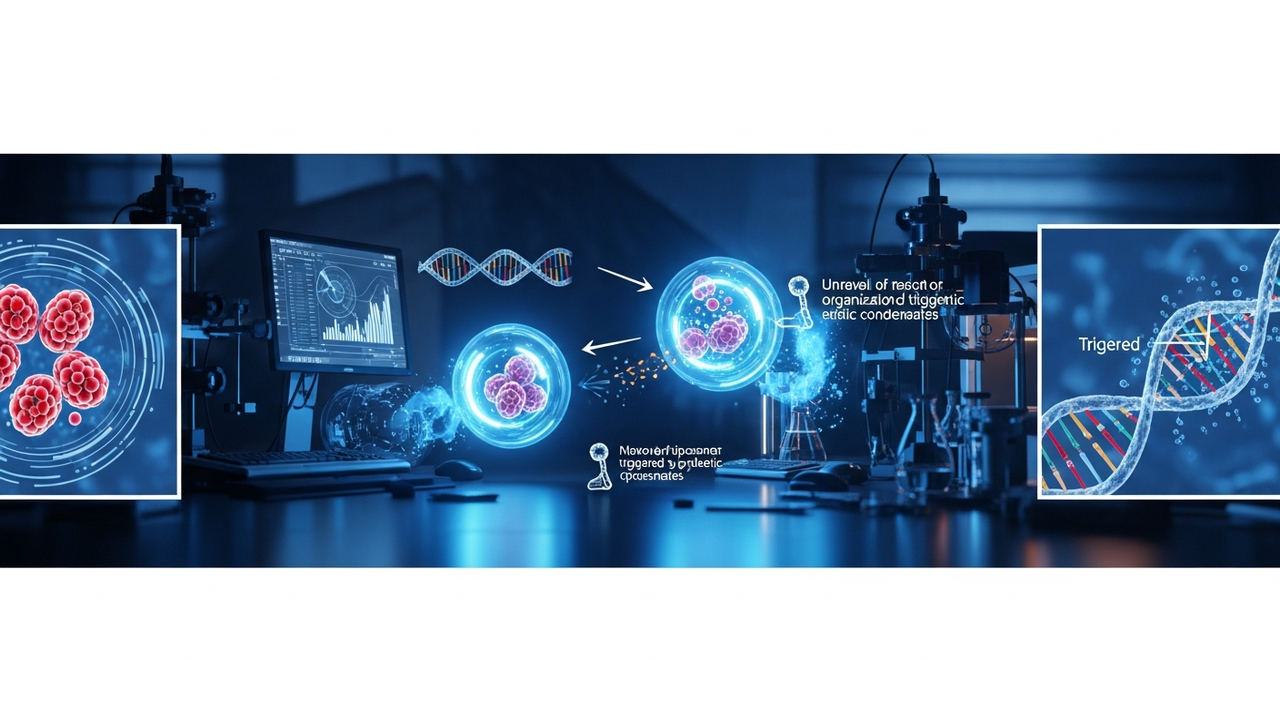
A cutting-edge research paper published in ACS Nano presents groundbreaking discoveries concerning the organization and triggered release mechanisms of liposomes utilizing DNA-based synthetic condensates. This modular platform distinctly demonstrates the capacity of DNA-based condensates to precisely program the spatial distribution of membranous subcompartments and dynamically process and release encapsulated cargo in response to specific stimuli. This represents a significant breakthrough in synthetic biology, nanobiotechnology, and delivery system engineering.
Technical / Clinical Details
The research team engineered synthetic condensates (such as DNA origami or DNA hydrogels) that self-assemble from complementary DNA strands. These condensates bind to the surface of liposomes (lipid bilayer vesicles that mimic biological membranes), guiding their specific arrangement and cluster formation. Furthermore, the DNA condensates are programmed to alter their structure in response to external cues like pH changes, light, temperature, or specific biomolecules. This enables precise control over the release of encapsulated cargo (e.g., drugs or genetic material) from the liposomes. The system not only controls the behavior of individual liposomes but also offers the ability to design complex networks where multiple liposomes interact in a controlled manner.
Background & Context
In drug delivery systems, gene therapy, diagnostic probes, and synthetic cell research, the ability to efficiently and selectively transport and release internal cargo is paramount. While traditional liposome-based delivery systems are effective, their release control has often been limited. Advances in DNA nanotechnology have made it possible to precisely design structures at the nanoscale and construct smart materials that respond to external stimuli. This research provides a novel solution to this challenge by combining the programmable properties of DNA with the biocompatibility of liposomes, paving the way for more sophisticated biomimetic systems and therapeutic approaches.
Strategic Significance & Outlook
This platform for organizing and triggering the release of liposomes using DNA-based synthetic condensates holds immense potential for engineering cell-mimetic systems, microreactors, and highly precise drug delivery systems. Future developments are expected to include smart nanocarriers that selectively release drugs to cancer cells, artificial cells that catalyze specific chemical reactions in vivo, or high-sensitivity biosensors for diagnostics. Researchers and engineers will focus on the in vivo safety, efficacy, and manufacturing scale-up of this technology. Investors are highly interested in the potential market value of this innovative delivery technology within growing fields such as personalized medicine and synthetic biology.
Source: https://pubs.acs.org/doi/10.1021/acsnano.5c16730
Get our weekly technology intelligence — free
Receive an infographic that lets you judge at a glance whether each field’s analysis report is worth reading.
Subscribe Free — Weekly Tech Intelligence
By subscribing, you’ll receive Troy-Technical’s weekly technology intelligence newsletter.
- Your email and selected fields are used only to deliver the newsletter.
- We never share your information with third parties.
- You can unsubscribe anytime via the link in each email.
See our Privacy Policy for details.
Takes about a minute · Unsubscribe anytime









Comments