Key Findings
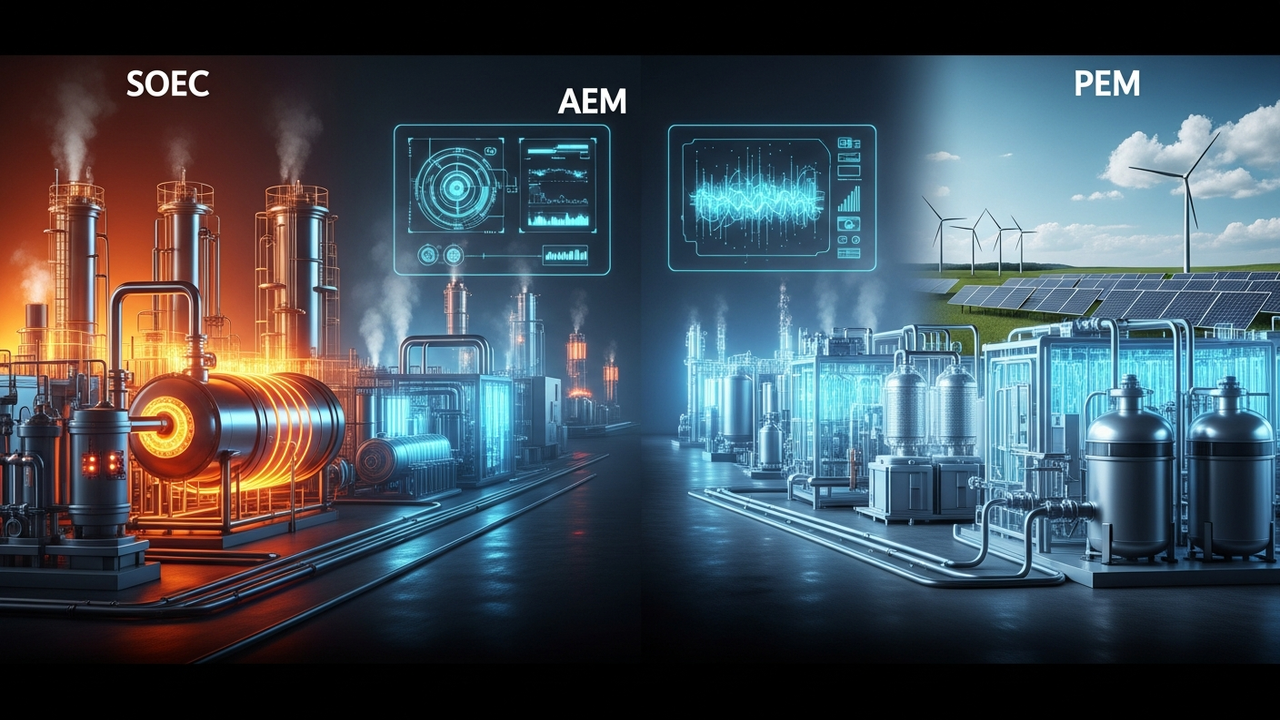
The leading electrolysis technologies for hydrogen production—Solid Oxide Electrolysis Cell (SOEC), Anion Exchange Membrane (AEM) electrolyzers, and Proton Exchange Membrane (PEM) electrolyzers—each possess unique characteristics tailored to specific market niches and applications. This differentiation in technological strengths is essential for meeting the diverse requirements and optimizing the efficiency of the burgeoning green hydrogen economy.
Technical / Clinical Details
- SOEC (Solid Oxide Electrolysis Cell):
- Characteristics: Operates at high temperatures (700–900°C), offering thermodynamic advantages that result in very high conversion efficiencies, often exceeding 90%. A significant benefit is its ability to utilize waste heat from industrial processes, reducing the electrical energy input required.
- Suitable Applications: Most appropriate for large-scale industrial hydrogen production and integration with high-temperature heat sources such as chemical plants, steel mills, and nuclear power facilities. Its high efficiency at scale makes it ideal for consistent, baseload hydrogen generation.
- AEM (Anion Exchange Membrane) Electrolyzers:
- Characteristics: Combines the advantages of low-cost, non-precious metal catalysts (common in alkaline electrolyzers) with the rapid response capabilities of PEM technology. This hybrid approach aims to reduce capital costs by avoiding expensive precious metals while improving dynamic load-following characteristics.
- Suitable Applications: Emerging as a strong contender for mid-scale hydrogen production, decentralized energy systems, and cost-sensitive markets where PEM’s noble metal requirements are prohibitive. They offer a balance between cost-effectiveness and operational flexibility.
- PEM (Proton Exchange Membrane) Electrolyzers:
- Characteristics: Known for their compact design, high current density, and extremely fast response times. They can quickly adapt to fluctuating power outputs from renewable energy sources, thereby contributing to grid stabilization. However, they require expensive precious metal catalysts (platinum, iridium), which contribute to higher capital costs.
- Suitable Applications: Ideal for direct integration with intermittent renewable energy sources (wind, solar), hydrogen refueling stations, and mobility applications where dynamic load changes are expected. Their rapid startup and shutdown capabilities are highly advantageous for flexible operation.
Background & Context
The production of green hydrogen is accelerating globally alongside the expansion of renewable energy. However, the choice of electrolysis technology is highly dependent on project scale, available heat sources, electricity costs, and response time requirements. Each technology presents distinct advantages and disadvantages, making the optimal selection crucial for maximizing hydrogen production efficiency and economic viability. This diverse technological portfolio is an indispensable element supporting the overall growth and resilience of the hydrogen economy.
Strategic Significance & Outlook
By leveraging the unique strengths of SOEC, AEM, and PEM electrolyzers, hydrogen can become a competitive energy carrier across a broad spectrum of applications. SOECs will drive industrial-scale decarbonization, AEMs will offer a balance of cost-effectiveness and flexibility for a wider range of projects, and PEMs will remain central to renewable energy integration and mobility solutions. As these technologies mature and their costs continue to decrease, hydrogen energy is expected to play an increasingly central and indispensable role in the global energy transition, enabling a more sustainable and resilient energy future worldwide.
Source: https://www.hydrogenergy.in/blog/soec-vs-aem-vs-pem-electrolyzers
Get our weekly technology intelligence — free
Receive an infographic that lets you judge at a glance whether each field’s analysis report is worth reading.
Subscribe Free — Weekly Tech Intelligence
By subscribing, you’ll receive Troy-Technical’s weekly technology intelligence newsletter.
- Your email and selected fields are used only to deliver the newsletter.
- We never share your information with third parties.
- You can unsubscribe anytime via the link in each email.
See our Privacy Policy for details.
Takes about a minute · Unsubscribe anytime