Background
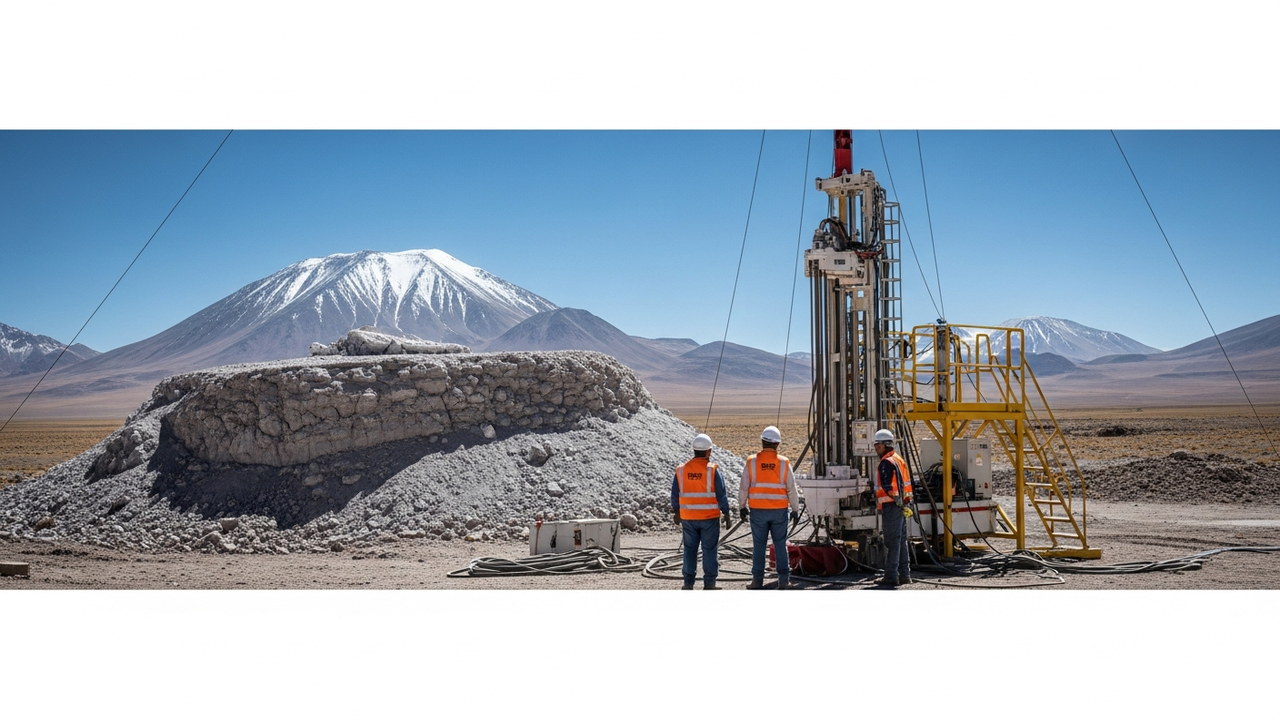
As the global energy transition intensifies, hydrogen has emerged as a crucial vector for decarbonization. However, the high costs and scalability challenges associated with conventional production methods remain significant hurdles. Chile, with its abundant renewable energy resources, is a global frontrunner in promoting ‘green hydrogen’ production. Yet, ongoing research in the nation’s Altiplano region is now exploring a potentially even more economically viable and environmentally friendly alternative: naturally occurring, or ‘white’ hydrogen. This resource could be directly integrated into existing hydrogen infrastructure, accelerating its commercialization and complementing global investments in green hydrogen projects.
Key Findings
Groundbreaking research in Chile’s Altiplano is actively exploring the potential for ‘white hydrogen’ — naturally occurring hydrogen systems that bypass the need for energy-intensive industrial production. This promising low-carbon energy source could significantly augment Chile’s national green hydrogen strategy.
Scientists believe natural hydrogen forms deep within the Earth’s crust through geochemical reactions like serpentinization, where water interacts with iron-rich minerals. The exploration leverages a multidisciplinary collaboration of seismologists, geologists, geophysicists, and geochemists. This team is meticulously analyzing crustal structures, interpreting advanced geophysical data (including electromagnetic and gravity measurements), quantifying hydrogen concentrations in surface and groundwater, and utilizing geochemical tracers. Their objective is to comprehensively map the origin, migration pathways, accumulation mechanisms, and spatial distribution of these natural hydrogen reservoirs.
The successful identification and commercialization of ‘white hydrogen’ could drastically reduce hydrogen production costs by eliminating the need for expensive electrolyzers and dedicated renewable energy infrastructure. This cost advantage represents a potential game-changer for global hydrogen supply strategies, accelerating the realization of a widespread hydrogen economy. The research team plans to assess commercial extraction feasibility and develop a roadmap for future large-scale development. The prospect of ‘white hydrogen’ as a low-cost, sustainable energy source is garnering considerable interest from investors and energy companies, who are closely watching its potential to transform global energy markets and advance a sustainable future.
Source: https://blogs.egu.eu/divisions/sm/2026/07/27/could-the-chilean-altiplano-host-natural-hydrogen/
Get our weekly technology intelligence — free
Receive an infographic that lets you judge at a glance whether each field’s analysis report is worth reading.
Subscribe Free — Weekly Tech Intelligence
By subscribing, you’ll receive Troy-Technical’s weekly technology intelligence newsletter.
- Your email and selected fields are used only to deliver the newsletter.
- We never share your information with third parties.
- You can unsubscribe anytime via the link in each email.
See our Privacy Policy for details.
Takes about a minute · Unsubscribe anytime