Key Findings
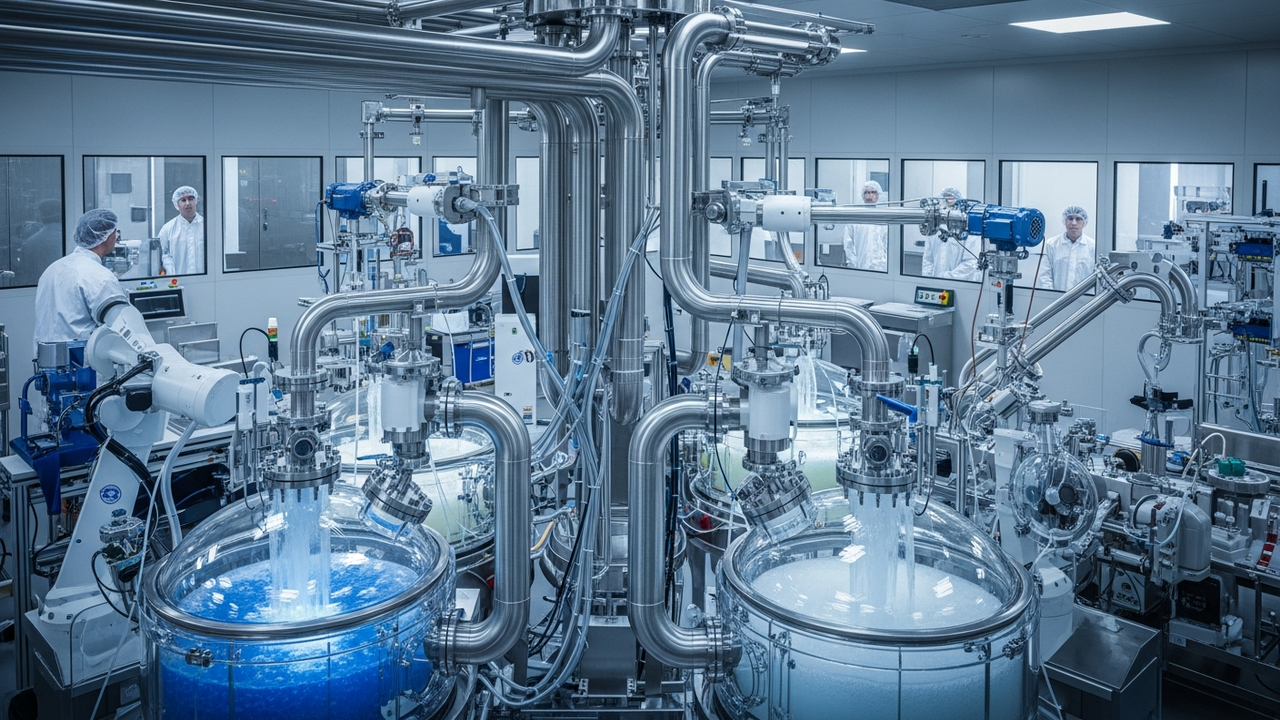
The reusable bioreactor market is gaining significant traction, primarily fueled by the burgeoning demand for large-volume commercial biopharmaceutical production and the aggressive expansion of manufacturing capacities by Contract Development and Manufacturing Organizations (CDMOs). A pivotal trend involves the increasing adoption of “hybrid biomanufacturing facilities,” which strategically combine single-use bioreactors for development and clinical phases with reusable bioreactors for large-scale commercial output, balancing flexibility with cost-effectiveness.
Technical / Clinical Details
- Suitability for Large-Scale Production: Reusable bioreactors are inherently suited for large-volume applications, often reaching thousands of liters, making them indispensable for the commercial production of biologics such as monoclonal antibodies. They offer high reliability for long-term, stable operations under stringent quality control requirements.
- Hybrid Manufacturing Strategy: Biopharmaceutical manufacturers and CDMOs are increasingly implementing a hybrid approach. This involves utilizing the speed and reduced contamination risks of single-use bioreactors for process development and small-scale clinical trials, while opting for the economic advantages and scalability of reusable bioreactors for post-approval commercial production. This strategy optimizes efficiency across the entire product lifecycle.
- CDMO Role in Expansion: CDMOs are expanding their investments in reusable platforms to handle multiple biopharmaceutical projects concurrently. This enables them to cater to diverse client needs, facilitating rapid production and market entry for a wide range of biologics.
Background & Context
The biopharmaceutical industry faces an urgent need to augment manufacturing capacity, driven by accelerating drug development and rising global demand. Analysis by Constancy Researchers indicates that the expansion of large-scale biologics production and increased CDMO investment are powerful catalysts for the reusable bioreactor market. Furthermore, regulatory agencies like the FDA and EMA have issued guidance encouraging continuous biomanufacturing, which enhances the value proposition of the stable, high-performance production offered by reusable bioreactors. Major industry players include Cytiva, Sartorius, Thermo Fisher Scientific, Merck KGaA, and Eppendorf, all actively pursuing technological innovation and market share expansion.
Strategic Significance & Outlook
The reusable bioreactor market is projected for sustained growth. The widespread adoption of hybrid manufacturing models will continue, ensuring that optimal production solutions are applied at every stage of biopharmaceutical development. This evolution will contribute to optimized manufacturing costs, stabilized supply chains, and ultimately, improved patient access to life-saving therapies. Additionally, the integration of advanced process control technologies, such as digital twins and AI-driven analytics, holds the potential to further enhance the operational efficiency and quality assurance of reusable bioreactors, driving the industry towards a more robust and responsive future.
Get our weekly technology intelligence — free
Receive an infographic that lets you judge at a glance whether each field’s analysis report is worth reading.
Subscribe Free — Weekly Tech Intelligence
By subscribing, you’ll receive Troy-Technical’s weekly technology intelligence newsletter.
- Your email and selected fields are used only to deliver the newsletter.
- We never share your information with third parties.
- You can unsubscribe anytime via the link in each email.
See our Privacy Policy for details.
Takes about a minute · Unsubscribe anytime