Background
The burgeoning fields of soft robotics, regenerative medicine, and bioelectronics are critically dependent on materials exhibiting flexibility, biocompatibility, and dynamic responsiveness—qualities often elusive in conventional rigid counterparts. Next-generation medical devices and advanced robotics, in particular, necessitate materials that emulate human tissue in softness, possess self-healing properties, and even facilitate information processing. Recent advancements in 3D printing technology have proven instrumental in enabling the design and fabrication of such intricate materials, significantly accelerating research and development. Beyond biomedical applications, the global imperative for sustainable societies drives an urgent demand for solutions in critical mineral recovery from wastewater and sophisticated environmental monitoring, creating a strong need for materials capable of selective ion discrimination and separation.
Key Findings
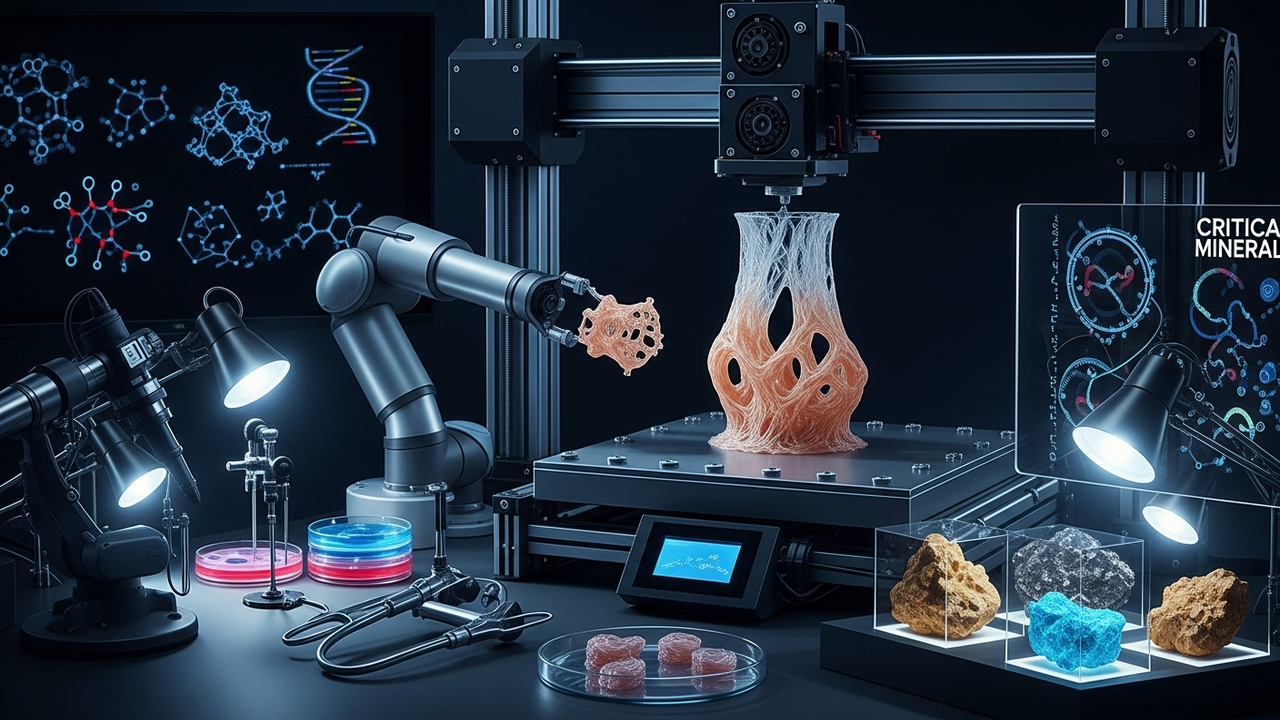
A research team at the University of Texas at Austin has engineered a groundbreaking 3D-printable, biocompatible material that meticulously mimics the structural and functional attributes of human tissue. This highly flexible and responsive biomaterial can be precisely tailored for a multitude of advanced applications, including the conduction of ion currents for neuromorphic (brain-inspired) computing and the selective discrimination of specific ions in complex matrices like wastewater. This innovation is expected to significantly expedite progress in soft robotics, tissue engineering, and critical environmental monitoring technologies.
Technical Details
The newly developed material is a sophisticated composite, primarily based on hydrogel polymers, into which nanoparticles and specialized molecules are integrated to impart distinct functionalities. Leveraging advanced 3D printing techniques, researchers can fabricate complex, three-dimensional microstructures that precisely emulate the intricate extracellular matrix found in biological tissues. The material’s remarkable flexibility and responsiveness stem from dynamic chemical bonds embedded within its architecture, allowing it to dynamically alter its properties in response to various external stimuli, such as pH changes, temperature fluctuations, or electrical signals. Key features include:
- Ion Current Conduction: The material effectively transmits electrical signals through controlled ion movement, akin to biological action potentials. This capability makes it an ideal candidate for constructing artificial synapses and neural networks crucial for brain-inspired (neuromorphic) computing architectures.
- Ion Discrimination: Through the incorporation of specific functional groups designed to detect and adsorb targeted ions (e.g., heavy metal ions), the material functions as a highly selective platform for ion discrimination, valuable in applications ranging from advanced wastewater treatment to environmental sensing.
- Biocompatibility: Crucially, the material demonstrates properties that minimize immune and inflammatory responses when integrated into living organisms, addressing a critical requirement for medical implants.
This inherent customizability significantly accelerates the design and fabrication of materials precisely tailored for specific medical applications or robotic functionalities.
Strategic Significance and Outlook
This 3D-printable, human-tissue-mimicking material is poised to unlock a new generation of innovative applications across multiple high-impact sectors:
- Tissue Engineering & Regenerative Medicine: Envisioned for use as replacement materials for damaged tissues and organs, artificial muscles, and advanced conduits for nerve regeneration.
- Soft Robotics: Enables the development of flexible actuators and sophisticated sensors, fostering safer and more intuitive human-robot interaction.
- Brain-Inspired Computing: Offers a foundation for low-power, high-efficiency computing chips that mimic the biological brain’s complex information processing capabilities.
- Environmental Remediation & Critical Mineral Recovery: Paves the way for smart filtration systems capable of removing harmful pollutants from wastewater or selectively recovering vital critical minerals such as lithium and rare earth elements.
Translating this breakthrough into commercial products will require overcoming challenges related to ensuring long-term material stability, optimizing manufacturing costs, and conducting stringent safety and efficacy testing, particularly for clinical applications. Nevertheless, the material’s unparalleled multifunctionality and customizability present a significant opportunity to cultivate new markets and industries within strategically crucial sectors like medicine, robotics, and environmental technology. This development merits close monitoring by researchers, engineers, and investors globally, as it signals potential profound technological transformations.
Source: #
Get our weekly technology intelligence — free
Receive an infographic that lets you judge at a glance whether each field’s analysis report is worth reading.
Subscribe Free — Weekly Tech Intelligence
By subscribing, you’ll receive Troy-Technical’s weekly technology intelligence newsletter.
- Your email and selected fields are used only to deliver the newsletter.
- We never share your information with third parties.
- You can unsubscribe anytime via the link in each email.
See our Privacy Policy for details.
Takes about a minute · Unsubscribe anytime