Pioneering Industrial Green Hydrogen
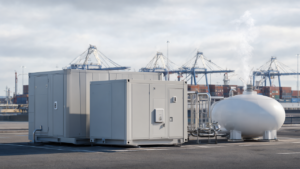
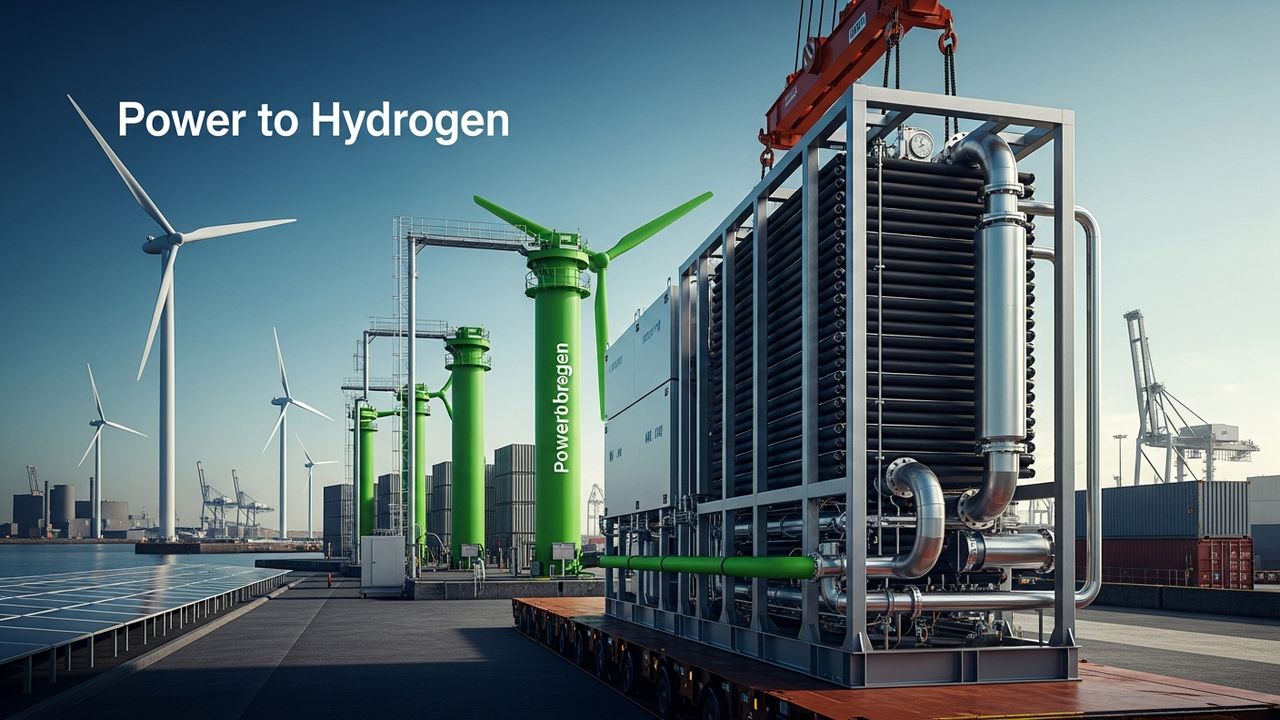
Power to Hydrogen (P2H2) has begun the installation of a 0.5-megawatt Anion Exchange Membrane (AEM) electrolyzer system at the Port of Antwerp-Bruges, Belgium. This initiative is being hailed as the “world’s first industrial-scale deployment” of 250-kilowatt AEM electrolyzer stacks, with commissioning slated for September. The pioneering project aims to demonstrate efficient and cost-effective renewable hydrogen production within the demanding environment of a high-throughput industrial port.
Technical Innovation: Cost-Effective AEM at Scale
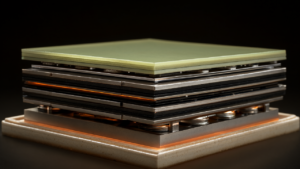
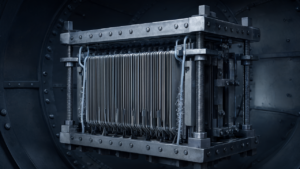
The P2H2 M-Class hybrid AEM electrolyzer platform integrates two 250 kW AEM stack modules to achieve its total 0.5 MW capacity. A critical differentiator of this technology is its ability to operate without the expensive precious metals, such as iridium, typically required in Proton Exchange Membrane (PEM) electrolyzers. Instead, P2H2 leverages lower-cost, abundant materials like steel and nickel, projecting a substantial capital cost reduction of up to 65% compared to existing PEM technologies. Engineered for seamless integration with intermittent renewable energy sources, the system is designed to maintain rapid electrical responsiveness while consistently producing high-purity hydrogen, exceeding 99.999%. The M-Class platform is inherently scalable, with designs already targeting capacities up to 25 megawatts for energy-intensive industrial applications.
Strategic Impact: Decarbonizing Industry and Fueling the Future
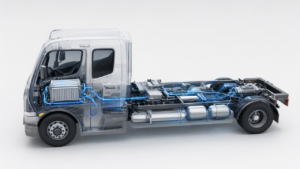
The Port of Antwerp-Bruges is strategically positioning itself as a central hub for green hydrogen in Europe, essential for decarbonizing its heavy industries and vast logistics operations. On-site renewable hydrogen generation, such as that provided by P2H2’s system, is a vital component for achieving these ambitious goals, supplying industrial processes, hydrogen-powered trucks, and local refueling stations. The deployment of AEM technology at this significant scale directly addresses the industry’s pressing need for more economically viable hydrogen production methods. By circumventing the reliance on precious metals, AEM offers a tangible pathway to reduce the overall cost of green hydrogen, overcoming one of the primary barriers to its widespread adoption and accelerating the transition towards a hydrogen economy. The successful demonstration of this system in a real-world, high-throughput industrial setting will provide crucial operational data, solidifying the commercial viability of AEM electrolysis and establishing it as a competitive, low-cost alternative to existing PEM and alkaline technologies. This advancement promises to foster greater diversification and innovation in the green hydrogen sector, contributing significantly to global decarbonization efforts and energy security initiatives.
Get our weekly technology intelligence — free
Receive an infographic that lets you judge at a glance whether each field’s analysis report is worth reading.
Subscribe Free — Weekly Tech Intelligence
By subscribing, you’ll receive Troy-Technical’s weekly technology intelligence newsletter.
- Your email and selected fields are used only to deliver the newsletter.
- We never share your information with third parties.
- You can unsubscribe anytime via the link in each email.
See our Privacy Policy for details.
Takes about a minute · Unsubscribe anytime