Key Findings
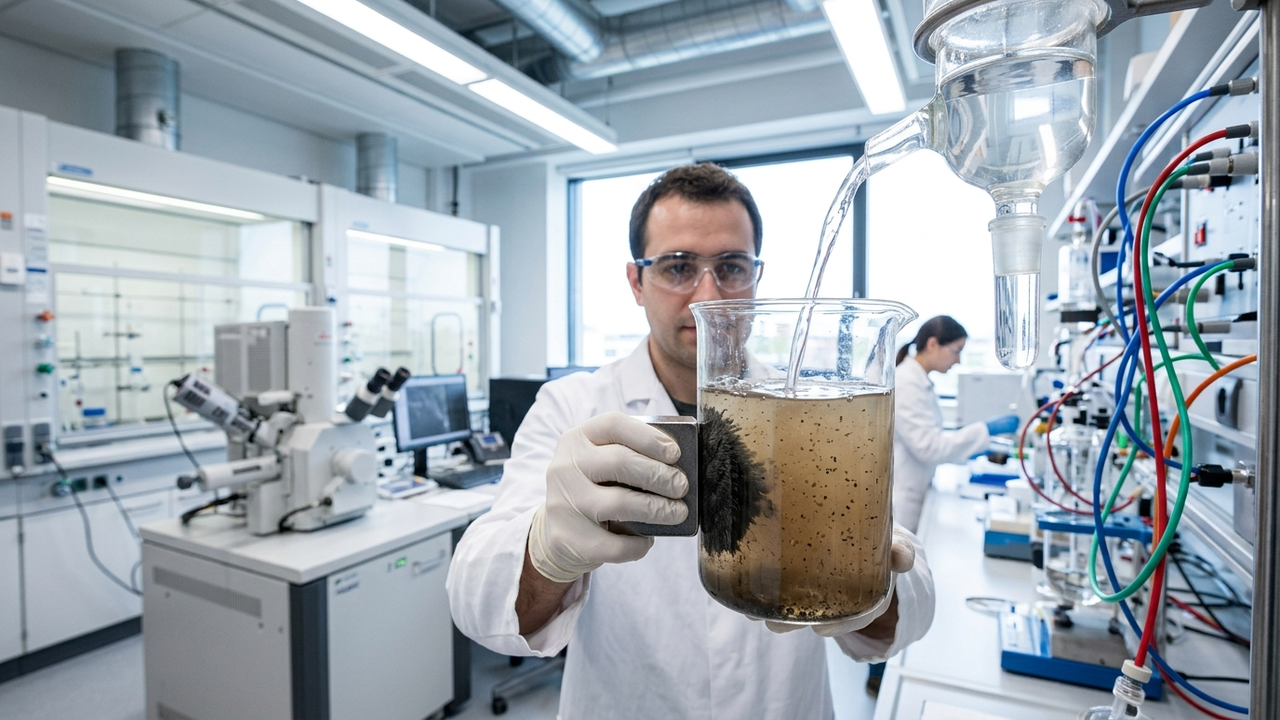
Researchers at RMIT (Royal Melbourne Institute of Technology) have engineered a groundbreaking magnetic nanomaterial that achieves over 95% removal of microplastics and nanoplastics from water in as little as one hour. This innovative technology offers an effective and reusable solution to the global plastic pollution crisis, aligning with circular economy principles for water treatment systems.
Technical / Clinical Details
The developed magnetic nanomaterials are designed with specific surface properties that enable strong binding to suspended microplastic and nanoplastic particles in water. Once bound, an external magnetic field can be applied to easily separate and recover these nanomaterial-plastic complexes from the water. This process has demonstrated high efficiency, achieving more than 95% plastic removal within a remarkably short period of one hour. Crucially, the separated magnetic nanomaterials can be washed and regenerated for multiple reuse cycles, significantly reducing treatment costs and environmental impact. Given its scalability, this technology is anticipated to find broad application, from domestic water purification filters to large-scale industrial wastewater treatment facilities.
Background & Context
Water contamination by microplastics and nanoplastics represents a escalating global environmental challenge, raising concerns about its impact on ecosystems and human health. These minute plastic particles are particularly difficult to remove using conventional physical filtration or chemical treatment methods, necessitating the development of novel solutions. The research from RMIT addresses this formidable challenge by combining magnetic separation—a physical technique—with the unique properties of nanomaterials, offering a viable and efficient approach. The reusability of the materials is a particularly vital aspect for the development of sustainable water treatment technologies.
Strategic Significance & Outlook
This water treatment technology utilizing magnetic nanomaterials marks a significant advancement in the global effort to mitigate plastic pollution. Its high removal efficiency and reusability have the potential to set new standards in the water treatment industry. Moving forward, further field testing and performance evaluations in diverse aquatic environments are expected to accelerate the practical implementation of this technology. Ultimately, it is poised to become a critical solution for addressing global plastic pollution and ensuring access to clean water resources.
Get our weekly technology intelligence — free
Receive an infographic that lets you judge at a glance whether each field’s analysis report is worth reading.
Subscribe Free — Weekly Tech Intelligence
By subscribing, you’ll receive Troy-Technical’s weekly technology intelligence newsletter.
- Your email and selected fields are used only to deliver the newsletter.
- We never share your information with third parties.
- You can unsubscribe anytime via the link in each email.
See our Privacy Policy for details.
Takes about a minute · Unsubscribe anytime





Comments