Key Findings
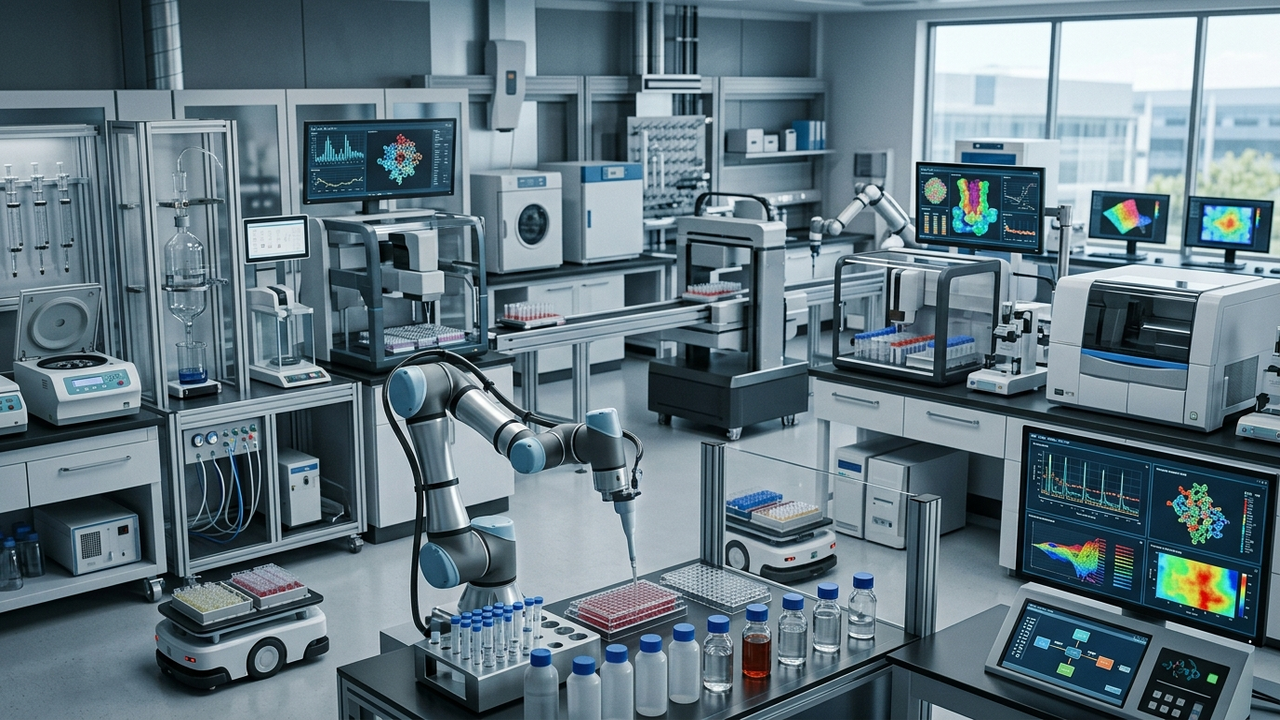
AI-powered autonomous laboratories, which synergistically combine robotics, high-throughput experimentation, and advanced artificial intelligence, are fundamentally reshaping scientific discovery by facilitating continuous and adaptive learning cycles. However, a significant challenge has surfaced: the rate at which AI can generate novel hypotheses vastly outstrips the capacity of physical laboratories to synthesize and validate them. This disequilibrium presents a major bottleneck in maximizing research efficiency.
Technical / Clinical Details
Autonomous labs automate the traditional human-driven cycle of experimental design, execution, and analysis by allowing AI algorithms to learn from experimental outcomes and optimize subsequent conditions. This capability enables exploration at unprecedented speed and scale across fields such as materials science, chemistry, and biology. Technically, the integration of sophisticated robotic platforms, automated synthesis and characterization instruments, and advanced AI models (including machine learning, deep learning, and reinforcement learning) is crucial. Nevertheless, the sheer volume of promising material candidates or processes proposed by AI overwhelms the available resources—time, reagents, and instrument access—for physical synthesis, characterization, and performance testing, leading to significant delays.
Background & Context
Accelerating scientific research is paramount for the discovery of new materials, pharmaceuticals, and energy technologies. Autonomous labs hold the potential to reduce discovery timelines from years to weeks by automating iterative trial-and-error processes and minimizing human intervention. This global movement is spearheaded by entities such as the U.S. Department of Energy (DOE), national research laboratories, leading universities like MIT, and technology giants like Microsoft, with investments totaling hundreds of millions of dollars. The gap between AI’s hypothesis generation capability and the physical validation capacity remains a critical challenge for the entire industry, necessitating new strategies and infrastructure to resolve it.
Strategic Significance & Outlook
To overcome this bottleneck, enhanced data sharing and collaboration among autonomous laboratories are essential. This requires the establishment of standardized data formats, open-access data platforms, and highly interoperable software architectures that enable different laboratory robots and instruments to ‘speak the same language.’ In the future, it is anticipated that a digital evaluation system, such as a ‘materials AI evidence passport,’ will be introduced for AI-generated material candidates. This system would prioritize synthesis and validation, directing scarce experimental resources toward the most promising candidates. Such ‘smart validation’ will be key to unlocking the full potential of autonomous laboratories, drastically accelerating the pace of material innovation and bringing new technologies to market faster.
Source: #
Get our weekly technology intelligence — free
Receive an infographic that lets you judge at a glance whether each field’s analysis report is worth reading.
Subscribe Free — Weekly Tech Intelligence
By subscribing, you’ll receive Troy-Technical’s weekly technology intelligence newsletter.
- Your email and selected fields are used only to deliver the newsletter.
- We never share your information with third parties.
- You can unsubscribe anytime via the link in each email.
See our Privacy Policy for details.
Takes about a minute · Unsubscribe anytime





Comments