Key Findings
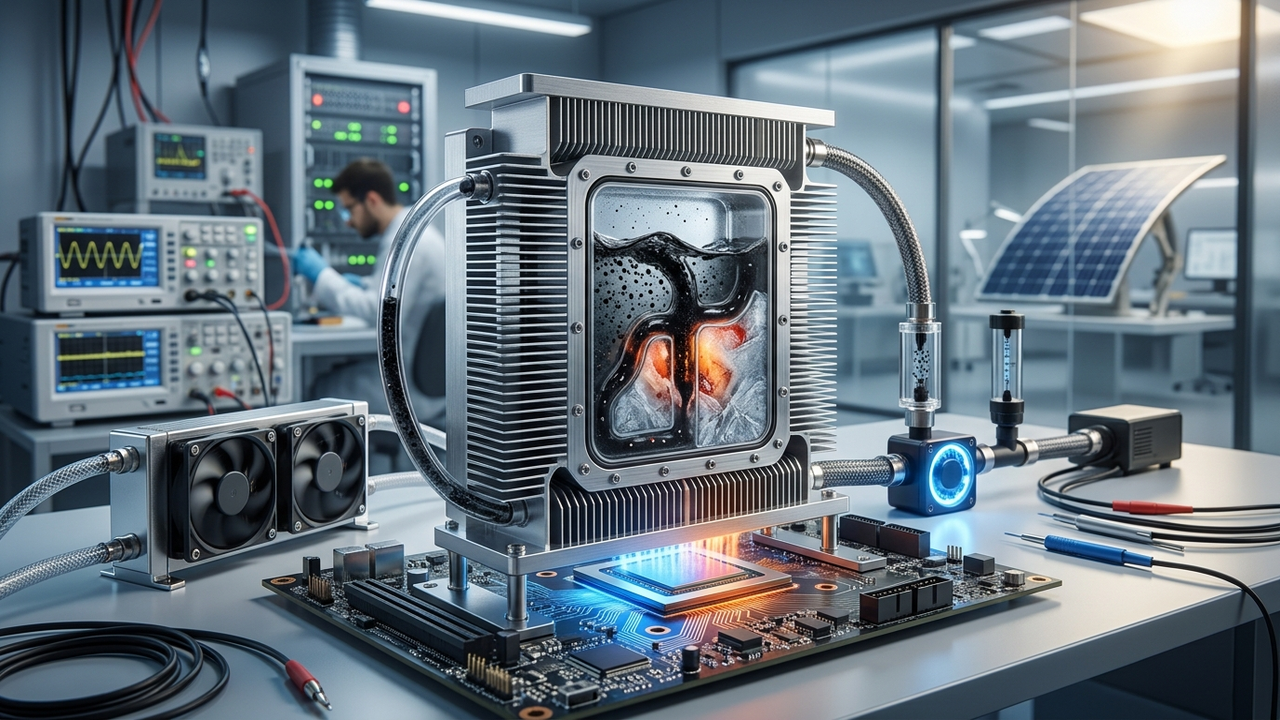
New research demonstrates that the integration of heat-transfer fins and advanced nanofluids can substantially improve the efficiency of phase-change materials (PCMs) for optimized thermal energy storage. This breakthrough has critical implications for the effective cooling of electronics and enhancing the performance of renewable energy devices. By boosting the thermal stability of PCMs, the potential for application in high-performance next-generation technologies is significantly expanded.
Technical / Clinical Details
Heat-transfer fins augment the heat exchange surface area within PCMs, accelerating heat transfer rates during charging and discharging cycles. This enables PCMs to absorb and release heat more rapidly, boosting overall energy storage efficiency. Furthermore, nanofluids, which contain highly conductive nanoparticles, dramatically improve heat transfer characteristics compared to conventional working fluids, further enhancing PCM performance. These technologies are particularly beneficial for server cooling in data centers, thermal management of electric vehicle batteries, and improving heat storage efficiency in concentrated solar power systems. Alongside these, advancements in PCM materials themselves, such as silicon-based nanostructures and specific polymer composites, are improving stability under high-temperature conditions. Pyroelectric energy conversion, which directly converts waste heat from high-speed electronics into electrical energy, is also expected to play a crucial role in improving energy efficiency.
Background & Context
As modern electronic devices become more powerful, their heat generation increases exponentially, making effective thermal management critical for device longevity and performance. Similarly, the widespread adoption of renewable energy systems hinges on efficient and cost-effective energy storage. PCMs have long been considered promising thermal storage media due to their high latent heat capacity but have faced challenges related to low thermal conductivity and long-term stability. The recent research findings offer concrete solutions to these challenges, expected to accelerate the development of sustainable energy systems and high-performance electronics.
Strategic Significance & Outlook
The integration of heat-transfer fins and nanofluids is likely to establish new standards in the design of PCM-based thermal energy storage systems. In the future, this technology is anticipated to find broader applications in smart building climate control, industrial waste heat recovery, and thermal control systems for space exploration. Researchers will continue to develop nanofluids with superior heat transfer properties and PCMs with wider phase-change temperature ranges, focusing on cost reduction and scalability for practical implementation. AI-driven design optimization is also expected to further accelerate advancements in this field, paving the way for unprecedented thermal management solutions.
Get our weekly technology intelligence — free
Receive an infographic that lets you judge at a glance whether each field’s analysis report is worth reading.
Subscribe Free — Weekly Tech Intelligence
By subscribing, you’ll receive Troy-Technical’s weekly technology intelligence newsletter.
- Your email and selected fields are used only to deliver the newsletter.
- We never share your information with third parties.
- You can unsubscribe anytime via the link in each email.
See our Privacy Policy for details.
Takes about a minute · Unsubscribe anytime








Comments