Key Findings
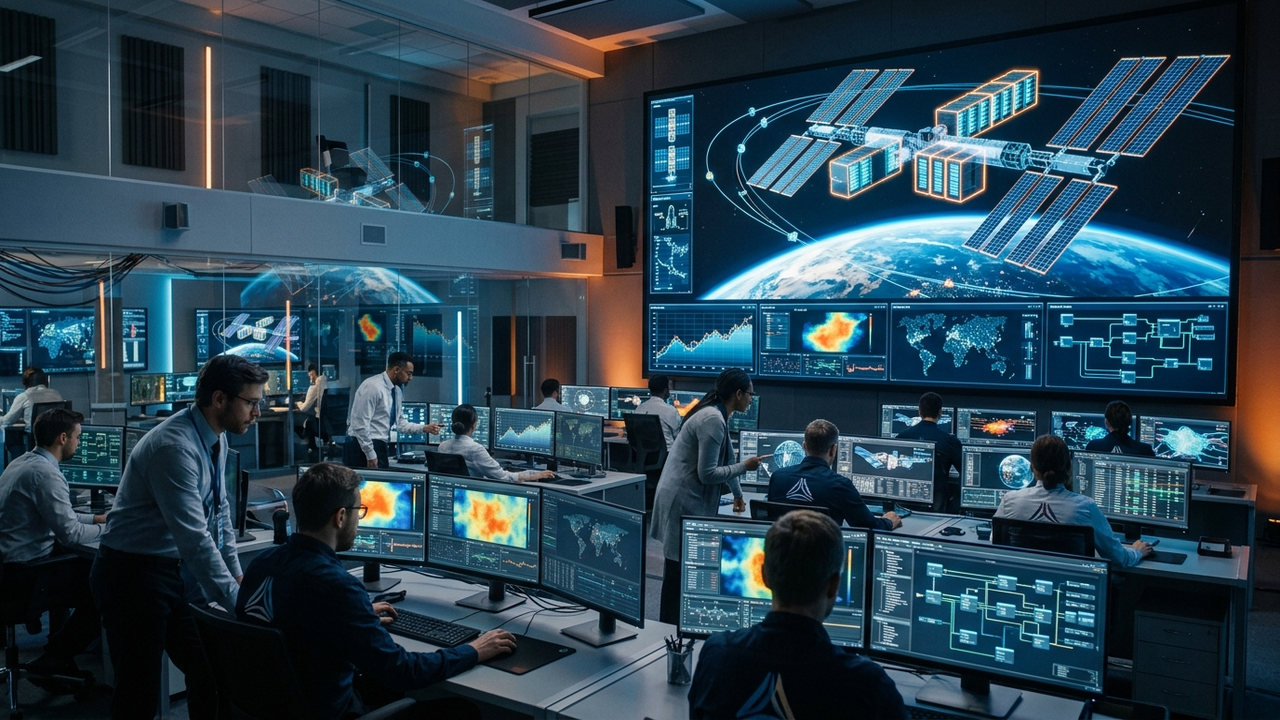
Boston Consulting Group (BCG) has published an analysis indicating that space-based data centers are poised to become technically feasible and scalable within the next 5 to 10 years, with the potential to secure a significant 10-15% share of the global AI data center market by 2040. This projection positions space infrastructure as a critical pillar for supporting next-generation computational demands.
Technical and Economic Details
- Technical Viability: The report highlights that space-based data centers will reach operational scale due to advancements in next-generation satellite technology, laser communications, and highly efficient power systems, including advanced solar arrays and compact nuclear reactors. Key considerations for long-term viability include in-orbit maintenance, upgradeability, and modular scalability.
- Market Potential: The forecast of capturing a portion of the global AI data center market by 2040 underscores a high-value, albeit niche, market segment. While an initial cost premium over terrestrial infrastructure is anticipated, this is offset by the unique advantages offered for specific use cases.
- Unique Advantages: The primary benefits of space-based data centers include:
- Sovereign AI Workloads: Providing independent computational capabilities for national security and highly sensitive data processing, free from terrestrial geopolitical boundaries or physical infrastructure constraints.
- Space-Generated Data Processing: Real-time, in-orbit processing of vast amounts of data from Earth observation satellites, communication satellites, and space probes, overcoming data transmission latency and bandwidth limitations.
- Energy Efficiency and Cooling: The vacuum of space offers superior passive cooling solutions compared to Earth, potentially contributing to long-term energy efficiency and optimized operational costs.
Background and Industry Context
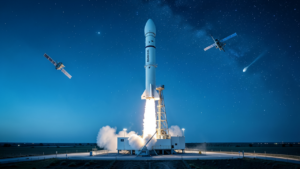
The rapid evolution of AI demands immense computational and data processing power, pushing the limits of terrestrial data centers concerning power consumption and cooling. Simultaneously, the space industry is experiencing a revolution driven by innovations such as small satellites, reusable rockets, and in-orbit services, leading to lower-cost, high-frequency access to space. The convergence of these two trends is creating a fertile ground for the emergence of space-based data centers, which represent a new frontier for overcoming geographical constraints in digital infrastructure and enhancing cybersecurity and data sovereignty.
Strategic Significance and Outlook
Space-based data centers are expected to function as a complementary layer to terrestrial infrastructure, rather than a direct replacement. They will offer unique value, particularly for advanced AI inference, edge computing, and highly sensitive government and defense applications. As technology matures, launch costs decrease, and regulatory frameworks evolve, space data centers are anticipated to play an indispensable role in the global digital economy. Investors and technology developers are keenly observing this nascent market’s growth potential and are encouraged to accelerate the transition from initial technological demonstrations to full commercial deployment.
Source: https://www.bcg.com/publications/2026/space-based-data-centers-cost-outlook
Get our weekly technology intelligence — free
Receive an infographic that lets you judge at a glance whether each field’s analysis report is worth reading.
Subscribe Free — Weekly Tech Intelligence
By subscribing, you’ll receive Troy-Technical’s weekly technology intelligence newsletter.
- Your email and selected fields are used only to deliver the newsletter.
- We never share your information with third parties.
- You can unsubscribe anytime via the link in each email.
See our Privacy Policy for details.
Takes about a minute · Unsubscribe anytime




Comments