Key Findings
The United States set an unprecedented record in Q2 2026, installing 20.2 gigawatt-hours (GWh) of new battery energy storage system (BESS) capacity, culminating in a first-half total of 30.8 GWh. This historic deployment signifies a near doubling of utility-scale storage capacity, from 88 GWh to 165 GWh, within the first 18 months of the Trump administration, symbolizing a robust response to enhancing grid reliability and addressing burgeoning electricity demand.
Technical / Clinical Details
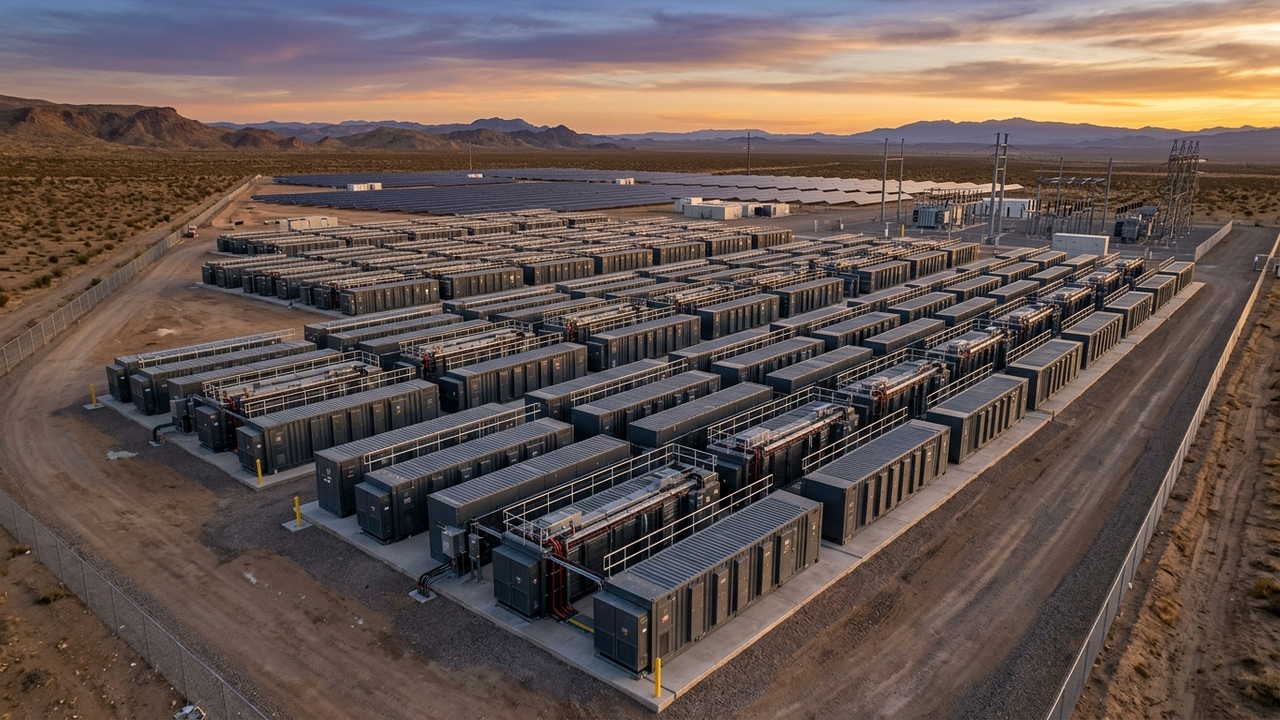
Of the 20.2 GWh deployed in Q2 2026, the majority comprised utility-scale projects, with several massive installations exceeding 1,000 MWh each in Arizona, California, and Utah. These systems primarily utilize lithium-ion batteries, playing an indispensable role in stabilizing the power grid and managing the intermittency of renewable energy sources. Notably, Tesla has operationalized its third Gigafactory in Texas, establishing an annual Megapack production capacity of 50 GWh. The company has begun shipping Megapacks containing domestically manufactured lithium iron phosphate (LFP) cells, contributing to supply chain localization and cost efficiency. Furthermore, Google has secured a contract to purchase a 30 GWh iron-air battery system from Form Energy to stabilize power supply for its data centers, highlighting a growing interest in long-duration energy storage technologies.
Background & Context
The U.S. energy storage market is being profoundly shaped by the AI boom, which has led to a dramatic surge in data center power consumption and exacerbated grid interconnection delays, positioning batteries as critical tools for ‘rapid power provision.’ The approximately 31 GWh of battery storage systems operationalized in H1 2026 represent a year-over-year increase of over 23%, underscoring the market’s strong momentum. Policy incentives like the Inflation Reduction Act (IRA) are powerfully stimulating domestic manufacturing and deployment. Significantly, over 74% of the capacity installed in Q2 was concentrated in states that President Donald Trump won in 2024, including Arizona, Texas, and Utah, suggesting potential political influences on energy infrastructure investment.
Strategic Significance & Outlook
Demand for energy storage is substantially exceeding initial forecasts, leading to an 11.5% upward revision of the cumulative U.S. installed capacity prediction for 2030, now projected to reach 683 GWh. Benchmark Minerals anticipates that total U.S. battery storage installations in 2026 will reach approximately 71 GWh, an increase of about 20% compared to 2025. This rapid expansion will be further accelerated by increased renewable energy integration, grid modernization efforts, and explosive data center demand. As the transition to an AI-driven economy pushes electricity demand to unprecedented levels, battery storage is expected to further elevate its strategic value in grid stabilization, peak demand shaving, and ensuring energy security. Continued investment and technological innovation in this sector are key to achieving U.S. clean energy targets.
Get our weekly technology intelligence — free
Receive an infographic that lets you judge at a glance whether each field’s analysis report is worth reading.
Subscribe Free — Weekly Tech Intelligence
By subscribing, you’ll receive Troy-Technical’s weekly technology intelligence newsletter.
- Your email and selected fields are used only to deliver the newsletter.
- We never share your information with third parties.
- You can unsubscribe anytime via the link in each email.
See our Privacy Policy for details.
Takes about a minute · Unsubscribe anytime








Comments