Key Findings
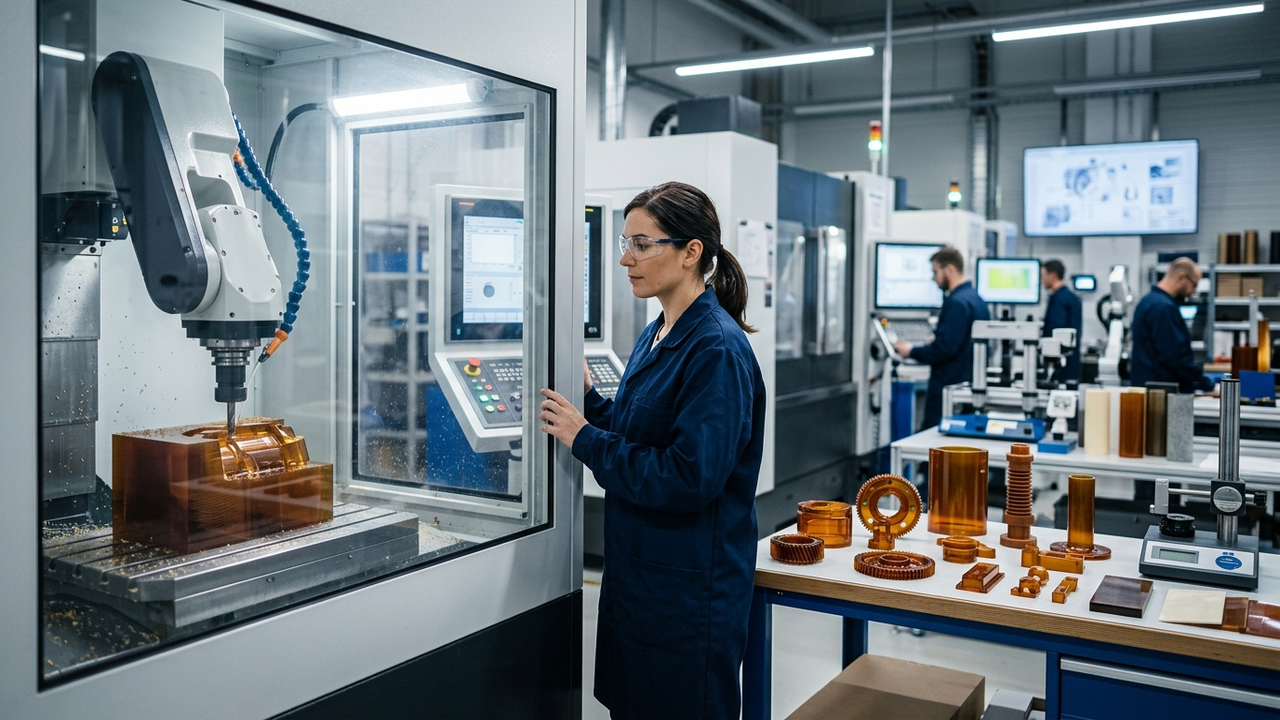
YD Rapid has published an article providing a detailed explanation of the exceptional performance of Polyimide (PI) material in the field of CNC machining. PI is particularly noteworthy as a high-performance engineering polymer capable of withstanding high-temperature environments while maintaining its mechanical and electrical properties. This material represents a versatile family of polymers whose strength, frictional properties, wear resistance, thermal characteristics, and electrical properties can be extensively tuned by specific formulations and the incorporation of fillers such as graphite or carbon. This versatility makes PI an optimal choice for components used under extreme conditions in industries like aerospace, automotive, semiconductor manufacturing, and industrial machinery.
Technical / Product Details
Polyimide (PI) refers to a class of high-performance polymers characterized by imide linkages in their molecular structure, which impart superior thermal stability and mechanical strength. For CNC machining applications, PI offers the following key advantages:
- Exceptional High-Temperature Resistance: PI typically boasts continuous service temperatures exceeding 250°C and can withstand brief excursions above 400°C. This characteristic surpasses many other engineering plastics, making it suitable for engine components, high-temperature sensor housings, and oven parts.
- High Mechanical Strength and Rigidity: PI maintains high tensile, flexural, and compressive strength at elevated temperatures and exhibits excellent creep resistance. This enables its use in structural components and parts subjected to high loads.
- Superior Friction and Wear Resistance: By incorporating lubricating fillers such as graphite, PTFE, or carbon fiber, PI can achieve low coefficients of friction and high wear resistance. This translates to extended lifespan and reduced maintenance for sliding components like bushings, bearings, and seals.
- Good Electrical Insulation: Unfilled PI is an excellent electrical insulator, used for insulating electrical components in high-temperature environments. Its low dielectric loss properties also make it suitable for high-frequency applications.
- Chemical Resistance: PI exhibits high resistance to many chemicals and solvents, allowing its use in corrosive environments.
In CNC machining, PI’s rigidity and thermal stability allow for the production of high-precision parts. However, due to its hardness and toughness, selecting appropriate cutting tools and machining parameters is crucial for successful processing.
Background & Context
Industries such as aerospace, automotive, semiconductor manufacturing, and energy constantly demand components that are lighter, offer higher performance, and can operate under increasingly harsh conditions. Particularly when lightweighting must be achieved concurrently with reliability in high-temperature environments, high-performance polymers capable of replacing metal parts are highly sought after. Polyimide is one of the few materials that meet these requirements, and its ability to custom-produce complex shapes via CNC machining enhances product development flexibility and accelerates time-to-market. This capability is leveraged across a wide range of applications, from low-volume production and prototyping to functional parts for specific niche markets.
Strategic Significance & Outlook
The polyimide CNC machining market is projected to continue growing, driven by trends toward enhanced functionality and customization. Adoption is expected to expand particularly in sectors with increasingly stringent performance requirements, such as medical implants, precision components for next-generation semiconductor manufacturing equipment, and lightweight structural parts for aerospace. Future focus will include further functionalization of PI materials (e.g., through nanofillers), optimization of CNC machining techniques to reduce processing time and cost, and the realization of more complex, integrated structures. These advancements are anticipated to further solidify PI’s crucial role in future high-performance engineering applications.
Source: https://ydrapid.com/blog/pi-material-for-cnc-machining/
Get our weekly technology intelligence — free
Receive an infographic that lets you judge at a glance whether each field’s analysis report is worth reading.
Subscribe Free — Weekly Tech Intelligence
By subscribing, you’ll receive Troy-Technical’s weekly technology intelligence newsletter.
- Your email and selected fields are used only to deliver the newsletter.
- We never share your information with third parties.
- You can unsubscribe anytime via the link in each email.
See our Privacy Policy for details.
Takes about a minute · Unsubscribe anytime





Comments