Key Findings
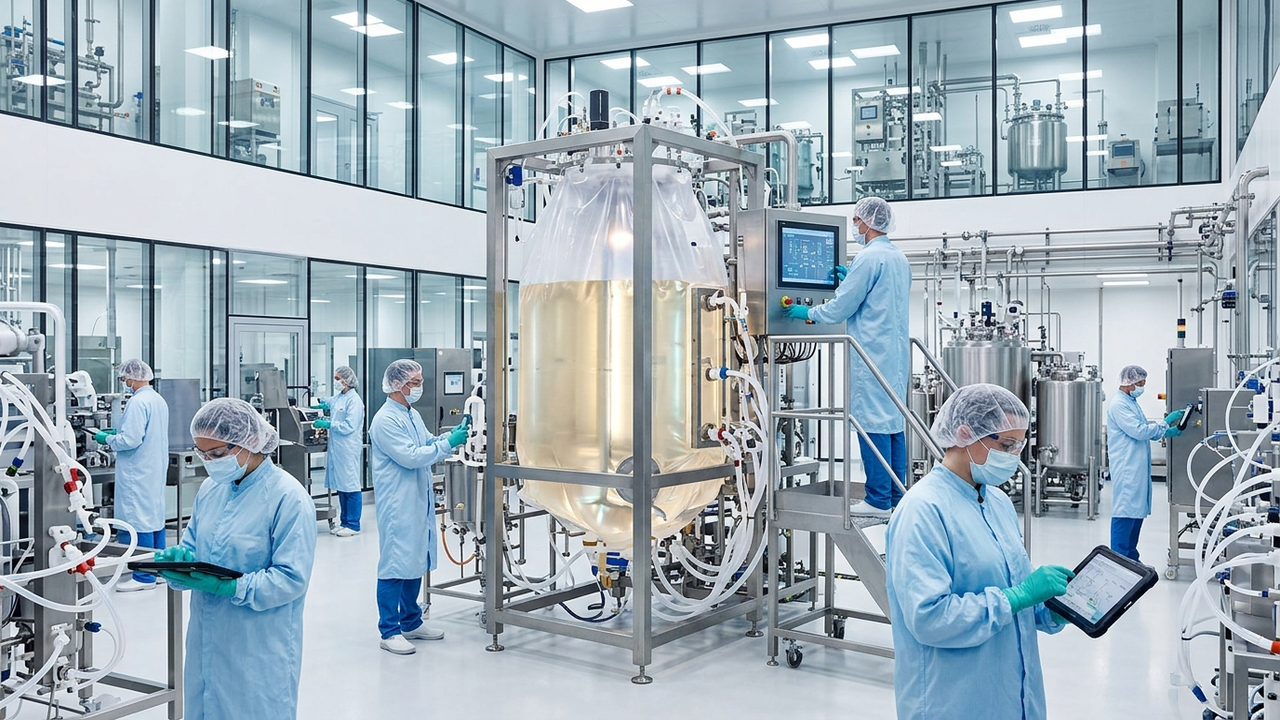
The economics of single-use biomanufacturing are now heavily influenced by multifaceted factors beyond mere bioreactor volume, including facility utilization rates, process productivity, and total annual throughput. The combination of larger single-use bioreactors with process intensification techniques is unlocking new commercial manufacturing strategies previously unattainable with traditional stainless steel equipment.
Technical and Business Details
Single-use systems eliminate the need for Clean-in-Place (CIP) and Steam-in-Place (SIP) procedures, dramatically reducing setup and turnaround times and enhancing flexibility for manufacturing multiple products in the same facility. Recent advancements have seen the emergence of large-scale single-use bioreactors, some exceeding 2000L in volume. When combined with process intensification technologies like continuous perfusion culture or intensified fed-batch culture, these systems enable commercial-scale production that was previously uneconomical with smaller single-use setups. This allows for achieving target annual production volumes more efficiently and with lower capital expenditures (CAPEX). Waste management and reducing environmental impact are also critical considerations, demanding optimization across the entire supply chain.
Background and Industry Context
The biopharmaceutical industry increasingly values manufacturing flexibility and agility due to the rise of high-mix, low-volume production, advances in personalized medicine, and the need for rapid production scale-up during pandemics. While traditional stainless steel facilities were suitable for large-scale production, they suffered from high changeover costs and lengthy times, making them unsuitable for small-batch production. Single-use technology emerged as a solution to these challenges, initially primarily used for clinical trial stages and rare disease drug production. However, with technological maturity and improved scale-up capabilities, it has now become a mainstream component of commercial manufacturing.
Strategic Significance and Outlook
The economics of single-use biomanufacturing will continue to evolve, remaining a critical factor influencing the competitiveness of the biopharmaceutical industry. Further advancements in scale, automation, and supply chain integration will enable efficient production of even more complex biopharmaceuticals and advanced modalities like cell and gene therapy products. This will allow pharmaceutical companies to reduce risks and shorten time-to-market, providing patients with faster and broader access to innovative therapies. Single-use technology is expected to be an indispensable driver towards realizing a sustainable and flexible biomanufacturing ecosystem.
Source: https://www.pharmasalmanac.com/articles/the-changing-economics-of-single-use-biomanufacturing
Get our weekly technology intelligence — free
Receive an infographic that lets you judge at a glance whether each field’s analysis report is worth reading.
Subscribe Free — Weekly Tech Intelligence
By subscribing, you’ll receive Troy-Technical’s weekly technology intelligence newsletter.
- Your email and selected fields are used only to deliver the newsletter.
- We never share your information with third parties.
- You can unsubscribe anytime via the link in each email.
See our Privacy Policy for details.
Takes about a minute · Unsubscribe anytime





Comments