Key Findings
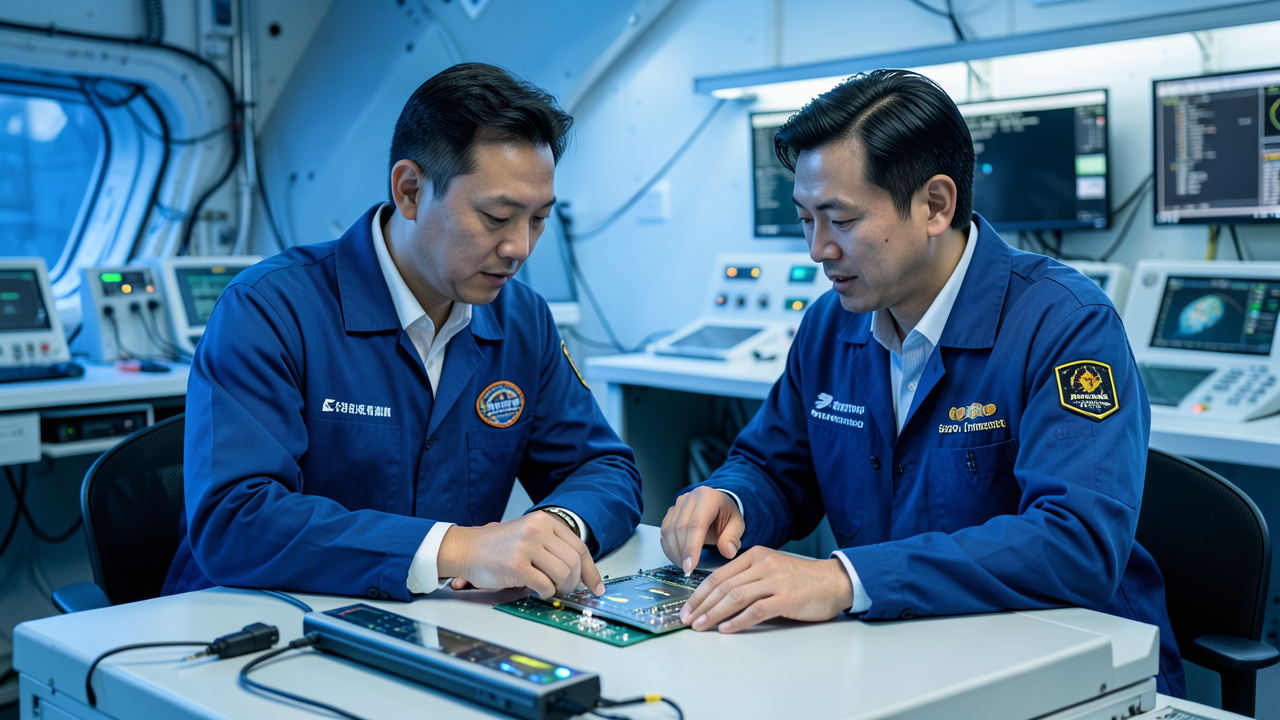
Humanoid robot tactile perception is undergoing revolutionary advancements. Researchers at Hanyang University in South Korea have developed a compact dual-gate triboelectric transistor that detects touch, pressure, and proximate objects, showcasing significant size reduction and electrically tunable sensitivity. In parallel, a collaborative team from China University of Mining and Technology, the University of Birmingham, and Soochow University engineered a capacitive pressure sensor by incorporating graphene and fine spherical iron particles into a silicone polymer. This new electronic skin demonstrated 100% accuracy in identifying 10 different objects using a five-fingered robotic hand, signifying a major leap towards human-like robotic touch and enabling safer, more dexterous manipulation.
Technical / Clinical Details
Hanyang University’s Breakthrough
The dual-gate triboelectric transistor developed by Hanyang University’s team features a vertically integrated design, combining sensor and transistor layers. This architecture drastically reduces the device’s footprint compared to conventional planar sensors while enabling multi-functional sensing. The sensor can detect not only pressure from contact but also changes in capacitance as an object approaches, allowing for proximity sensing without physical touch. Furthermore, the dual-gate structure provides electrical tunability of sensitivity, enabling precise adjustments of the sensor’s response by varying applied voltages, thus offering adaptability to diverse operational scenarios. This flexible sensor is anticipated for applications in robotic fingertips, prosthetics, and wearable devices.
China-UK-Soochow University Team’s Innovation
The electronic skin developed by this collaborative team is a capacitive pressure sensor created by embedding fine spherical iron particles and ultra-thin graphene sheets within a flexible silicone polymer matrix. By combining graphene’s high conductivity and flexibility with the magnetic responsiveness of iron particles, the sensor achieves both a wide pressure detection range (e.g., from pascals to megapascals) and exceptionally high sensitivity, capable of detecting minute contact forces. Experimental results demonstrated that a five-fingered robotic hand equipped with this sensor could identify 10 distinct objects of varying shapes, stiffnesses, and surface textures with an impressive 100% accuracy. This capability signifies not just object recognition but also the ability to accurately perceive subtle details such as object hardness, texture, and even impending slippage.
Background & Context
In the advancement of humanoid robotics, tactile information is as critical as visual data. While many current robots heavily rely on cameras and LiDAR for object shape and position, these systems often fall short in providing detailed information about surface texture, hardness, and the precise force required for grasping. Tactile sensing is fundamental for humans to safely manipulate objects and interact with their environment. For robots to achieve delicate tasks in manufacturing, provide sensitive care as service robots, or perform dexterous daily activities, human-like tactile capabilities are indispensable. These new electronic skin technologies are pivotal in bridging this gap, representing a significant stride towards a cyborg-like future of human-machine integration.
Strategic Significance & Outlook
These advanced electronic skin sensors hold the potential to revolutionize humanoid robotics, medical prosthetics, and smart wearable devices. Robots will be able to handle fragile items without damage, adjust appropriate pressure when interacting with humans, and perform complex manipulations with unprecedented finesse. Prosthetic users could gain more natural tactile feedback, significantly improving their quality of life. Furthermore, this technology is expected to extend its application to haptic feedback systems in virtual (VR) and augmented reality (AR), precision sensors for medical diagnostics, and next-generation human-machine interfaces (HMIs). The continued synergy between material science, nanotechnology, and machine learning will undoubtedly drive further leaps in tactile sensing precision and practicality.
Get our weekly technology intelligence — free
Receive an infographic that lets you judge at a glance whether each field’s analysis report is worth reading.
Subscribe Free — Weekly Tech Intelligence
By subscribing, you’ll receive Troy-Technical’s weekly technology intelligence newsletter.
- Your email and selected fields are used only to deliver the newsletter.
- We never share your information with third parties.
- You can unsubscribe anytime via the link in each email.
See our Privacy Policy for details.
Takes about a minute · Unsubscribe anytime






Comments