Key Findings
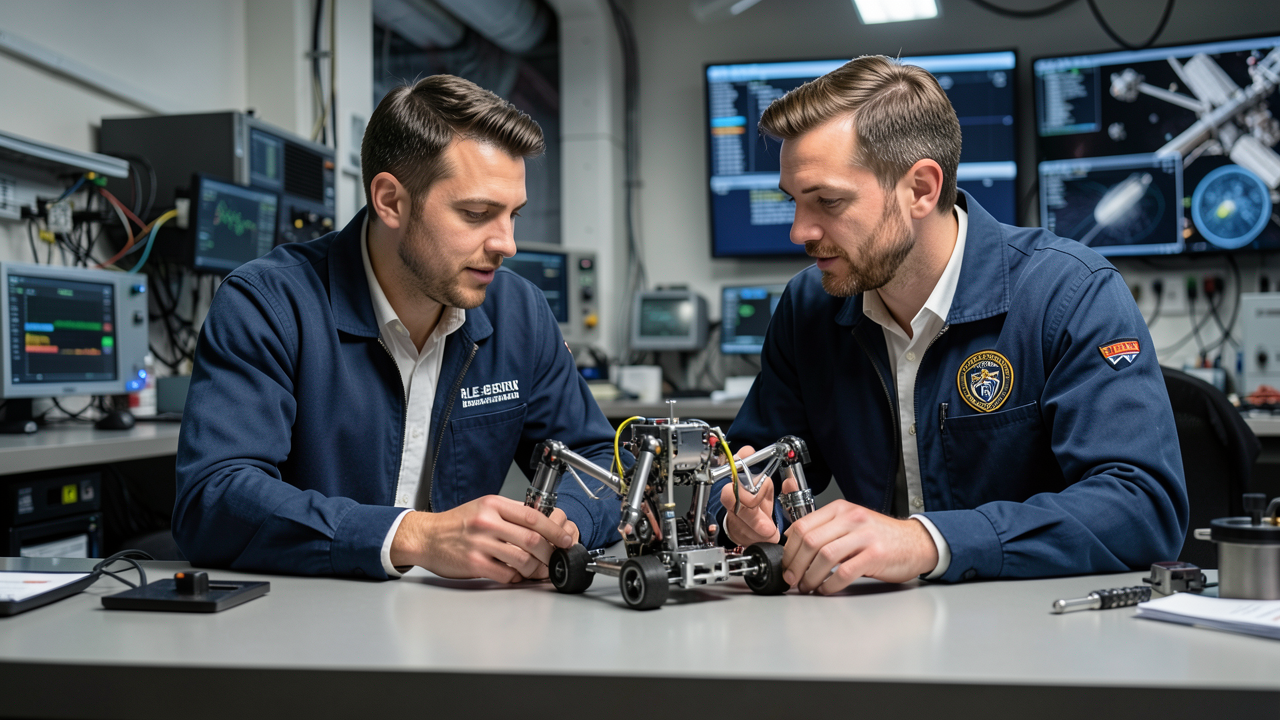
Researchers from Harvard John A. Paulson School of Engineering and Applied Sciences (SEAS) and Georgia Tech’s School of Computational Science and Engineering have released “RLE-Bench,” an open-source evaluation tool designed to test how well AI coding agents can design and operate physical robot systems. This represents the first comprehensive benchmark to objectively measure AI engineering capabilities for physical systems.
Technical / Clinical Details
- Purpose of RLE-Bench: RLE-Bench was developed to systematically evaluate the capabilities of AI systems as “robot learning engineers”—that is, their ability to design, control, and refine robots that function effectively in complex physical environments.
- Evaluation Domains: The benchmark assesses the performance of AI coding agents across four broad categories:
- Interactive Control: The robot’s ability to dynamically interact with its physical environment.
- Policy Development: The capacity to generate and optimize behavioral strategies to accomplish specific tasks.
- Perception and Estimation: The ability to interpret sensor data, understand the environment, and estimate relevant states.
- Mechanical Design: The skill to optimize and design the physical structure and configuration of a robot.
- Benefits of Open Source: Being open-source, RLE-Bench allows researchers and developers worldwide to utilize this tool to fairly compare their AI models and accelerate progress. A common evaluation framework promotes collaboration and innovation across the broader AI robotics community.
Background & Context
While AI has driven significant advancements in software development automation, the design and engineering of robotic systems that interact directly with the physical world remain complex, human-intensive processes. The ability for AI to autonomously design robots and generate control code is considered one of the ultimate goals of “AI engineers.” However, a standardized benchmark to objectively and comprehensively evaluate this capability has been lacking. RLE-Bench fills this gap, providing an essential tool for measuring how AI performs in the physical world.
Strategic Significance & Outlook
The introduction of RLE-Bench is expected to profoundly influence research and development in AI robotics. Through this benchmark, researchers can identify the strengths and weaknesses of AI coding agents, thereby accelerating the development of more robust and intelligent autonomous robotic systems. In the future, as AI automates more aspects of the robot development process, from complex mechanical design to control algorithm generation, it is anticipated to shorten product development cycles, foster innovation, and contribute to the creation of novel robotic applications across various industries.
Source: https://seas.harvard.edu/news/can-your-ai-engineer-robot
Get our weekly technology intelligence — free
Receive an infographic that lets you judge at a glance whether each field’s analysis report is worth reading.
Subscribe Free — Weekly Tech Intelligence
By subscribing, you’ll receive Troy-Technical’s weekly technology intelligence newsletter.
- Your email and selected fields are used only to deliver the newsletter.
- We never share your information with third parties.
- You can unsubscribe anytime via the link in each email.
See our Privacy Policy for details.
Takes about a minute · Unsubscribe anytime








Comments