Key Findings
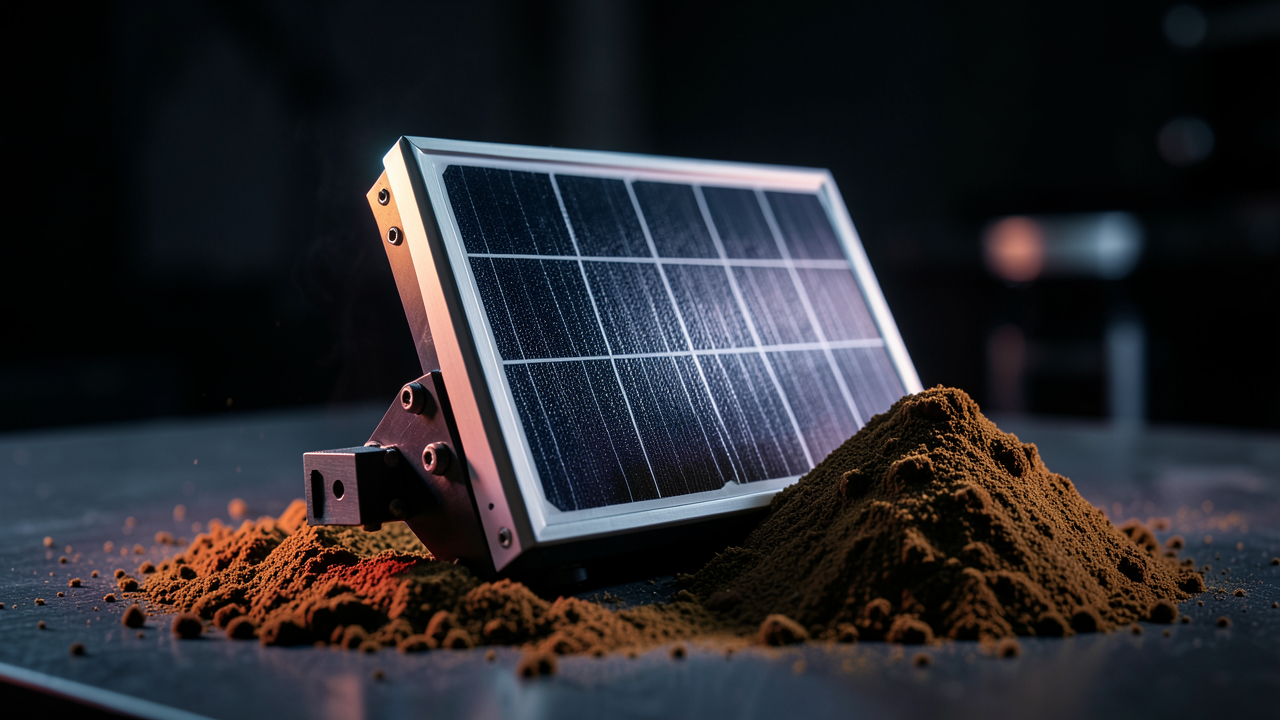
A comprehensive meta-analysis published on September 14, 2026, highlights the remarkable progress in power conversion efficiency (PCE) of perovskite solar cells (PSCs). Single-junction PSCs now exhibit average PCEs ranging from 18-22%, while tandem perovskite-silicon structures have surpassed 26% efficiency, outperforming many established photovoltaic technologies. Despite these impressive gains, the analysis critically points out that instability against moisture, heat, and irradiation stress remains a major impediment to PSC commercialization. A significant number of PSC devices experience over 20% efficiency loss within a mere 1,000 hours of operation.
Technical / Clinical Details
The meta-analysis attributes the efficiency improvements in PSCs to advancements in interface engineering, gradient composition control, and the deployment of novel materials. Specifically, defect passivation techniques at the interfaces between active and transport layers, along with compositional tuning to optimize bandgaps, have been shown to enhance carrier extraction and suppress non-radiative recombination. Conversely, the inherent stability issues of PSCs stem from their material properties, citing intrinsic vulnerabilities to moisture, oxygen, heat, and UV light. These factors accelerate device degradation, making long-term performance difficult to sustain. Current research indicates that robust encapsulation technologies and the development of more intrinsically stable perovskite compositions are essential to protect devices from these environmental stressors.
Background & Context
Perovskite solar cells have garnered significant global attention as a next-generation photovoltaic technology due to their high PCE and potential for low-cost manufacturing. Their adaptability allows for diverse applications beyond traditional silicon panels, including flexible substrates and transparent devices. This meta-analysis reaffirms the immense potential of PSCs while squarely focusing on stability as the paramount barrier to practical implementation. The findings suggest that the research and development trajectory must shift from solely pursuing efficiency to prioritizing long-term reliability as an urgent challenge.
Strategic Significance & Outlook
As indicated by this meta-analysis, a dramatic improvement in device stability is indispensable for the widespread commercial deployment of perovskite solar cells. Future research will likely accelerate in areas such as innovative material design, advanced encapsulation methods, and optimized device architectures to enhance resistance against moisture, heat, and light stress. The development of devices capable of achieving less than 20% efficiency loss after more than 1,000 hours of continuous operation will be a crucial benchmark for establishing market competitiveness. Overcoming this stability challenge will enable PSCs to play a transformative role in the renewable energy market.
Source: https://www.irejournals.com/paper-details/1723060
Get our weekly technology intelligence — free
Receive an infographic that lets you judge at a glance whether each field’s analysis report is worth reading.
Subscribe Free — Weekly Tech Intelligence
By subscribing, you’ll receive Troy-Technical’s weekly technology intelligence newsletter.
- Your email and selected fields are used only to deliver the newsletter.
- We never share your information with third parties.
- You can unsubscribe anytime via the link in each email.
See our Privacy Policy for details.
Takes about a minute · Unsubscribe anytime


Comments