Key Findings
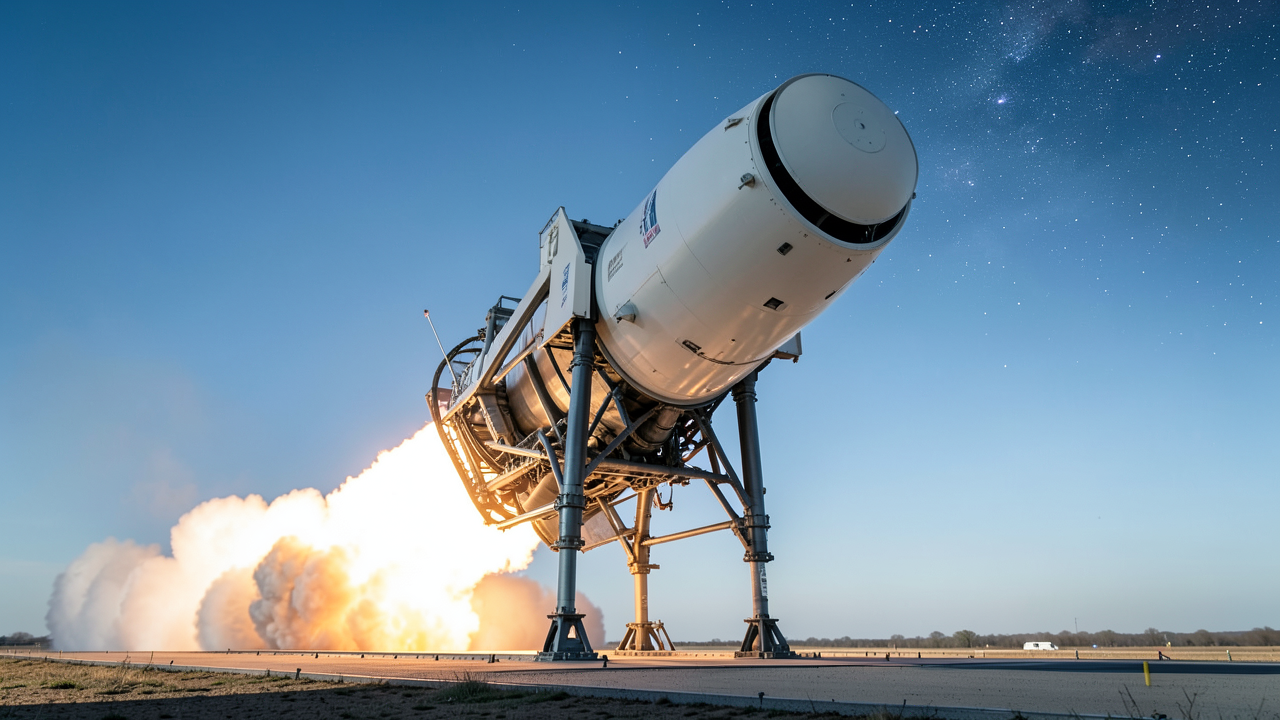
LandSpace, a private Chinese aerospace company, successfully performed China’s first ground-controlled recovery of its Zhuque-3 rocket booster in August 2026. This pivotal achievement, utilizing landing legs similar to SpaceX’s Falcon 9, marks a significant milestone for China in the global race for reusable launch technology.
Technical / Clinical Details
The successful recovery of the Zhuque-3 booster was made possible by advanced guidance and control systems, integrated with robust landing gear. This technology, pioneered by companies like SpaceX, enables precise atmospheric reentry and vertical landing. However, LandSpace’s choice of heavy stainless steel for reentry durability, while robust, adds significant mass to the booster, potentially limiting its payload capacity compared to lighter material approaches used by international counterparts like SpaceX. This engineering trade-off highlights the complex challenges in balancing structural integrity with performance.
Background & Context
The pursuit of reusable rockets is a cornerstone of modern space exploration, promising drastic reductions in launch costs and expanded access to space. SpaceX’s Falcon 9 has set a global precedent, inspiring space companies worldwide to invest in similar technologies. China has consistently advanced its space capabilities, and LandSpace’s achievement underscores an accelerating trend of innovation driven by the private sector within the country’s broader space program. This move is crucial for China to remain competitive in the rapidly evolving commercial space market.
Strategic Significance & Outlook
The immediate challenge for LandSpace is to demonstrate the actual reusability and re-launch capability of its recovered boosters. Overcoming the payload limitations imposed by the stainless steel structure, while establishing a cost-effective operational model, will be critical for LandSpace’s long-term competitiveness and the overall development of China’s space industry. The maturation of this technology is a vital step towards diversifying satellite launch services and enabling a wider array of space activities, contributing to global space infrastructure.
Get our weekly technology intelligence — free
Receive an infographic that lets you judge at a glance whether each field’s analysis report is worth reading.
Subscribe Free — Weekly Tech Intelligence
By subscribing, you’ll receive Troy-Technical’s weekly technology intelligence newsletter.
- Your email and selected fields are used only to deliver the newsletter.
- We never share your information with third parties.
- You can unsubscribe anytime via the link in each email.
See our Privacy Policy for details.
Takes about a minute · Unsubscribe anytime








Comments