
Key Findings: SK Hynix Imposes Strict 90%+ Yield and 3-Year Lifespan Conditions for Hybrid Bonding Adoption
SK Hynix has outlined very strict quality criteria for the adoption of hybrid bonding, a pivotal technology for next-generation HBM (High Bandwidth Memory) manufacturing. The company mandates that the yield rate must be within the 90% to 98% range, and the product lifespan must be guaranteed for 3 to 5 years as essential conditions for implementing this advanced technology. This high bar reflects both the company’s expectations for and concerns regarding the maturity and mass-production applicability of hybrid bonding technology.
Technical Details: Advantages and Challenges of Hybrid Bonding
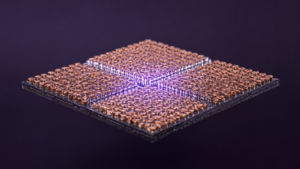
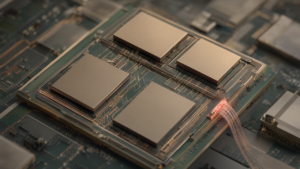
Hybrid bonding, unlike traditional microbump-based joining methods, directly connects copper-to-copper, enabling higher density and lower resistance interconnections between chips. This allows for significant reduction in HBM stack thickness, as well as lower power consumption and heat generation during data transfer. These characteristics are indispensable for enhancing HBM performance in AI accelerators and High-Performance Computing (HPC). However, achieving stable high yields remains the greatest technical challenge, as it requires extremely precise process control over copper surface cleanliness, alignment accuracy, and bonding pressure.
Industry Trends and Competition: Equipment Manufacturer Progress and Market Demands
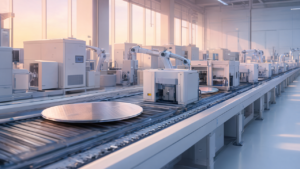
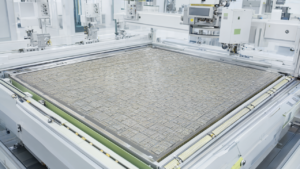
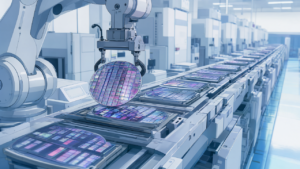
Hybrid bonding is a fundamental technology that HBM manufacturers aim to adopt for their next-generation products, but yield issues have been a bottleneck for its mass production deployment. Equipment manufacturers are accelerating development to resolve these challenges. For instance, Tokyo Electron has already introduced high-precision wafer-to-wafer (W2W) bonding equipment to the market and is actively advancing die-to-wafer (D2W) bonding technology. The stringent criteria set by SK Hynix can be seen as part of its strategy to introduce high-quality and reliable products to the market ahead of competitors, amidst intensifying competition in the HBM market.
Future Outlook: HBM Market Innovation and Supply Chain Impact
The conditions set by SK Hynix will serve as a crucial milestone for the full-scale mass production integration of hybrid bonding technology into HBM. Equipment manufacturers and material suppliers will be compelled to pursue further technological development and optimization to meet these demands. If hybrid bonding yield issues are resolved and stable mass production becomes feasible, HBM performance will improve dramatically, accelerating the evolution of AI and HPC. Conversely, the timing and cost of implementing this technology will significantly impact each company’s competitiveness in the HBM market and will be a determining factor in the pace of technological innovation across the entire semiconductor supply chain.
Source: https://finance.biggo.jp/news/2ec25972-e64d-4693-b246-9525a79b4b5f
Get our weekly technology intelligence — free
Receive an infographic that lets you judge at a glance whether each field’s analysis report is worth reading.
Subscribe Free — Weekly Tech Intelligence
By subscribing, you’ll receive Troy-Technical’s weekly technology intelligence newsletter.
- Your email and selected fields are used only to deliver the newsletter.
- We never share your information with third parties.
- You can unsubscribe anytime via the link in each email.
See our Privacy Policy for details.
Takes about a minute · Unsubscribe anytime


Comments