Key Findings
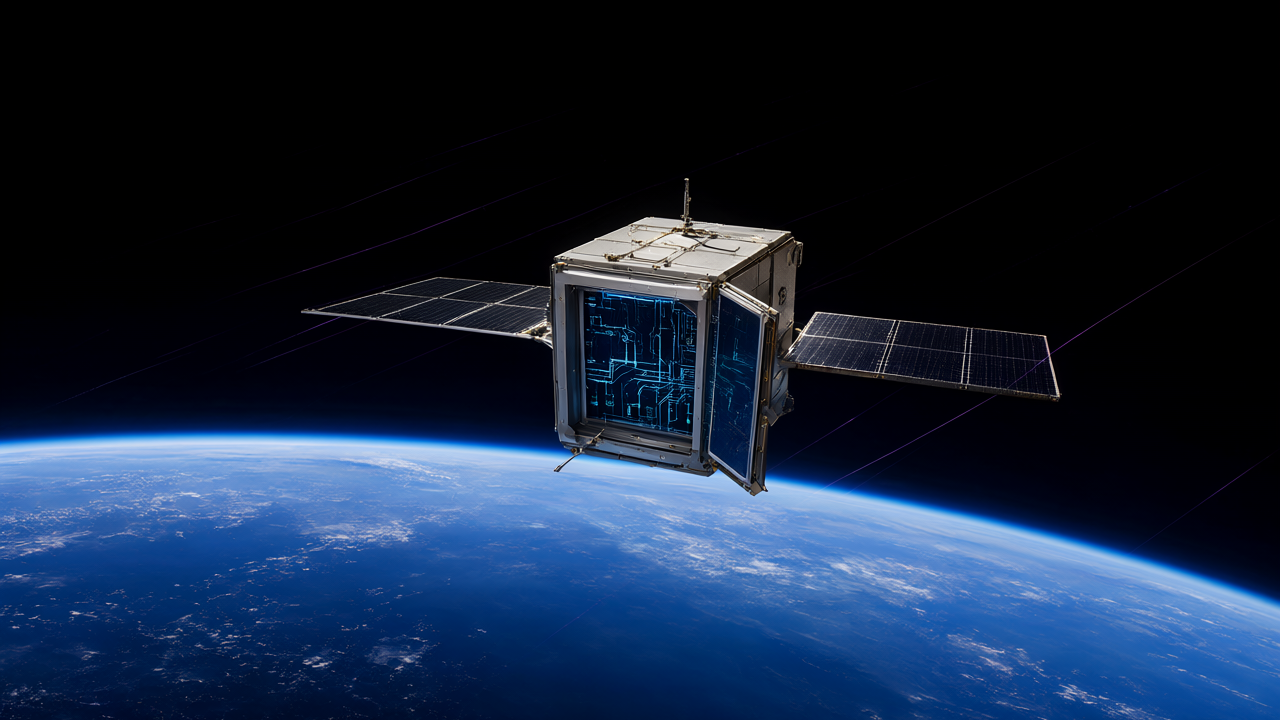
Google is embarking on a pivotal mission with SpaceX’s Transporter-18 to launch its Project Suncatcher prototype satellite, initiating tests to determine if its AI chips can function reliably in the harsh environment of space. This endeavor is a significant stride towards Google’s ambitious vision of establishing orbital data centers, enabling high-performance AI computing beyond Earth’s atmosphere.
Technical / Clinical Details
The core of this mission involves evaluating Google’s proprietary AI chips for their ability to withstand the intense forces of launch, the high levels of radiation (cosmic rays and solar particles) prevalent in space, and extreme temperature fluctuations. Although these chips are primarily designed for terrestrial data centers, Google has developed specialized cooling systems, including heat pipes and radiators, which have undergone rigorous testing in chambers simulating the vacuum and temperatures of space. Low Earth Orbit (LEO) offers unique advantages, such as near-constant exposure to sunlight, potentially providing up to eight times more solar power generation than on Earth. This abundant energy source could be highly beneficial for processing energy-intensive AI workloads in space. The initial prototype satellite will transmit detailed telemetry data to Earth, focusing on chip operational status, potential radiation-induced damage, and the performance of the thermal management system.
Background & Context
The burgeoning volume of data generated daily by Earth observation, communication, and deep-space exploration satellites presents a significant bottleneck for bandwidth, latency, and processing capacity if all data must be transmitted to and processed on Earth. By deploying AI chips in space, Google aims to enable “space-based edge computing,” where data is processed closer to its source. This approach reduces the volume of data transmitted to Earth and facilitates real-time decision-making, which is revolutionary for applications in disaster response, climate change monitoring, and space exploration. Google’s investment in this sector also signifies a major push in commercializing space technology, fostering innovation, and creating new competitive and collaborative opportunities for both established and emerging space companies.
Strategic Significance & Outlook
The success of this initial test mission for Project Suncatcher is paramount for Google to outline a concrete roadmap for realizing orbital AI data centers. Should this technology prove viable, it could lead to the establishment of a vast, distributed AI computing network in space, creating a more robust and scalable space infrastructure independent of terrestrial dependencies. This would accelerate real-time data analysis from space, enable autonomous spacecraft operations, and facilitate scientific discoveries previously deemed impossible. Orbital AI computing is expected to impact diverse sectors, including communications, navigation, Earth observation, and defense, forming a cornerstone of the next-generation space economy. Simultaneously, international cooperation on AI ethics, data security, and orbital congestion management will be essential to govern this technological advancement responsibly.
Get our weekly technology intelligence — free
Receive an infographic that lets you judge at a glance whether each field’s analysis report is worth reading.
Subscribe Free — Weekly Tech Intelligence
By subscribing, you’ll receive Troy-Technical’s weekly technology intelligence newsletter.
- Your email and selected fields are used only to deliver the newsletter.
- We never share your information with third parties.
- You can unsubscribe anytime via the link in each email.
See our Privacy Policy for details.
Takes about a minute · Unsubscribe anytime







Comments