Key Findings
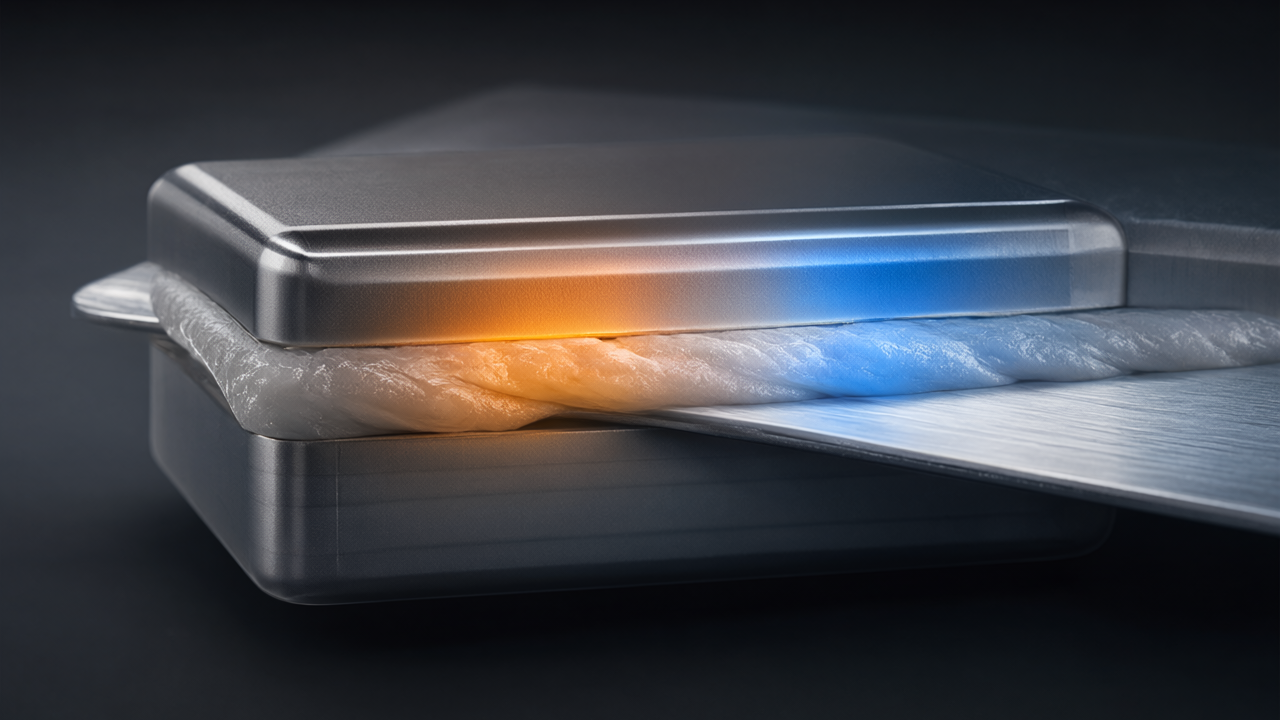
In the thermal gap compound market, material innovation is intensely focused on developing high thermal conductivity and environmentally friendly products. Specifically for electric vehicle (EV) battery pack assemblies, Dow offers ‘DOWSIL TC-5533,’ a gap filler with a thermal conductivity of 3.0 W/mK, while Henkel provides a silicone-free, battery-grade material with 1.7 W/mK. These products facilitate efficient thermal management of heat-generating components, significantly improving system performance and lifespan.
Technical Details
Dow’s DOWSIL TC-5533, with its superior thermal conductivity of 3.0 W/mK, minimizes thermal resistance between battery cells and cooling fins, efficiently dissipating heat. This prevents the formation of hot spots within the battery pack and equalizes temperature distribution, thereby preventing battery overheating. Conversely, Henkel’s silicone-free battery-grade gap compound offers 1.7 W/mK thermal conductivity while avoiding potential issues associated with silicones, such as the release of volatile organic compounds in sealed environments. This characteristic is particularly advantageous in cleanroom environments and for precision electronic devices.
Background and Context
With the widespread adoption and performance enhancement of EVs, the amount of heat generated by battery packs is increasing, making efficient and reliable thermal management indispensable. Proper thermal management directly impacts battery safety, range, charging speed, and overall lifespan. Stricter environmental regulations are also driving a shift towards sustainable materials, increasing demand for eco-friendly, high thermal conductivity compounds.
Strategic Significance and Outlook
These advanced thermal gap compounds are crucial for improving the performance and safety of EV batteries. In the future, as higher energy density and higher power battery systems are introduced, materials with even greater thermal conductivity and reliability will be required. Material manufacturers are expected to continue driving innovation in material science to meet these demands, providing sustainable and high-performance solutions.
Source: https://www.futuremarketinsights.com/reports/thermal-gap-compounds-market
Get our weekly technology intelligence — free
Receive an infographic that lets you judge at a glance whether each field’s analysis report is worth reading.
Subscribe Free — Weekly Tech Intelligence
By subscribing, you’ll receive Troy-Technical’s weekly technology intelligence newsletter.
- Your email and selected fields are used only to deliver the newsletter.
- We never share your information with third parties.
- You can unsubscribe anytime via the link in each email.
See our Privacy Policy for details.
Takes about a minute · Unsubscribe anytime






Comments