Key Findings
The South Korean government has unveiled an ambitious ‘Battery Industry Technology Roadmap,’ aiming to commercialize all-solid-state batteries by 2030. This strategic initiative is designed to re-establish South Korea’s leadership in the global battery market, with a specific target of developing all-solid-state batteries boasting an energy density of 400Wh/kg by 2028.
Technical & Policy Details
- Energy Density Goal: The roadmap sets an aggressive energy density target of 400Wh/kg for all-solid-state batteries by 2028. This represents a significant leap from current lithium-ion technologies and is crucial for extending the range of electric vehicles (EVs) and the operational endurance of drones and urban air mobility (UAM) platforms.
- Prototype Milestone: A critical intermediate goal is the development of the ‘world’s first’ all-solid-state battery prototype by 2027. This milestone is intended to showcase South Korea’s technological prowess and accelerate the transition from research to practical application.
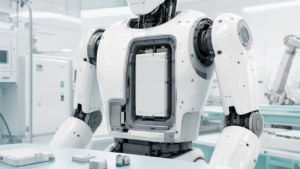
- Target Applications: The primary target markets identified are high-performance EVs, robotics, drones, and UAM. These sectors demand batteries with superior safety, durability, and high energy density, making them ideal applications for all-solid-state technology.
- Comprehensive National Strategy: Beyond technological development, the roadmap encompasses a broader national strategy that includes stabilizing raw material supply chains, innovating manufacturing processes, and cultivating skilled professionals to support the entire battery ecosystem.
Background & Context
South Korea has historically been a dominant player in the battery industry but faces increasing competition from China and technological advancements from Japan. All-solid-state battery technology is widely regarded as the ultimate frontier for next-generation batteries, with global powers racing to achieve commercial viability. In this context, the Korean government’s robust roadmap seeks to secure a technological advantage and lead future markets by pushing beyond the limitations of existing lithium-ion chemistries and creating new industrial value.
Strategic Significance & Outlook
This roadmap provides clear direction and strong incentives for South Korean battery manufacturers, research institutions, and universities. The ambitious timelines—prototype by 2027, 400Wh/kg by 2028, and commercialization by 2030—are expected to spur intensive R&D and investment. Successful execution would position South Korea as a pivotal force in the EV, robotics, and aerospace industries, significantly contributing to global battery technology evolution. This initiative will also intensify competition with other leading solid-state battery developers worldwide, such as Toyota in Japan and QuantumScape in the US.
Get our weekly technology intelligence — free
Receive an infographic that lets you judge at a glance whether each field’s analysis report is worth reading.
Subscribe Free — Weekly Tech Intelligence
By subscribing, you’ll receive Troy-Technical’s weekly technology intelligence newsletter.
- Your email and selected fields are used only to deliver the newsletter.
- We never share your information with third parties.
- You can unsubscribe anytime via the link in each email.
See our Privacy Policy for details.
Takes about a minute · Unsubscribe anytime