Key Findings
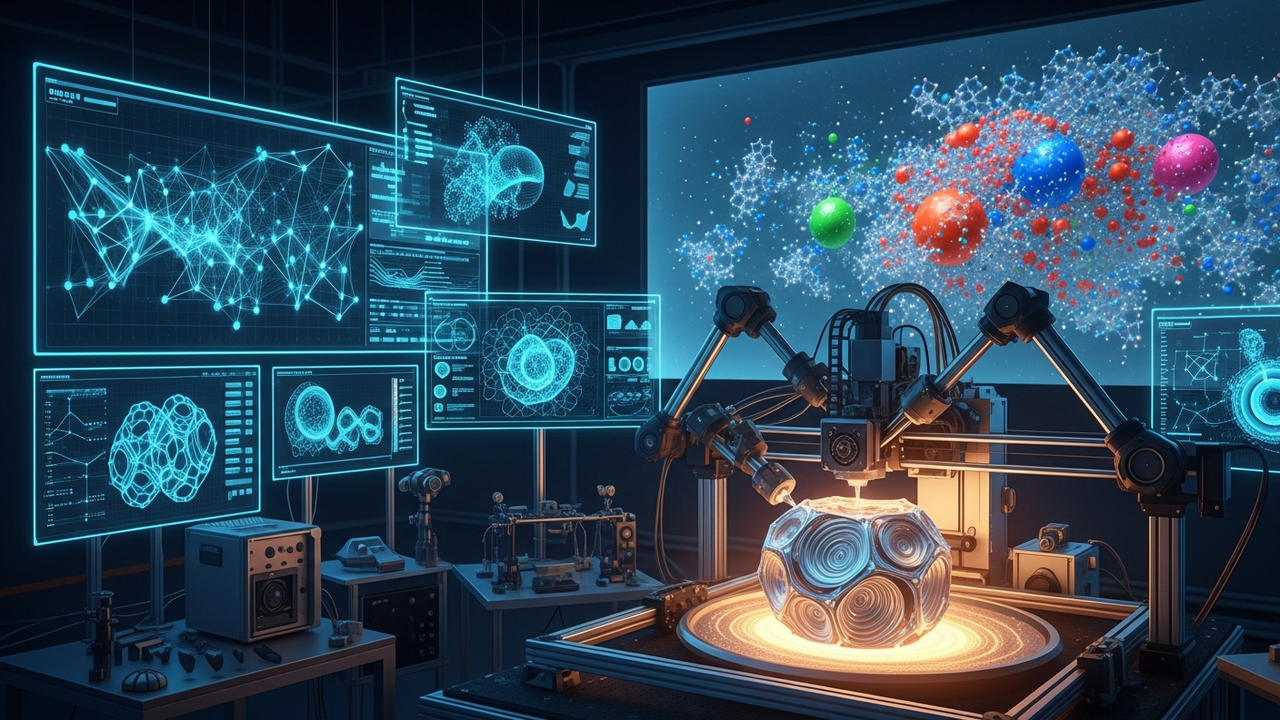
An overview paper published on Preprints.org underscores the transformative potential of integrating artificial intelligence (AI) and machine learning (ML) strategies into the design and development of additively manufactured (AM) components using high-entropy alloys (HEAs). The review connects the past two decades of HEA development with the growing application of AI, ML, and deep learning for prediction and discovery, suggesting a new paradigm for efficiently producing high-performance AM parts.
Technical / Clinical Details
The paper thoroughly analyzes how fundamental HEA design principles—specifically, thermodynamic parameters, atomic size, and valence electron concentration—influence the mechanical properties of AM components. Traditional HEA AM research has predominantly relied on time-consuming and costly trial-and-error approaches. This review elaborates on how AI and ML algorithms can leverage experimental test matrices and artificial neural network maps from existing HEA-related databases to predict material properties and optimize the design process. This capability enables the efficient design of HEAs with specific desired properties, leading to improved yield and performance in AM processes.
Background & Context
High-entropy alloys are drawing considerable attention across demanding industrial sectors like aerospace, defense, energy, and automotive, due to their exceptional mechanical properties, high-temperature stability, and corrosion resistance. Additive manufacturing is crucial for expanding HEA applications by enabling the efficient production of complex-shaped parts. However, the vast compositional space of HEAs makes identifying optimal alloy compositions and AM process parameters extremely challenging. The introduction of AI and ML provides powerful tools to efficiently explore this extensive design space, enabling the discovery of high-performance materials much faster than traditional experimental approaches. This accelerates the ‘Materials Discovery, Design, and Certification (MDDC)’ paradigm in materials science.
Strategic Significance & Outlook
AI-driven design strategies are expected to significantly impact not only HEA additive manufacturing but also the development of other advanced materials. The research concludes that the application of AI and ML is essential for enhancing material performance, reducing manufacturing costs, and shortening time-to-market. Moving forward, the development of more sophisticated AI models, expansion of HEA databases, and integration of simulation with experimental data are anticipated to lead to the realization of ‘closed-loop systems’ where AI autonomously designs and manufactures materials. This will dramatically accelerate the process of discovering and commercializing new materials, bringing immense value to industries worldwide.