Key Findings
The evolution and increasing size of AI accelerators have led to ABF (Ajinomoto Build-up Film) substrates becoming a critical bottleneck in the semiconductor supply chain. Specifically, by 2026, next-generation AI chips are projected to require ABF substrates with 18 to 20 layers, which will inevitably lead to significantly extended production times and reduced effective manufacturing capacity.
Technical & Clinical Details
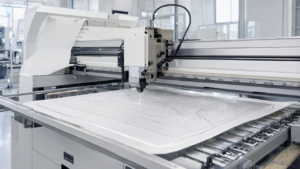
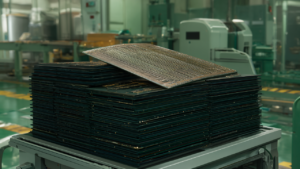
AI accelerators integrate an increasing number of computing dies and High-Bandwidth Memory (HBM), leading to a continuous expansion in package size. Concurrently, the area of the supporting ABF substrate also grows, reducing the number of substrates that can be placed on a single production panel. The multi-layering of ABF substrates necessitates a greater number of complex steps for each additional layer, including lamination, laser drilling, electroplating, etching, and alignment. For instance, while current common ABF substrates typically have 12-16 layers, there is a projection for this to increase to 18-20 layers by 2026. This increase in layer count exponentially extends production time.
Background & Context
The rapid advancement of AI has generated unprecedented demand for high-performance semiconductor chips. However, performance improvements are hitting the limits of traditional miniaturization, increasing reliance on advanced packaging, especially large, multi-layer ABF substrates. The supply capacity for ABF substrates is limited, and while manufacturers are striving to expand capacity to meet growing demand, technical complexity and long manufacturing cycles pose significant challenges. This substrate shortage directly translates into supply constraints for AI chips, potentially decelerating overall market growth.
Strategic Significance & Outlook
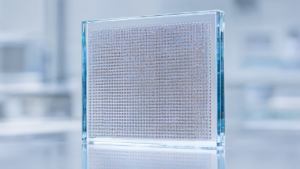
The effective production capacity that manufacturers can achieve for large, high-layer-count ABF substrates for advanced AI chips will be a crucial indicator determining the future supply-demand balance of AI chips. To alleviate this bottleneck, innovation in ABF substrate manufacturing processes, expansion of production facilities, and the introduction of new material technologies are urgently required. Furthermore, advancements in alternative technologies, such as glass substrates, are also gaining attention as potential long-term solutions to this challenge.
Source: https://techsoda.substack.com/p/dr-change-column-15-as-chips-get
Get our weekly technology intelligence — free
Receive an infographic that lets you judge at a glance whether each field’s analysis report is worth reading.
Subscribe Free — Weekly Tech Intelligence
By subscribing, you’ll receive Troy-Technical’s weekly technology intelligence newsletter.
- Your email and selected fields are used only to deliver the newsletter.
- We never share your information with third parties.
- You can unsubscribe anytime via the link in each email.
See our Privacy Policy for details.
Takes about a minute · Unsubscribe anytime