
Key Findings
The SID-WAVES platform achieves attomolar-level sensitivity (10 to the minus 18 molar) for molecular assays, enabling the detection of individual molecules in extremely small volumes. In a study of 225 clinical and self-collected molecular assays, the system maintained diagnostic accuracy exceeding 95 percent. For protein detection, the implementation of a triple-amplification and hierarchical capture strategy increased accuracy from 87.6 percent to 100 percent across 54 simulated samples, representing a 125-fold increase in sensitivity compared to conventional methods.
Technical Details
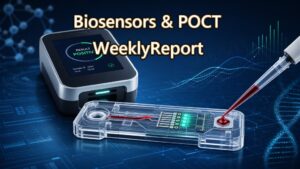
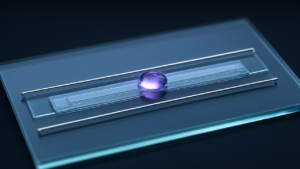
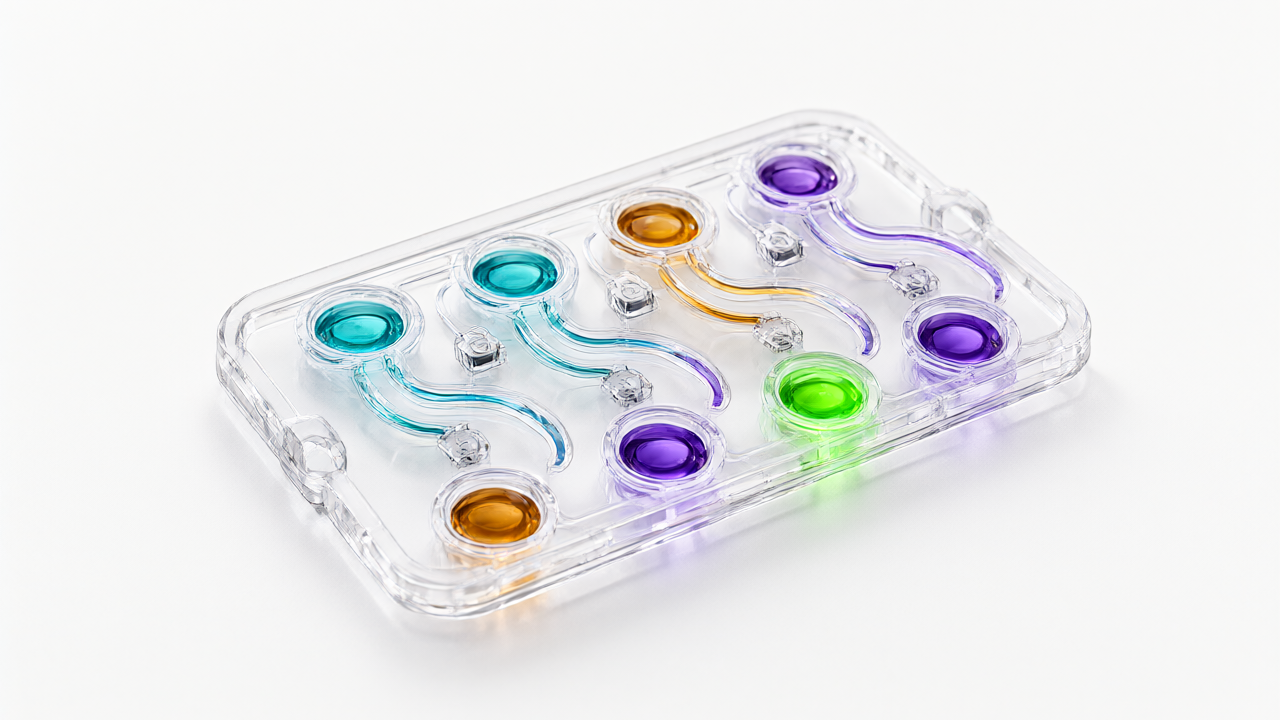
The system utilizes a programmable microfluidic cartridge that eliminates the need for external pumps and valves. Fluid control is managed via two passive mechanisms:
- Phase-change valves: Low-melting-point materials that gate fluid flow based on thermal cues.
- Siphon valves: Mechanisms relying on capillary and gravitational principles to trigger liquid transfer based on geometric conditions.
For nucleic acid detection, SID-WAVES employs recombinase polymerase amplification (RPA) for isothermal copying, followed by CRISPR/Cas12a detection. Protein targets are analyzed via immunoassays using triple-amplification and hierarchical capture. The system employs “spatial-temporal-signal encoding,” assigning unique physical and temporal positions to each target and signal to allow simultaneous multi-sample and multimodal analysis without cross-contamination.
Background & Context
Traditional point-of-care diagnostics are often one-dimensional, focusing on a single viral protein or genetic target. Furthermore, operator variability in timing and interpretation has historically hindered decentralized testing. SID-WAVES addresses this by automating the analytical workflow from sample partitioning to signal generation. The final readout is handled by an AI-assisted smartphone application that uses machine-learning algorithms to extract quantitative results, correcting for noise such as camera angle and lighting.
Significance & Outlook
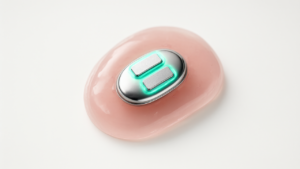
By integrating automated fluidics with AI-driven interpretation, SID-WAVES transforms a consumer smartphone into a calibrated analytical instrument. This allows for the simultaneous reading of multiple biological signals across different molecular classes without requiring a central laboratory, reducing the impact of operator-dependent variability in field-based diagnostics.
Get our weekly technology intelligence — free
Receive an infographic that lets you judge at a glance whether each field’s analysis report is worth reading.
Subscribe Free — Weekly Tech Intelligence
By subscribing, you’ll receive Troy-Technical’s weekly technology intelligence newsletter.
- Your email and selected fields are used only to deliver the newsletter.
- We never share your information with third parties.
- You can unsubscribe anytime via the link in each email.
See our Privacy Policy for details.
Takes about a minute · Unsubscribe anytime