
Key Findings
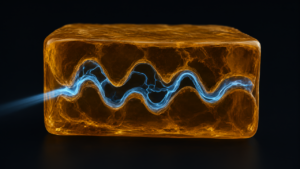
The study reveals that adding minute quantities of nanomodifiers—measured in hundredths of a percent by weight—significantly impacts the melt flow index (MFI) of sand-polymer composites. Specifically, in the range of 0.01 to 0.03 percent, the melt exhibited a non-monotonic dependence where the material thickened rather than flowed more freely. A diamond-containing detonation carbon charge reduced MFI by approximately 30 percent at 190 degrees Celsius and about 20 percent at 230 degrees Celsius, with a viscosity minimum at 0.01 percent. Pyrogenic silicon dioxide (Aerosil-380) showed a similar effect, though its minimum shifted to around 0.03 percent.
Technical Details
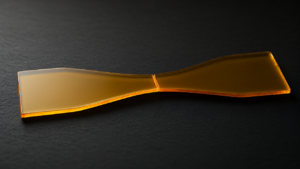
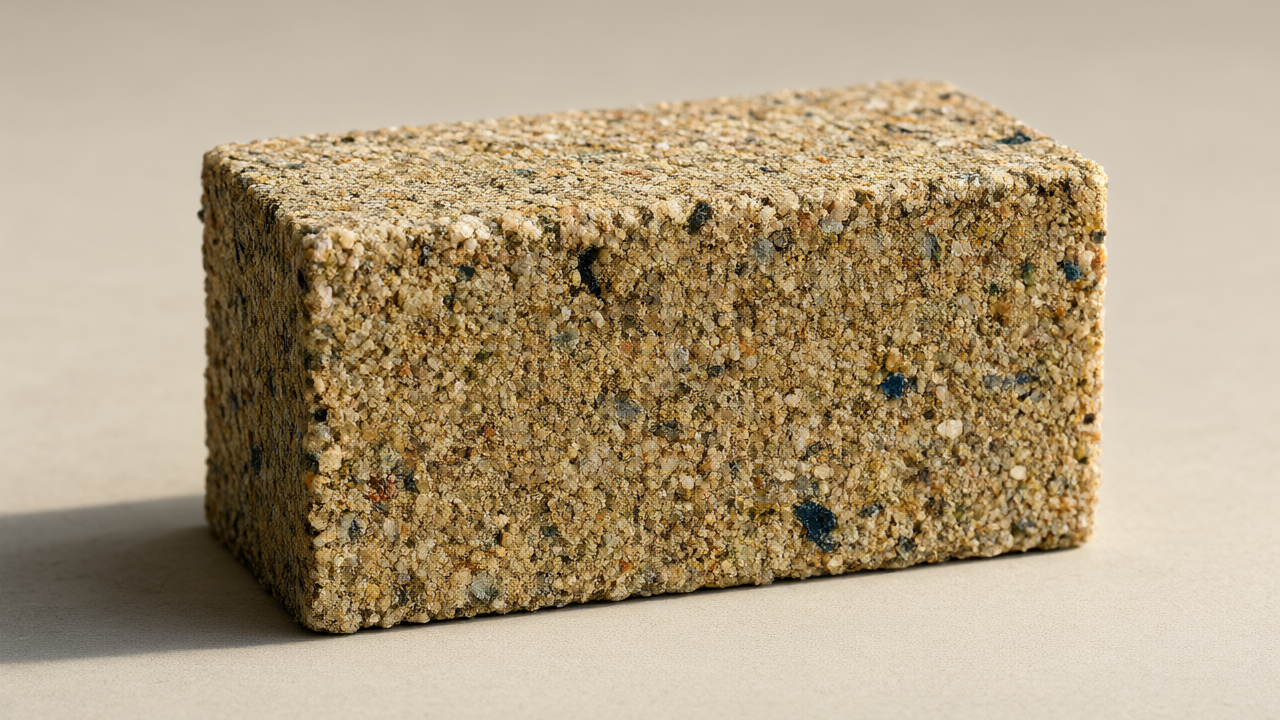
The composite consists of approximately 75 percent quartz sand and 25 percent thermoplastic binder. The binder is a 3:1 mass ratio of recycled polypropylene (PP) to virgin low-density polyethylene (LDPE), stabilized with approximately 5 percent ethylene-vinyl acetate (EVA) copolymer to prevent phase separation. To enhance interfacial interaction, washed sand (180 to 260 micrometers) was dried to below 0.1 percent moisture and treated with a 50 percent stearic acid solution in ethyl alcohol, leaving no more than 3 percent stearic acid on the surface.
The two nanomodifiers tested were:
- Detonation carbon charge: Amorphous and crystalline carbon particles (1 to 8 nanometers).
- Aerosil-380: Pyrogenic silicon dioxide with 5-nanometer primary particles and a specific surface area of 380 square meters per gram.
Background & Context
These “norplast” materials are valuable for construction and mechanical engineering due to their use of cheap fillers and waste polymers. However, they are traditionally difficult to process because the low binder content makes the finished product susceptible to brittleness and instability caused by particle agglomeration or polymer incompatibility.
Significance & Outlook
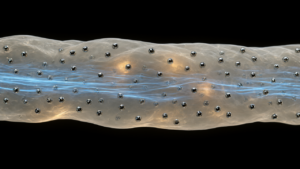
The researchers interpret the observed thickening as a result of physical intermolecular interactions where nanoclusters act as anchoring points for polymer macromolecules, predominantly LDPE. This forces the amorphous phase into a more ordered arrangement, improving the material’s structural integrity during processing.
Get our weekly technology intelligence — free
Receive an infographic that lets you judge at a glance whether each field’s analysis report is worth reading.
Subscribe Free — Weekly Tech Intelligence
By subscribing, you’ll receive Troy-Technical’s weekly technology intelligence newsletter.
- Your email and selected fields are used only to deliver the newsletter.
- We never share your information with third parties.
- You can unsubscribe anytime via the link in each email.
See our Privacy Policy for details.
Takes about a minute · Unsubscribe anytime