

Key Findings
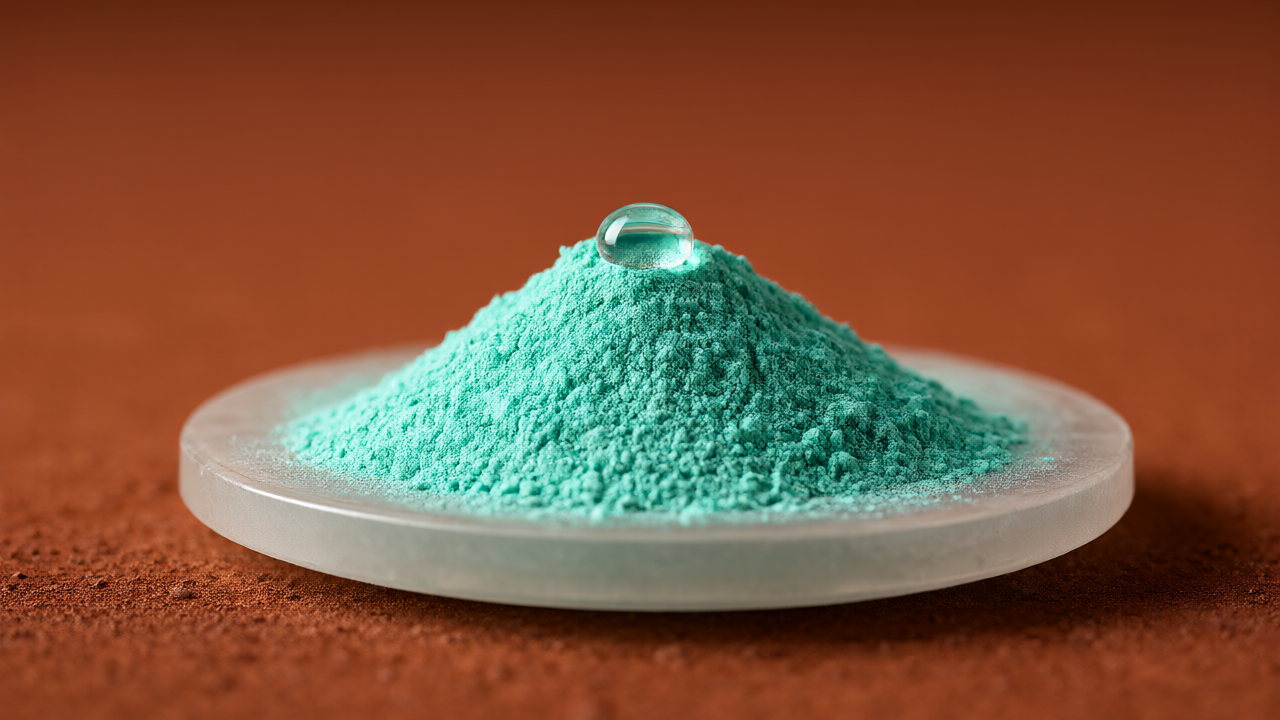
The research team reported a methanol space-time yield (STY) of 245 g/(kg_cat·h) using the MOF-808-NaCu catalyst in a laboratory environment. When compared to the control catalyst (MOF-808-Cu), which yielded 22 g/(kg_cat·h), the sodium-promoted catalyst showed an approximately 11.1-fold increase in production speed. The study also noted a suppression of carbon monoxide (CO) generation, improving reaction selectivity.
Technical Details
The catalyst utilizes a metal-organic framework (MOF-808), a zirconium-based porous material. The team introduced alkali metals—specifically sodium (Na)—via deprotonation of hydroxyl groups, then loaded copper (Cu) to create dual-active sites. Density functional theory (DFT) calculations and measurements suggest that Na+ ions strengthen the interaction with oxygen atoms in CO2, promoting adsorption and activation. Additionally, sodium prevents copper atoms from aggregating into nanoparticles, maintaining atomic-level dispersion.
The synthesis follows the chemical equation: CO2 + 3H2 → CH3OH + H2O. While the catalyst shows high activity, the researchers emphasized that these results were obtained in a controlled flow reactor with pressurized gases, not in the actual Martian environment.
Background and Context
Mars’ atmosphere consists of approximately 95.9% CO2. While methane (CH4) is a common target for ISRU via the Sabatier reaction, it requires cryogenic cooling for liquid storage (boiling point -161.5°C). Methanol (CH3OH) offers a logistical advantage with a boiling point of 64.7°C and a melting point of -97.6°C, allowing for easier liquid storage and potential use as a chemical feedstock for plastics or antifreeze.
Significance and Outlook
The results, published in the Journal of Deep Space Exploration, provide a material-level proof of concept for fuel production. However, significant engineering hurdles remain, including the need for equipment to capture and compress the thin Martian atmosphere (average 7 millibars), the mining of ice for water electrolysis to supply hydrogen, and the verification of catalyst longevity over thousands of hours.
Source: https://xenospectrum.com/mars-air-to-methanol-catalyst-mof-808-nacu/
Get our weekly technology intelligence — free
Receive an infographic that lets you judge at a glance whether each field’s analysis report is worth reading.
Subscribe Free — Weekly Tech Intelligence
By subscribing, you’ll receive Troy-Technical’s weekly technology intelligence newsletter.
- Your email and selected fields are used only to deliver the newsletter.
- We never share your information with third parties.
- You can unsubscribe anytime via the link in each email.
See our Privacy Policy for details.
Takes about a minute · Unsubscribe anytime