
Key Findings
A prototype lithium battery developed by the Hong Kong University of Science and Technology (HKUST) has reached a specific energy of 467Wh/kg. In separate testing, a coin cell utilizing this chemistry retained 90 per cent of its capacity after 200 charge-discharge cycles. These results indicate a significant increase in energy storage per kilogram compared to conventional lithium-ion cells.
Technical Details
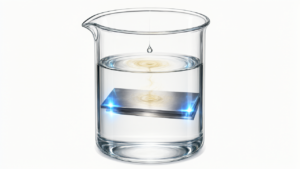
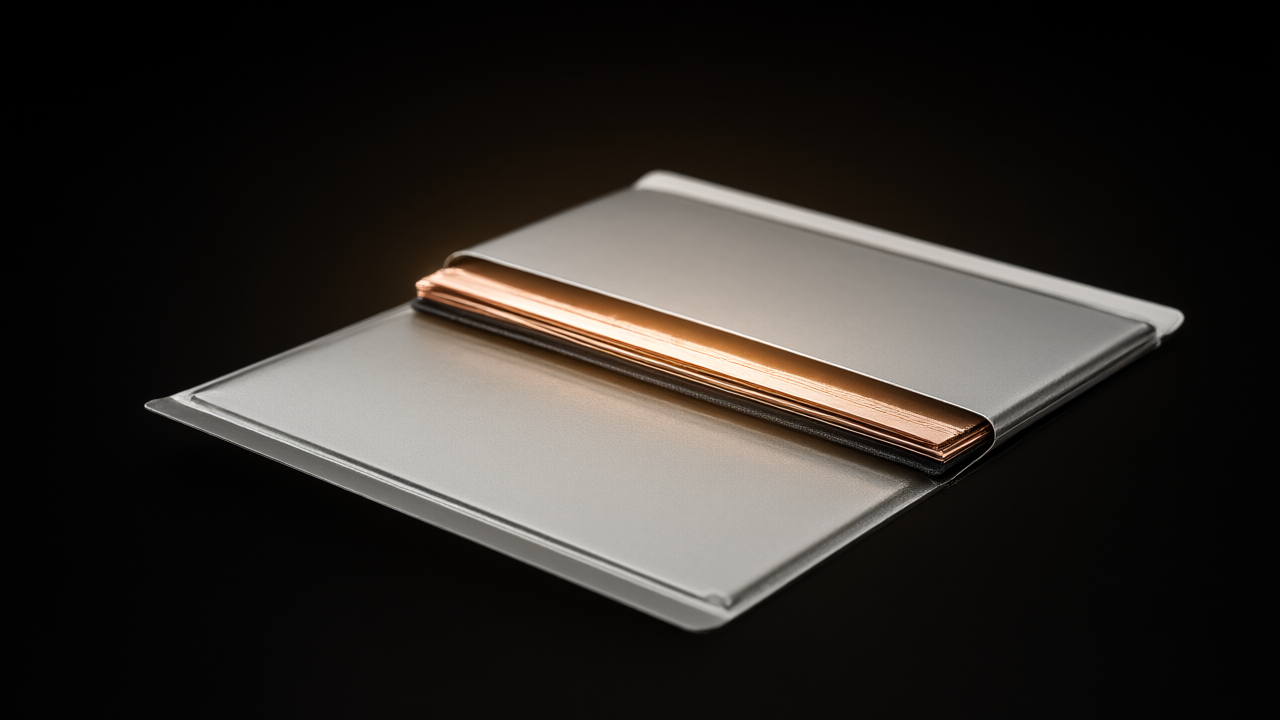
The battery eliminates the conventional graphite anode, utilizing bare copper foil instead. During charging, lithium from the cathode plates directly onto the copper. To prevent the formation of dendrites—needle-like spikes that cause internal short circuits—and to stabilize the solid electrolyte interphase (SEI), the team led by Professor Shao Minhua implemented a compound called AMI.
- AMI Additive: Combines silver ions with anions to regulate lithium deposition.
- Mechanism: Silver encourages even lithium spreading, while anions trigger a reaction that forms a gel within a protective two-layer film.
- Environment: This creates a quasi-solid-state environment that blends features of liquid and solid-state battery systems.
Background & Context
Conventional lithium-ion batteries rely on graphite anodes to store lithium. While removing this layer saves space and simplifies manufacturing, it typically leads to uneven lithium deposition and unstable protective films. The HKUST approach aims to mitigate these degradation issues through the AMI additive to make anode-free designs viable.
Significance & Outlook
Higher specific energy could extend the range of electric vehicles and drones or increase the battery life of mobile phones. However, the technology remains at the laboratory stage. Key challenges for commercialization include the cost and availability of the silver-based additive, the difficulty of scaling manufacturing, and the lack of data on how high-energy pouch cells perform over hundreds of cycles under practical conditions. For manufacturers, such as those in India’s battery industry, the primary hurdle is determining if the technology can maintain energy density over repeated cycles while remaining affordable.
Source: https://www.electronicsforu.com/news/anode-free-lithium-battery-reaches-467wh-kg
Get our weekly technology intelligence — free
Receive an infographic that lets you judge at a glance whether each field’s analysis report is worth reading.
Subscribe Free — Weekly Tech Intelligence
By subscribing, you’ll receive Troy-Technical’s weekly technology intelligence newsletter.
- Your email and selected fields are used only to deliver the newsletter.
- We never share your information with third parties.
- You can unsubscribe anytime via the link in each email.
See our Privacy Policy for details.
Takes about a minute · Unsubscribe anytime